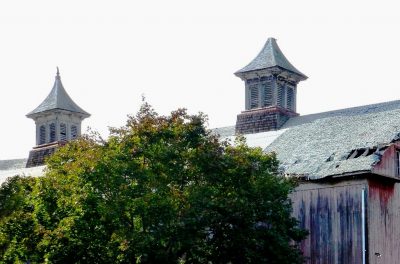
Cupolas are small structures built over a hole in the roof centerline to provide light, ventilation, a nice view or perhaps some decoration to the overall structure. While found on many kinds of buildings including the International Space Station, the main purpose of barn cupolas is functional over form. With the advent of tighter barn construction to keep livestock warm during the winter, moisture buildup became a problem. The cupola became a necessary addition to barns to help reduce this moisture buildup and to allow fresh air to enter the barn.
While used in the Middle East and eventually in Europe, these structures were more decorative than functional. They were eventually used less as domes became more popular. In the United States, cupolas were introduced in the late 1700s by settlers from Europe and used as barns increased in size and allowed for more hay storage and livestock housing. Tighter construction by means of siding and better roofing became the norm in the mid 1860s, and this resulted in ventilation issues as moisture levels increased.
The larger amounts of hay could build up heat and occasionally spontaneous combustion occurs if fresh air is not provided. Both the hay and the barn could be destroyed. Tighter barns also meant more moisture from both the breathing of the cows and from a constant deposit of urine and manure. Fresh air and the removal of moisture was needed for the health of livestock and to prevent mold developing on and ruining stored hay.
The solution was a nifty piece of architecture called a cupola. Farmers started installing cupolas as a means to draw out hot, moist air and stale gases from manure via louvered slats on all four sides. Fresh air could also enter while rain and snow were mostly kept from entering the roof as these louvers were downward facing. The health of livestock kept in close quarters in cold weather improved, and mold development on stored hay was reduced through this ventilation. Additionally, livestock kept warmer in the cold months required less food, so hay lasted longer and in good condition.
The spacing, size, and number of cupolas needed depended upon the linear footage of roof centerlines. The number of livestock and amount of hay storage were also considered. This is why some barns have many of these structures, while other barns may only have one or two. Barns with open sides have no need for cupolas.
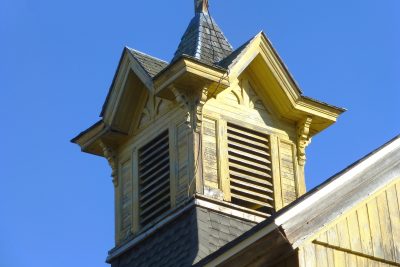
While the primary function of cupolas has been to provide ventilation for haylofts and livestock areas, there are many styles of cupolas that also incorporate various decorative designs. On Hanks Hill Road in Mansfield, there are two barns on two different properties near each other that have the exact same unique design, which is rather fancy while still being functional. I suspect the same person designed and built both as they are almost identical in decorative woodwork and unusual peaked roof lines. I have not found other cupolas with such intricate woodwork and wonderful design features.
Historic barns often have fixed or awning windows that either don’t open or that are hinged on the top or bottom and open only slightly. Some cupolas are topped with a weathervane or a finial. Farmers took great pride in their barns. They could be a large investment, so it’s understandable that many put elaborate cupolas on their barns to make a statement about their pride and prosperity. As you drive around farm country, perhaps now you will notice some interesting cupolas that have been there all along.
The UConn Home & Garden Education Center supports UConn Extension’s mission by providing answers you can trust with research-based information and resources. For gardening questions, contact us toll-free at (877) 486-6271, visit our website at homegarden.cahnr.uconn.edu, or reach out to your local UConn Extension Center at extension.uconn.edu/locations.