Your Raised Beds Worked Hard All Season—Garden Pros Share 6 Ways to Help Them Recover Before Winter
The Spruce – Heather Zidack and other gardening professionals recommend their top tips to help your garden beds prepare for winter.
Web cookies (also called HTTP cookies, browser cookies, or simply cookies) are small pieces of data that websites store on your device (computer, phone, etc.) through your web browser. They are used to remember information about you and your interactions with the site.
Session Management:
Keeping you logged in
Remembering items in a shopping cart
Saving language or theme preferences
Personalization:
Tailoring content or ads based on your previous activity
Tracking & Analytics:
Monitoring browsing behavior for analytics or marketing purposes
Session Cookies:
Temporary; deleted when you close your browser
Used for things like keeping you logged in during a single session
Persistent Cookies:
Stored on your device until they expire or are manually deleted
Used for remembering login credentials, settings, etc.
First-Party Cookies:
Set by the website you're visiting directly
Third-Party Cookies:
Set by other domains (usually advertisers) embedded in the website
Commonly used for tracking across multiple sites
Authentication cookies are a special type of web cookie used to identify and verify a user after they log in to a website or web application.
Once you log in to a site, the server creates an authentication cookie and sends it to your browser. This cookie:
Proves to the website that you're logged in
Prevents you from having to log in again on every page you visit
Can persist across sessions if you select "Remember me"
Typically, it contains:
A unique session ID (not your actual password)
Optional metadata (e.g., expiration time, security flags)
Analytics cookies are cookies used to collect data about how visitors interact with a website. Their primary purpose is to help website owners understand and improve user experience by analyzing things like:
How users navigate the site
Which pages are most/least visited
How long users stay on each page
What device, browser, or location the user is from
Some examples of data analytics cookies may collect:
Page views and time spent on pages
Click paths (how users move from page to page)
Bounce rate (users who leave without interacting)
User demographics (location, language, device)
Referring websites (how users arrived at the site)
Here’s how you can disable cookies in common browsers:
Open Chrome and click the three vertical dots in the top-right corner.
Go to Settings > Privacy and security > Cookies and other site data.
Choose your preferred option:
Block all cookies (not recommended, can break most websites).
Block third-party cookies (can block ads and tracking cookies).
Open Firefox and click the three horizontal lines in the top-right corner.
Go to Settings > Privacy & Security.
Under the Enhanced Tracking Protection section, choose Strict to block most cookies or Custom to manually choose which cookies to block.
Open Safari and click Safari in the top-left corner of the screen.
Go to Preferences > Privacy.
Check Block all cookies to stop all cookies, or select options to block third-party cookies.
Open Edge and click the three horizontal dots in the top-right corner.
Go to Settings > Privacy, search, and services > Cookies and site permissions.
Select your cookie settings from there, including blocking all cookies or blocking third-party cookies.
For Safari on iOS: Go to Settings > Safari > Privacy & Security > Block All Cookies.
For Chrome on Android: Open the app, tap the three dots, go to Settings > Privacy and security > Cookies.
Disabling cookies can make your online experience more difficult. Some websites may not load properly, or you may be logged out frequently. Also, certain features may not work as expected.
Your Raised Beds Worked Hard All Season—Garden Pros Share 6 Ways to Help Them Recover Before Winter
The Spruce – Heather Zidack and other gardening professionals recommend their top tips to help your garden beds prepare for winter.
By. Dr. Avishesh Neupane, UConn Soil Nutrient Analysis Lab
Fall brings familiar lawn and garden jobs like reseeding thin turf, planting bulbs, cleaning up beds, and preparing for winter. For many people, lime is also a part of the fall lawn-care routine.
But lime is not something every lawn or garden needs every year. When soil is too acidic, limestone can be very helpful. However, when the soil pH is already suitable, adding more lime provides no additional benefit and can eventually push the pH too high. Whether you should lime this fall depends less on the season than on whether your soil actually needs it.
Limestone is used primarily to raise soil pH. Soil pH describes how acidic or alkaline the soil is, with pH 7 considered neutral. Values below 7 are acidic and values above 7 are alkaline. Soil pH affects nutrient availability, root growth, and the activity of many soil organisms.
Many Connecticut soils are naturally acidic. Rainfall gradually leaches calcium and magnesium from soil, making it acidic. Some fertilizer practices can also increase soil acidity over time. Limestone neutralizes some of that acidity while supplying calcium and, depending on the type of limestone, magnesium.
Most lawn grasses and common vegetables perform best in slightly acidic soil, typically around pH 6 to the mid-6s. However, there is no single ideal pH for every plant. Blueberries, rhododendrons, azaleas, and several other plants prefer more acidic conditions. Applying lime simply because the rest of the yard receives it can make the soil less suitable for these plants.
That is why the target pH should be based on what you are growing.
One of the most persistent lawn-care myths is that moss automatically means the soil is too acidic. Moss can grow well in acidic soil, but it also thrives in shade, wet or poorly drained soil, compacted areas, and thin turf where grass struggles to compete. A shaded, damp lawn may have moss even when its soil pH is perfectly acceptable.
Adding lime without checking the soil may therefore do nothing to solve the real problem. If the lawn is heavily shaded, compacted, or poorly drained, those conditions still need to be addressed.
The same principle applies when grass looks weak or vegetables struggle. Poor plant growth does not by itself indicate a need for lime. Problems with drainage, compaction, nutrients, watering, roots, insects, or disease can produce similar symptoms.
Knowing the soil pH is important, but pH alone does not always tell you how much limestone to apply. Two soils with the same pH may require different amounts of lime to reach the same target. Soil texture, organic matter, and the soil’s ability to resist changes in pH all influence the lime requirement. Many laboratories use a buffer test to estimate this resistance and then calculate a lime rate based on the target pH for the plants being grown. This is why a laboratory soil test that provides a lime recommendation is more useful than simply checking pH with an inexpensive home meter.
Applying less than the recommended amount may not raise the soil pH enough to reach the desired range, while over-liming can push soil pH too high and reduce the availability of nutrients such as iron, manganese, and zinc.
Limestone works gradually, and how quickly it changes soil pH depends partly on particle size, soil conditions, and how the material is applied. It may take six months to a year, or longer, to reach its full effect
Garden centers commonly sell both calcitic and dolomitic limestone. These terms describe the limestone’s composition. Calcitic limestone primarily supplies calcium, while dolomitic limestone supplies both calcium and magnesium. If a soil test shows low magnesium, dolomitic limestone can correct soil acidity while also supplying magnesium. If magnesium is already high, calcitic limestone may be the better choice.
Limestone can also come in different physical forms. Both calcitic and dolomitic limestone may be sold as ground or pelletized products. Pelletized lime is easier and less dusty to spread because finely ground limestone is formed into pellets. Once wet, the pellets break apart, releasing fine particles that react with the soil.
Fall is a good time to apply limestone, especially to lawns, because soil moisture is usually adequate and the material has time to begin reacting before the next growing season. However, lime can also be applied at other times of year when conditions are suitable.
For a new lawn or vegetable garden, lime can be mixed into the soil before planting if a soil test recommends it. On an established lawn, it is usually applied to the surface and allowed to react gradually.
The key is to base liming on a soil test, not the calendar. Test the soil, consider what you plan to grow, and, if lime is recommended, apply the appropriate type and amount.
The UConn Home Garden Education Office at the George Leigh Minor Plant and Soil Health Center supports UConn Extension’s mission by providing answers you can trust with research-based information and resources. For gardening questions, contact us toll-free at (877) 486-6271, visit our website at homegarden.cahnr.uconn.edu, or reach out to your local UConn Extension center at extension.uconn.edu/locations.
This article was published in the Hartford Courant September 21, 2026
Gardening Season Isn’t Over Yet: 6 Fast-Growing Flowers You Can Still Grow Through the Start of Fall
The Spruce – Heather Zidack joins other gardening professionals to recommend fall blooming annuals for extending your season of color.
By Dawn Pettinelli, UConn Home Garden Education Office

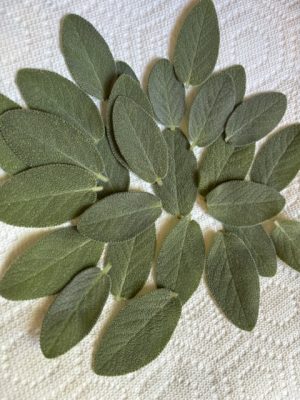
With the Dog Days of summer behind us and Labor Day on the horizon, there’s still plenty of time to both enjoy your garden’s beauty and bounty as well as finish harvesting aromatic herbs for culinary use. Even a small pot or planting of basil, thyme, rosemary and the like can supply a fair amount of flavor to your favorite dishes.
Methods of harvesting vary from fresh use to frozen to dried depending on your preferences. Regardless of how you intend to prepare them, follow these few suggestions for harvesting. Start with clean hands, clean scissors or clippers and a clean container to place your herbs in. Make sure your scissors or clippers are sharp to make clean cuts.
Most herbs can be harvested throughout the summer. Annual herbs can be picked until they start looking ragged or get hit by the frost. Typically, late August through early September is the last time to clip perennial herbs as the tender new growth that is encouraged by harvesting could be damaged by the frost if plants are harvested too late in the season.
Also, as a general rule of thumb, herbs grown for their aromatic leaves are most pungent when harvested before flowering. This may leave some pollinator friendly gardeners with a dilemma as the flowers of many herb plants, like oregano and thyme, are especially attractive to pollinating bees and others. One way to deal with this if plants are of good size is to harvest half to two-thirds of the plants earlier in the season before they flower and later, cut the spent flowering stems back. Usually that gives you a second harvest about now.
Always harvest herbs in the morning, shortly after the dew dries but before the heat of day sets in. The essential oils are highest before the heat causes them to evaporate. When harvesting herbs for their flowers, like chamomile, borage and calendula, pick the blossoms just before fully opened. Seed heads of dill, fennel or coriander can be cut right into paper bags so as not to lose any seeds. Leave a few heads if you want these plants to self-seed. I had not had to purchase dill seeds for over 20 years in my old garden as they just reseeded themselves.
How much of a herb plant’s foliage can you remove? Anywhere from 30 to 70 percent depending on the plant. Quick growing plants such as oregano, mints, parsley and basil can generally have more of their foliage removed than slower growing potted rosemary and, in my yard, tarragon. Collect handfuls of leafy stems and bring inside to inspect before processing.
Plants can be rinsed if they have dust or dirt on them but if harvested after a rain or from a mulched bed, often they are clean enough not to need washing. Pick through them for any insects, damaged leaves or debris. If plants need to be rinsed, shake them and then spread them out on cloth or paper towels to dry. Generally, herbs that are not used fresh are either frozen or more typically dried.
Freezing herbs is quite easy. Simply chop them in small enough pieces to add to your water filled ice cube tray and freeze. Once frozen, the cubes can be popped out and stored in freezer bags or containers. Use for flavoring in soups, stews and other culinary dishes.
Herbs can be dried in little bundles, on screens, in a microwave, oven or dehydrator depending on your preferences. If you have a dry, airy, dimly lit area, you might want to make small bundles of herbs to hang upside down to dry. Seed heads, such as dill, can be bundled together and placed upside down in a paper bag. Punch a few holes in the bag, gather it at the top and hang to dry. Seeds will fall into the bottom of the bag. Leafy herbs could be spread out and placed on drying screens. Air drying works best when we have periods of low humidity.
Since this is often not the case in August, many opt to dry herbs in a microwave or dehydrator. Old gas stoves with an always on pilot light in the oven make ideal drying places. Except for the dill seeds which I bag, the microwave works best for me. Not only is it a quick way to dry herbs but they keep their nice green color. The key to successful microwave drying is to just dry small batches of herbs at one time and experiment with the timing. Herbs should be placed on a plate between 2 paper towels and then start your microwave from 30 to 60 seconds and see how that works. In between bursts, the herbs can be stirred and the bottom paper towel replaced if it gets too wet. Continue in short bursts until you come up with a good routine for your microwave. I have not used a dehydrator so if using, follow the directions that come with the unit.
Dried herbs are flavorful for at least one year. After drying, crumble them slightly and store in well-sealed glass or plastic jars. I repurpose ones that originally held herbs and spices. Take some time now to preserve some of summer’s best flavors. Come cooler days, you’ll be glad you did.
The UConn Home Garden Education Office at the George Leigh Minor Plant and Soil Health Center supports UConn Extension’s mission by providing answers you can trust with research-based information and resources. For gardening questions, contact us toll-free at (877) 486-6271, visit our website at homegarden.cahnr.uconn.edu, or reach out to your local UConn Extension center at extension.uconn.edu/locations.
This article was published in the Hartford Courant August 30, 2026
By Heather Zidack, UConn Home Garden Education Office

It’s been a strange year. While many gardeners typically start to feel as if their season is starting to wind down in August, some gardens this year seem to finally be hitting their stride. Regardless, with fall just ahead of us, this month provides a fantastic opportunity to reflect, and plan for your next growing season all while the weather is still on your side!
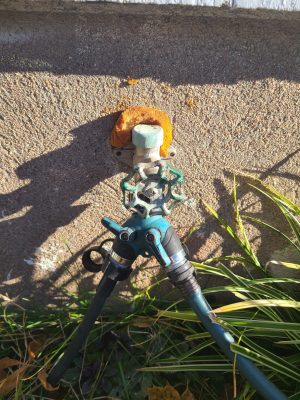
While your garden is still in flower and plants are still well established, it is a great time of year to document this growing season for yourself. Gardeners have used systems of colored golf tees, rocks, or other means to mark out where perennials are in the garden so that they do not disturb them during spring planting or cleanup. Others will sketch out their gardens on graph paper. For perennials, this is a great way to remember what species are planted, and when they flower so that you can shop for additions. This method is particularly useful for vegetable garden beds, which many try to rotate each season. By sketching out what is currently planted, you will be able to identify new locations for next season’s rotation.
It’s always easier to reflect on something while it’s in front of you. Keep a journal and note what went well this season and what didn’t while it is fresh in mind. Include pests and diseases so you are aware of what to scout for next season, before it’s an issue. Even though next year’s conditions may be different, this documentation will help you have an idea of timing, locations, or practices that can be improved on in the next growing season.
While it may not quite be time to start shopping for seeds or starts for next season, note the varieties of vegetables that did well in your garden, and ones that you might skip for next year. Taking note of diseases or pests will also help you with your winter seed shopping by helping you identify if resistant varieties are out there to help you combat those issues. Creating this list now will help you when it comes time for those January seed orders!
If you still want to play in the dirt, this is a good time of year to divide your spring and summer blooming perennials. Division not only provides an opportunity for your plants to have a little extra growing room in the garden bed, but some see it as a way of getting free plants from your garden! Enhance other garden spaces with additional plant material where it may fit. If your plants are healthy and free of pests and disease, you can even share divisions with family, friends or neighbors.
Late summer and fall blooming perennials are best divided in the spring so that they are not expending energy on both flowering and establishment at the same time. Always make sure to follow proper watering guidelines to help any transplanted divisions establish in their new spot in the garden. Even though the plants have been in your garden for a long time, once they are moved the clock resets on their “establishment period.” They’ve taken a hit to their root system and may need your support to recover. Ensure plants are receiving one inch of water per week (roughly 0.62 gallons per sq foot), to help them establish a healthy root system. Always feel the soil to determine whether supplemental water is necessary.
Spring bulbs and Peony roots will be planted in the coming months, so prepare by shopping early! Unique varieties will sell out quickly and you will want to make sure you get what you need for planting time.
We’re also approaching a fine time of year to have your soil nutrition tested so that you’re ready to go next spring! Typically, the springtime sees a rush for soil testing and there can be delays, which mean more time waiting before implementing your fertilizer programs. By testing in the fall, you have your recommendations ready to go when the soil warms up next spring!
Don’t underestimate the value of a detailed gardening journal and a few garden markers to help you remember where things are in your garden, how well they did, and what you may need to watch out for next year! Many successful gardeners have a collection of journals or notes that help them build upon what they learn from season to season. August is the perfect time of year to start documenting those observations while they’re fresh in your mind, and there’s still plenty of gardening left in the year!
The UConn Home Garden Education Office at the George Leigh Minor Plant and Soil Health Center supports UConn Extension’s mission by providing answers you can trust with research-based information and resources. For gardening questions, contact us toll-free at (877) 486-6271, visit our website at homegarden.cahnr.uconn.edu, or reach out to your local UConn Extension center at extension.uconn.edu/locations.
This article was published in the Hartford Courant August 23, 2026
By Heather Zidack, UConn Home & Garden Education Center

It’s already November! It doesn’t seem like that long ago when we were giving advice about seeding lawns and watering in new fall plantings. Now that the time has changed, the days feel shorter, and the nights are getting colder, it’s important to remember to take the time to properly store your garden equipment and accessories before locking up the shed for the season.
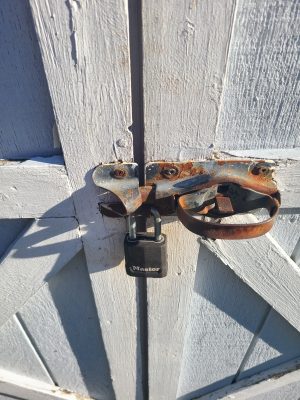
Freezing temperatures are on the way fast. Drain and roll up any hoses to remove tripping hazards from the landscape. Store them inside a garage or shed to keep them out of the elements and lengthen their lifespan of use in the garden. Make sure that your outdoor water systems are properly winterized. Whether that means flushing your irrigation system, or simply shutting off your outside water, don’t forget this important step to protect your pipes! Once lines are turned off, open external valves to relieve any remaining pressure.
Water can not only wreak havoc on pipes but many garden accessories, too. A glass rain gauge left outside can and will freeze and shatter outdoors. Ceramics like pottery and bird baths are susceptible to cracking, so store them either in the shed or upside down in a sheltered area. Stash your garden gnomes, garden flags and solar pathway lights to protect them from fading and damage. Brittle cold, freezing water, and a careless throw of the snow shovel could spell disaster for garden décor left out in the open.
Inside the shed, take a quick inventory. Leftover seed or bagged mulch could be rodent attractants. Seeds should be stored in areas safe from extreme temperatures to preserve germination rates. Bird seed should be stored in animal proof containers. Chemical products like pesticides and fertilizers may be adversely affected by temperature fluctuations and freezing. They could also make a real mess if a water-based or pressurized solution were to burst. Products leftover from the growing season should be evaluated and moved into a space safe from freezing temperatures. Product labels or manufacturers will have storage and disposal information to help you make the best decision about what to do with your garden chemicals at the end of the season.
Winter will be a great time to thoroughly clean, repair, and sharpen tools. Store them somewhere that is easy to get to later so you can make sure your tools are fresh for the new season! If you have to do the seasonal shed shuffle, this is also a great time to rotate the lawn mower and snow thrower to prepare for the first storms of the season.
Speaking of your gas-powered equipment, check your owner’s manuals for winterizing recommendations and instructions to help maintain the life and quality of your equipment. You may need specific maintenance before long term storage. Contact a professional for any maintenance tasks that you do not feel confident performing on your own.
If you’re running out of space in the shed and garage, consider covering lawn furniture with UV and mildew resistant covers. Take down awning covers and temporary structures. I, myself, have fallen victim to the false sense of security of a mild winter, only to be devastated by the collapse of my garden tent in the first, albeit belated, heavy snow.
While all of this seems like common sense, the mad dash from here to the holidays will have many of us pulled in different directions. Our equipment, tools, and garden infrastructure are some of the biggest investments we put into our gardens. Hopefully this short checklist will help you knock out those last few chores that come with maintaining a four season New England garden.
The UConn Home & Garden Education Center supports UConn Extension’s mission by providing answers you can trust with research-based information and resources. For gardening questions, contact us toll-free at (877) 486-6271, visit our website at homegarden.cahnr.uconn.edu, or reach out to your local UConn Extension center at extension.uconn.edu/locations.
This article was published in the Hartford Courant November 8, 2025
By Holly McNamara, UConn Plant Diagnostic Lab
This year, Connecticut’s notably dry summer conditions have continued into fall. According to the U.S. Drought Monitor, all counties are abnormally dry for this time of year, and some are even considered to be in a moderate drought. Thus, many trees, shrubs, and perennials are heading into winter low on moisture. These conditions combined with the dry air, low precipitation, and fluctuating temperatures characteristic of Connecticut winters can lead to plant damage if no supplemental water is provided. Many of your plants will benefit from a deep final soak before the ground freezes.
Fall drought stress often doesn’t show up until spring, or even the following summer.Affected plants may appear perfectly normal and resume growth in the spring, using stored food energy. Plants may be weakened or die in late spring or summer when temperatures rise. Browning evergreens, delayed leaf-out, and sudden dieback are common signs of plants that went into winter too dry.
Moist soil is so important in the fall and winter months because it provides insulation to the roots. It may seem counter-intuitive, but properly hydrated soil does a much better job at protecting roots from freezing temperatures than dry soil. Root damage occurs for this reason when plants do not receive enough late-season moisture.
Woody plants with shallow root systems require the most supplemental water during extended dry periods in the fall and winter. Trees in this category include maples, birches, willows, and dogwoods. This category also includes perennials, and shrubs like hydrangeas, boxwoods, and azaleas. These plants benefit from mulch to further conserve soil moisture and buffer the roots from temperature swings. Apply mulch about 2 to 4 inches away from the trunk all the way to the outermost reach of its branches in a doughnut shape.

Evergreens also benefit from fall and winter watering because they do not go dormant in the winter. Evergreens of any age are still actively respiring during the coldest months of the year and will continuously lose water through their needles. If they go into the winter with dry soil, they are more likely to have a difficult spring recovery. This is especially true for those in open or windy areas.
Only water when daytime temperatures are above 40°F, ideally in the late morning or early afternoon so the water can soak in before possible freezing at night. Feel the soil at a depth of 4 to 6 inches to ensure that supplemental water is necessary. Soil should be consistently moist, but not oversaturated or muddy. Stop supplemental watering after the ground freezes because plants cannot absorb water through frozen soil. To water, use a soaker hose to provide a slow stream of water that can penetrate deeper into the soil with limited runoff. If your hose is already stored away for the winter, and your tree or shrub is small, consider drilling a 1/8-inch hole at the bottom of a 5-gallon bucket and filling that with water for a slow, steady stream. If dry weather continues into the winter and there’s little snow cover, additional watering once or twice a month may be needed until the soil hardens.
A final round of watering now can prevent root injury that won’t be visible until much later. Evergreens, deciduous trees, and other landscape plantings will head into winter stronger with a little extra attention this month. Giving the soil one last watering before it freezes is one of the simplest ways to protect your landscape from winter stress.
The UConn Home & Garden Education Center supports UConn Extension’s mission by providing answers you can trust with research-based information and resources. For gardening questions, contact us toll-free at (877) 486-6271, visit our website at homegarden.cahnr.uconn.edu, or reach out to your local UConn Extension center at extension.uconn.edu/locations.
This article was published in the Hartford Courant October 25, 2025
By Pamm Cooper, UConn Home & Garden Education Center

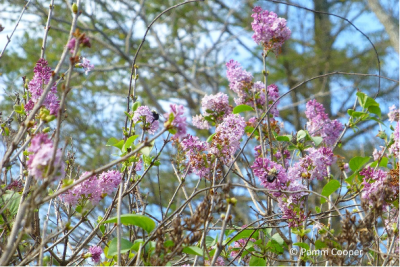
Spring-blooming woody plants like lilacs (especially the old, grafted varieties), ornamental cherries, forsythia, crabapples, azaleas and some magnolias set their flower buds for the following year in early summer shortly after flowering. Usually, flower buds are triggered to bloom by environmental conditions which normally occur after an extended fall and winter cold period, followed by longer days and warming temperatures in spring. It is not typical for these plants to have a second bloom in the fall, but environmental conditions sometimes trigger premature flowering in the fall. Some plants may have only a few flowers rebloom, while other plants may have more flowers open in the fall.
Some of the reasons for this out of season bloom are extended summer heat and drought conditions where supplemental water is lacking. Severe early defoliation, especially from certain fungal pathogens, can also contribute to reblooming. The past two springs have been very wet and diseases such as anthracnose and Pseudocercospora spp. leaf spot may have caused leaves to brown, shrivel and drop early. This stresses the shrub and contributes to out of sync rebloom if other conditions are right. Good sanitation practices such as cleaning up infected leaves will be helpful in reducing fungal infections the following year.
If a plant is healthy and relatively unstressed, the normal seasonal move to cooler weather triggers dormancy. Plants that are deciduous will drop leaves as daylight length and temperature both decrease. Next year’s leaf and flower buds will also remain in a dormant state. Flowering and leafing out will be triggered by increasing daylight and air temperatures the next spring.
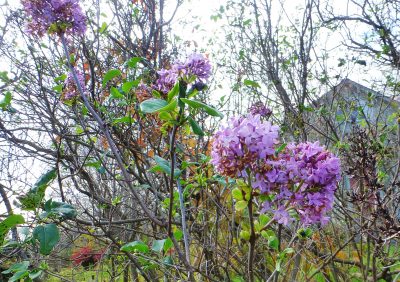
If certain woody plants have been stressed during the growing season, however, the change to cooler weather followed by some warmer weather can trigger some of the flower buds to open prematurely. This false dormancy especially affects flower buds near the tops of old-style lilacs where it is sunnier and warmer. Ornamental cherries may show sporadic flowering all over the tree where there is a southern exposure.
While fall reblooming of ornamental trees and shrubs can lead to a disappointing floral display the following spring, it is not harmful to the plant. After a less showy spring bloom period, flower buds will be produced normally. If stressful conditions caused by environmental conditions, insect pests or fungal pathogens are minimal, then a second bloom in autumn is unlikely to occur. Gardeners and landscapers can only do so much, and while the weather is out of our control, making sure plants are maintained properly to avoid stress during the summer will go a long way in helping them remain as healthy as possible.
The UConn Home & Garden Education Center supports UConn Extension’s mission by providing answers you can trust with research-based information and resources. For gardening questions, contact us toll-free at (877) 486-6271, visit our website at homegarden.cahnr.uconn.edu, or reach out to your local UConn Extension center at extension.uconn.edu/locations.
This article was published in the Hartford Courant October 18, 2025
We Asked Gardening Pros If You Should Rake Leaves From Garden Beds—And They All Agreed
The Spruce – Heather Zidack and other professionals give their insight on raking leaves from your garden beds.
Heather Zidack from the UConn Home & Garden Education Center talks to host, Stephen Thal, about the summer weather patterns, and how they have impacted our fall garden chores!
00:00:01 Stephen Thal
Hi, welcome to another segment on Focal Point. This is Stephen Thal, your host. And boy, we got another exciting program for our listeners. Today we're going to be talking about plants and gardens and how to take care of them, especially with the challenging weather- humid, hot. Oh, the plants must be having a tough time and garden things. What's happening?
00:00:27 Stephen Thal
Well, here to help us work this all out is Heather Zidack, and she's from the UConn Plant and Garden Education Center. Welcome, Heather.
00:00:40 Heather Zidack
Hi, Stephen. Thanks for having me.
00:00:42 Stephen Thal
Oh, it's always a pleasure. So what did the weather do to the plants this year?
00:00:49 Heather Zidack
So, this year was a wild year for our plants. It was a wild year for us too. Some of the weather that we noticed was quite crazy. But in particular, we had a very hot, very humid summer that led us to see a lot of fungal diseases. We got a lot of phone calls, a lot of emails, a lot of samples into our diagnostic lab that had a lot of diseases in the garden. So that was something that we saw. We actually have also been getting reports right now. People are asking us why are their lilacs blooming? And it's because of the stress that we've had this season.
00:01:28 Heather Zidack
So with that heat, that humidity, we've also had some really dry stretches that have kept us kind of right on the border of a drought. We're not quite there yet, but we are in abnormally dry conditions. So when plants are stressed, sometimes they do some really strange things and so people have been seeing their lilacs blooming in the fall when that's normally a spring blooming plant. It's not something that's normal, but it's definitely it's an environmental thing and it's not going to be like detrimental to the lilacs if you are seeing that. So it's it's worth noting, but it's not necessarily need for alarm.
00:02:06 Heather Zidack
We had earlier in the summer, we had the wildfires and smoke from that may have affected some of your plants. Because believe it or not, the air quality can affect your plants in the garden. And so that could have led to some ozone damage, which we see is like curling in the leaves. It can look like distortion in the leaves. So some weird things with that.
00:02:29 Heather Zidack
And then the other thing is that we saw temperatures whenever we went over 85 degrees, usually our common vegetables like tomatoes, peppers, things like that will actually kind of put a pause on. And so, they will not ripen or they may not fruit as heavily. So, we got some calls in saying, “Hey, why have my tomatoes been green for so long?” And it was probably because of the weather.
00:02:56 Heather Zidack
So a lot of things happening, the swings in moisture, so we'd have some really warm days, some really dry weather, and then we'd get kind of a deluge of rain. That kind of also stressed the plants out as well.
00:03:12 Heather Zidack
So we are advising right now to water your plants, especially your evergreens going into the fall. If we're not seeing an inch of rain forecasted, you want to make sure you're out there watering during any of your new plantings, any of your evergreens, anything like that.
00:03:31 Heather Zidack
The drought that we had last fall, so fall of 2024, actually caused a lot of losses in the garden for evergreens, rhododendrons, things like that in 2025 when we were coming into the spring and plants were starting to wake up. So, watering now is going to save you a headache in the spring for sure and if you've had anything like if you have had experience with like fungal disease in your garden this year we're recommending cut all of that tissue back let those leaves drop rake them up and dispose of them don't come compost it because you don't want to put it back into your garden so a lot of different weather patterns have caused the gardeners to have a little extra work this fall I think.
00:04:14 Stephen Thal
Okay so where do we go from here with the weather are we going to be bringing some plants into the house? And and we'll also be checking on the plants that have been in the house that may need some help for the fall.
00:04:32 Heather Zidack
Yeah, so it's definitely that time of year we recommend bringing in your plants when nighttime temperatures are 50 degrees or lower. And so, we've kind of been doing okay with that weather-wise but we are starting to get into that time where it's consistent and we're seeing that below 50 degrees.
So, a lot of things if you keep, you know, palms outside or if you keep any citrus trees or anything outside, they need to be in if they're not already. So, some species can be a little more sensitive, so they may have needed to come in already, like even before that 50 degree mark, but that's our rule of thumb.
00:05:13 Heather Zidack
When you start to bring them inside, definitely look them over really well, feel them over really well, make sure that the leaves are smooth, everything is healthy, you're not feeling any kind of like insects or any sticky leaves or anything like that. If you are, it is time to kind of have a little bit of a closer look, have checked out for bugs, make sure that you're not bringing anything into your house that you don't want staying there for the winter with your plants. You know, check the undersides of the leaves, check through the soil a little bit, and identify and treat any of those issues before they come into the house.
00:05:51 Heather Zidack
So, we do help homeowners if you have pictures, you can send us pictures and we can take a look to see if any of those plant related insects are anything that you need to do anything about before it comes inside.
00:06:07 Heather Zidack
You want to give your plants a chance to transition from inside to outside. So if 50 degree nights is what they're-the goal is and we've been letting the weather come down to that 50 degrees and then you're bringing it into your 68 degree house, that's an 18 degree temperature difference. So they may show signs of stress.
00:06:29 Heather Zidack
They may kind of not be used to the amount of moisture in the air in your home as compared to what was outside, especially as it starts to get a little colder and we start kicking on the furnace and the air is drier inside the home.
00:06:43 Heather Zidack
So keep an eye on your plants, monitor them. Those stress responses may happen, but don't-go ahead and-don't overreact to it. So if you see them drying out, if you see them wilting a little bit, don't change your practices too much. Continue to water as you've always watered. Continue to take all the care that you always have to make sure that they're not drying out, but you're not over watering either.
00:07:12 Heather Zidack
We see a lot of people that will over love their plants and over water them. So you end up kind of seeing things come inside, the wilt, we’ll panic and then we'll put a ton of water on it, which then sends it to swing the other way into that over watering and root rot and things like that.
00:07:30 Heather Zidack
So just keep doing what you're doing, but keep an eye on what's happening to make sure that you can respond if there is an issue.
00:07:39 Stephen Thal
Okay. And that also goes for the local gardeners too. They probably experience a lot of people requesting help during the summer and now how to make best use of their garden.
00:07:54 Heather Zidack
Yeah, yeah. And we're going to start seeing now with, you know, again, weather related, we're going to start seeing frosts. Some parts of the state may have seen them already.
If you have anything like mums or pumpkins outside, those are things that you may want to protect from those frosts.
What happens is that when the dew falls at night and it crystallizes into frost on your plant material, it can actually damage the tissue and that causes your pumpkins to rot faster. It causes a lot of tender flower petals to not look so good.
00:08:31 Heather Zidack
So, what we recommend is to either bring them inside if you just have one mum on the front step, that's easy to bring in and just leave in the kitchen overnight.
00:08:40 Heather Zidack
But if you have a larger grouping of plants or if you have some, you know, some cole crop vegetables or something like that that you may want to protect, you can use something as simple as a bed sheet or a towel even.
Never use a plastic tarp or anything to cover plants because that will just exacerbate the cold against the plant tissue, but definitely do find a way to cover them if frost is coming or bring them inside.
00:09:12 Stephen Thal
What kind of covers can you use?
00:09:14 Heather Zidack
So, anything that is fabric based is going to work really well. They do sell specific like frost covers, but you don't have to go that far.
If you have an old sheet, if you have towels, a pillowcase even, kind of depends on your plant size, but a lot of those just to keep that frost from falling onto and making contact with the plant tissue.
00:09:37 Stephen Thal
Okay so now we got to get in and roll up our sleeves and begin the work to preparing the plants as Heather has been saying earlier because of the weather and now she's trying to talk a little bit more specifically about plants that come in the house to make sure they don't have some sort of a disease, which will impact the plants that are in the house as well.
Now, is this the time too, because of the changing of the sunsets and amount of light coming in, you have to move your plants inside the house to different positions in the house.
00:10:21 Heather Zidack
So not necessarily different positions. Plants that we have indoors go through yearly cycles just like the ones outdoors. And so some of them may be able to tolerate that change in light as they adjust because it happens slowly. Always check your plant label to make sure if it needs like a full sun or indirect sun.
You know, we've talked about before those differences are kind of like if you think about a cat in the living room, right? So, if it needs bright indirect light, maybe the cat is somewhere that the light is not shining through the window but it's right next door versus if it needs bright direct light, the cat is sitting right in the window and if it needs shade, it's over by the couch and you don't see it necessarily.
So, if you always kind of think about in that way, you can remember where your plants need to be in terms of their labeling, which is important to follow.
00:11:14 Heather Zidack
But they do adapt a little bit over time when they're indoors, which is why we need to help them adapt when they go outside.
So if you keep them in a place that is draft free, bright enough for whatever their requirement is, and away from any of the heat sources, so away from any radiators, vents, anything like that that can dry them out, keep them away from like being too close to wood stoves obviously, and that will help them to not be too dry so they don't lose water as quickly. But the other thing too is that like I said, they go through those yearly cycles, so they will go dormant just like the outdoor plants.
00:11:58 Heather Zidack
Cooler temperatures, changes in light, changes in water can trigger dormancy, but it is species dependent and so with our houseplants because we keep them in a steady environment as possible, some years they'll go into dormancy, some years they won't.
And so it's just kind of knowing what plant you have and whether to expect that or not. That can be really helpful. The other quick tip with houseplants that I like to remind everybody is that we allow the soil to dry in between waterings.
00:12:32 Heather Zidack
So don't keep your soil wet when your plants are indoors. Let it dry out as much as you can in between to help prevent fungus gnats. Those are those little black flies that seem to get everywhere.
Again, follow what your plant needs for watering, but if you can stretch it and let it dry out a little bit, you're going to help reduce that issue.
00:12:54 Stephen Thal
Oh, that's great. Is this also a time to take a look at repotting any of the soils or any of the plants that we're bringing in or the house plants that have already been there.
00:13:07 Heather Zidack
You certainly can.
00:13:09 Heather Zidack
People like to repot either in the fall or in the spring. Usually when you repot in the fall, it can be good if you've had them outside and you're worried about any critters that may come in with them in the soil. It's a good time to do it.
You can do it in the spring if they've put on a lot of growth over the winter while they've been indoors.
So it all matters on checking the plant in the pot to see if there's any presence of any kind of insect or anything.
00:13:40 Heather Zidack
You're definitely going to want to change out your soil. But also if the plant is, those roots are a little too tight in the pot, it starts to get root-bound, that's more your sign of whether to do it or not. It doesn't have to be on a time frame per se.
00:13:56 Stephen Thal
Okay, this is Stephen Thal with another segment on Focal Point, and we're interviewing Heather Zidack from the University of Connecticut Plant and Garden Center up in Storrs, Connecticut.
00:14:08 Stephen Thal
And she'll give us some phone numbers that we can call regarding if you need some help with your plants or the garden that you've been doing.
Heather, you got some phone numbers we can use?
00:14:24 Heather Zidack
Absolutely.
So, if you have questions about anything in the garden, anything plant related, your house plants, anything that you have that you you keep for plant material, we can help at the Home Garden Education Center.
That number is 877-486-6271. Again, that's 877-486-6271 or you can always e-mail us at ladybug@uconn.edu. Again, that's ladybug@uconn.edu.
00:15:03 Heather Zidack
We look at pictures to help with diagnosis, so sometimes a picture says a thousand words. Also, I can give you the phone number too. It's a great time of year to be doing soil testing.
So, the Soil Nutrient Analysis Lab, their number is 860-486-4274. Again, that's 860-486-4274.
00:15:26 Heather Zidack
So, between the services in the Home Garden Education Center, we work with our plant diagnostic lab and then the soil lab. We have pretty much everything that the home gardener or plant enthusiast needs to make sure that they're keeping their plants healthy.
00:15:45 Stephen Thal
That's good.
00:15:45 Stephen Thal
What about fertilizers?
When does that come into play?
00:15:50 Heather Zidack
Yeah, that's a good question. So at this point, we should not be fertilizing anything. There are some exceptions for like lawn care and things like that, but my colleague is much more versed in that.
00:16:05 Heather Zidack
In general, it is too cold to fertilize anything right now because what's going to happen is if you were to put down any plant food,you would be pushing growth and any growth that's new on plants is very tender and very small and very susceptible to damage.
So, it'll push out new growth and then it would freeze and cause damage and not do so well for your plant. So, we don't recommend fertilizing at this point in the year.
The next time that you would be able to or you should would be for the springtime, once the soil temperatures start to climb up again and it starts to warm up.
00:16:46 Heather Zidack
If you have houseplants, you can fertilize.
00:16:50 Heather Zidack
However, some of them only need it once a year. It really depends on the species of houseplant you have.
And so again, like I talked about over loving our plants with watering, sometimes we can over love our plants with fertilizer and, you know, overfeed them. And so sometimes we don't want to do that. So it's something to be aware of.
Usually, as long as the plant is in active growth, you're able to fertilize. And so since we're kind of in that time of year where things are winding down and going to bed for the season, we just don't do it. But it all depends on what you're growing and what you have to keep an eye on.
00:17:30 Stephen Thal
Okay, what are some of the other things that we need to take care of in the fall?
We did mention, we talked a little bit about fertilizer.
We talked about bringing plants into the house. Making sure they're not bringing some critters in.
00:17:43 Stephen Thal
What about the compost pile? Is that something that we do all year round or just certain times of the year?
00:17:50 Heather Zidack
Yeah, composting is year round. So you want to make sure that you're continuously turning your compost pile. There's a couple different kinds.
So there's hot composting where you keep your compost pile at 140 degrees by turning it throughout the year.
There's also cold composting, which is what I'm a little better at, where you kind of throw it together, turn it when you can, but it takes longer and it may not necessarily take out all of the pathogens and weed seeds in the same way that hot composting will. So you have to be really careful with your compost at that point.
00:18:25 Heather Zidack
Which is a good thing to keep in mind because right now, we advise people who are doing their garden cleanup for the season.
There's a lot of controversy between that going for do I clean up in the fall or do I clean up in the spring? And so, what I tell people with that is to maintain what I call goal-oriented gardening. So, if your garden is all about pollinators and wildlife support and native plants and all of that. Definitely clean up in the spring. Don't cut back your perennials right now. You can leave your leaves a little bit. That leaves habitat options like hollow stems, leaf litter, and all of that for overwintering insects. And it leaves seed heads for birds to feed on as well as for winter interest.
00:19:16 Heather Zidack
However, if you have had a lot of disease this year and we talked about like with all the weather conditions, we saw fungal disease, people had, you know, if you had insects in your garden this year or things like that that you needed to manage, then one of the best things that you can do is clean up your garden in the fall.
00:19:37 Heather Zidack
And it goes against that instinct to leave the leaves and leave that pollinator habitat, however, it does help us to reduce our need for chemicals and other products in the spring and the following season because you're taking out anything that's potentially infected and just disposing of it right now instead of letting it overwinter and come back in the next season. So, if you've had disease in the garden and your goal is to have to try to not have that happen again next year.
You want to clean up all your leaf litter, you want to pull up all your sick plants, dispose of everything in the garbage, don't compost it. You know that you are removing some of those habitat opportunities for the pollinators, but you're keeping your plants healthy for them to come back to and find next season. So it's kind of a toss up between the two.
00:20:31 Heather Zidack
And so I always encourage gardeners to really look at their own personal goals in their garden and see what they're willing to work with. If they really want that pollinator habitat to clean up in the spring, go for it. If they want to manage the disease, then fall may be the better time. And the other thing to keep in mind that I encourage people is to think about their own time.
00:20:56 Heather Zidack
So your time is valuable when it comes to garden cleanup. And make sure you're doing what you have time for when you have the time. So I've explained this and I've talked to other gardeners about this and I am a big football fan and so on Sundays, I am watching football instead of being out in my garden, believe it or not.
And so sometimes for me, cleaning in the spring allows me to have that extra hobby and so it's kind of looking at my time and my priorities and really making sure that my garden is fitting that.
00:21:31 Heather Zidack
Because at the end of the day, we all do gardening as something we enjoy, and we want to make sure that we continue to get out there to enjoy it.
00:21:40 Stephen Thal
Okay, are there any other major things that we need to cover at this point, Heather?
00:21:46 Heather Zidack
One of the things that I definitely encourage people, like right now, if you're out in the garden, make sure that you're digging up any of your bulbs. It's the bulb time of year.
So when I say dig up bulbs, I mean all of your elephant ears, your canna lilies, your gladiolus, any of those annual bulbs should be dug up, put into paper bags for storage. If you're growing them in containers, you can just cut them back and put the container in the garage or the basement to make sure that it will stay cool, but it won't freeze.
On the other side of that, you want to start planting your spring blooming bulbs right now, you want to plant your garlic in late October, early November, you want to remove your vegetable plants that have those signs of disease, and don't compost again like I had mentioned.
00:22:39 Heather Zidack
The other thing that you want to do is you want to try to cover your soil in any of your garden beds. So a lot of the perennial garden beds that you have and a lot of your foundation plantings and things like that may already have mulch around them, so it might not be as important.
But for your vegetable gardens and things that you're turning over every year, it's important to make sure that that soil is covered for the winter. Some gardeners were able to put in some cover crops by now and have something to hold the soil, like plant material-wise, that they'll be able to turn in. However, at this point in the season, we recommend just using something like straw, leaf mulch. You can chop up your leaves and put them out onto the garden as long as they were disease free.
00:23:29 Heather Zidack
And what that does is when you break up your leaves and you chop them up first, it allows them to break down faster so that there's less cleanup for you in the spring instead of having like if you've ever seen outside the dense thick leaf patches that we tend to have in the spring where leaves have collected. You want to make sure that they're chopped up, they're fine and that they're able to be turned into the soil at the end of the season.
When you do, if you do have anything that you're turning in, so if you're going to do the leaves this fall and turn things in in the spring, it needs to be about three weeks before you're planting in the springtime. So, keep that in mind.
00:24:11 Heather Zidack
Make sure that you are cutting back any of your perennials, if fall cleanup is your goal, this is the time to do it. You want to cut back and leave one third of the perennials above the ground.
So, say you have a six inch perennial, you want to cut it back to a two inch stub and that's where you'll leave it for the fall if you decide to clean up now.
00:24:35 Heather Zidack
If conditions continue to stay dry like they have been, keep watering all of your trees, your shrubs, your perennials, especially your new plantings until the ground freezes. So we've still got a little bit of time that we should be watering with supplemental water.
We recommend one inch of water a week, which actually ends up being about, I think it's like 0.62 gallons per square foot. So that can help you kind of figure out how much water you need in a week for your plants.
00:25:07 Heather Zidack
And you want to wait till all your shrubs are dormant so their leaves have dropped before pruning in the fall. Do not prune any of your spring blooming shrubs.
So, you don't want to prune your hydrangeas. You don't want to prune your forsythia, your lilacs, anything like that because things likely already set their buds for next year already. So, if you prune them now, you could lose your flowers.
00:25:34 Heather Zidack
The other thing that we recommend is, like I said, you don't want to fertilize anymore at this point. You know, consider getting your soil tested now so that you can have those results in the spring and be able to hit the ground running.
00:25:48 Heather Zidack
And again, like I said, our office is open year-round to help support with any of these home garden houseplant questions that you may have.
00:25:59 Stephen Thal
And also you have a number of local gardeners, don't you, or grangers?
00:26:05 Heather Zidack
We do. We have county offices that will help with garden questions as well through our master gardener colleagues will help with identification and things like that. If it's disease questions, definitely send it to the Home Garden Education Center.
00:26:23 Heather Zidack
But the master gardeners at the county offices are also very well equipped to help with cultural questions, how to take care of plants, how to identify them, and some of these fall and spring cleanup tips as well.
00:26:36 Stephen Thal
Do you have many fruit plants that need to be taken care of, or are they all pretty much gone?
00:26:43 Heather Zidack
They're pretty well done the only one to keep in mind is your fall blooming raspberries or your fall fruiting raspberries those you want to prune after fruiting is complete otherwise you're going to be all set um mostly in the winter when things are totally dormant so we're looking at like March would be the time to start pruning your fruit trees.
00:27:04 Stephen Thal
Oh okay one other thing I forgot to ask you you also have to take clean your tools that you use the garden with.
00:27:12 Heather Zidack
Absolutely. That's a great winter chore. Clean your tools, especially if you're between pruning diseased plants.
The other thing is in the winter, it's great to not only clean your tools, but if you need to sharpen your tools or it's a good time also to make sure that you repaint all the handles so you can find them again when you have them in the garden.
00:27:34 Stephen Thal
Hey, Heather's going to give us the phone number one more time in case you missed it the first time.
00:27:40 Heather Zidack
Yes. So if you have any plant or garden questions, you can always call our office at 877-486-6271. Again, that's 877-486-6271.
00:27:55 Stephen Thal
That'll be great.
Well, thank you again for coming again to help our gardeners or people that have interested in starting gardens or plants or whatever. Great information.
Give my best to your whole team and I know when it comes around Christmas there's a lot of plants there that have to be protected once the season goes by.
00:28:20 Heather Zidack
Yes, yeah there's a lot of holiday plants that we could certainly talk about.
00:28:26 Stephen Thal
Okay well thank you again and wishing you and the whole team at UConn Plant and Garden Center continued success.
00:28:33 Heather Zidack
Thank you so much.
00:28:35 Stephen Thal
Stephen Thal with another segment on Focal Point.
I want to thank all of you for listening.
And a couple of things we want to remind you of is first, make sure that you wear a hat and dark glasses to protect your eyes against the sun all year around, particularly during the winter, particularly if we get snow, be a lot of glare.
00:28:59 Stephen Thal
The other item I wanted to mention is to make sure that you have an emergency plan and practice it. If you need any help with it, call your local fire department or police department and they can direct you to the proper resources to help you build one of these plans because someday that life may be somebody in your family that you save.
00:29:23 Stephen Thal
And also when you travel, make sure you know what the emergency rules are so that should you get into a situation, you know what to do.
00:29:33 Stephen Thal
So once again, thank you all for listening.
Stay safe and stay healthy.