
“Winter, a lingering season, is a time to gather golden moments, embark upon a sentimental journey, and enjoy every idle hour"
— John Boswell
Frustrated with Fungus Gnats?
Someone once said "There are two types of people in this world. People who have fungus gnats, and liars!"
It's a common issue that almost everyone has had to manage at one point or another with their houseplants. These tiny pests feed on fungus that grows on decaying root tissue in the soil, often caused by overwatering. While they may occasionally eat plant material, more often they're an indicator of a larger issue.
Scout often for an infestation, and try to let the soil dry out between waterings when possible to help keep them at bay. Chemical solutions out there are frequently short term solutions for infestations. They should be used in severe cases alongside cultural management practices for best results.
Scout for Invasives this Winter!

Invasive Phragmites asutralis (Common Reed) is especially easy to spot during the winter months while most other wetland plants collapse and become nondescript brownish patches on the landscape.
Invasive phragmites remains, standing tall in dense stands with rigid stems and large, persistent seed heads. This rhizomatous grass grows 5 to 10 feet tall, which makes it easy to spot along the frozen edges of wetlands and waterbodies. The winter visibility makes this an ideal time for landowners and managers to map infestations or plan future control efforts.

Another common observation at this time of the year is choking and girdling damage caused by invasive vines like Asiatic or Oriental Bittersweet (Celastrus orbiculatus). By bringing pruners with you as you scout, you can immediately respond to any damage you see from these vines on your property.
Out In Nature
For Connecticut Bird Enthusiasts
UConn has worked in partnership with many organizations and agencies across the state to develop an online Bird Atlas. This project has been in the works since 2018 and is continuing to develop.
The atlas contains information on birds found in Connecticut and has a block map showing where they are found. They are currently working on species accounts which have specific information on individual birds such as the whistling ducks shown in the image.

Image © Russ Smiley
False Turkeytail Fungus
Also called the golden curtain crust, Stereum ostrea is a plant pathogen and a wood decay fungus. Ostera means “oyster” and aptly describes its shell- like fruiting body which is made up of concentric circles of many colors.
It resembles the Trametes versicolor which is called the turkey tail fungus. Look for all turkey tail fungi on dead wood throughout the winter months on branches, logs, stumps of trees, especially of oaks, maples and elms. These are beneficial, aiding in the decomposition of dead wood and in recycling nutrients.

Photo by Pamm Cooper, UConn Home Garden Education Office
Native Plant: Winterberry Holly

Winterberry holly in autumn. Photo by Emily Leahy, UConn Plant Diagnostic Lab

Winterberry holly in winter. Photo by Lauren Kurtz, UConn Home Garden Education Office
Bringing a pop of red to late fall and winter landscapes, winterberries (Ilex verticillata) bear brightly colored fruit which grows in clusters along its branches. This deciduous holly is native to eastern North America. Winterberries are often grown around ponds or swampy areas, as they are well-suited for moist, acidic soil environments.
As their common name implies, this type of holly is famed for its ability to produce vibrant red fruit which brightens otherwise dreary winter landscapes. To achieve this result, proper cross-pollination of plants must occur during blooming seasons. Winterberries are dioecious – meaning they have separate male and female plants. Female plants are capable of producing berries only after being fertilized by a nearby male plant. Generally, male plants can pollinate 20 female plants when they are within a 40-foot distance of each other.
Certain cultivars of female and male plants are paired with one another according to the compatibility of their blooming times.
Berry Good Pick for Winter Interest
The Connecticut Native Perennial, Tree, & Shrub Availability List
Word from the WiSE
Women in Soil Ecology, UConn Student Chapter
The Soil Life Under the Snow
As we inch towards shorter days, colder nights, and snow covered grounds, almost everyone is bundling up in heavy coats and winter boots, but what about life within the soil? You might think that soil life abruptly stops after the first snowflake, but that is often not the case.
Moles live in tunnels underground throughout the year, however, they do not hibernate and instead dig deeper to expand their tunnels in order to find food and protect themselves from the cold. Worms burrow deep into the ground, wind into a ball, cover themselves in a protective
slime coating, and enter a dormant state called (a)estivation. Microbes, a small but mighty community in soil, are still active during winter, and some bacteria even produce a chemical similar to antifreeze! Soil contains extremely diverse and essential communities, and just because the ground is freezing doesn’t mean they do!
By Zaira O’Leary, Soil Science Master’s Student, UConn PSLA
Knowledge to Grow On
Read our Ladybug Blogs Written Weekly
Find Us in the Media

Photo by Pamm Cooper, UConn Home Garden Education Office
Upcoming Events and Things to Do
- Celebrate the New Year with a First Day Event, Hike, or Walk, January 1, Statewide
- Get out of the cold and see butterflies up close! The Connecticut Science Center's Butterfly Encounter is open! Explore their all season butterfly habitat housing over 40 species of butterflies! If you're looking to take a day trip, Magic Wings Butterfly Conservatoryis in South Deerfield MA. This conservatory hatches and maintains its butterfly population year round as well.
Educational Opportunities & Workshops
- 2026 UConn Extension Vegetable and Small Fruit Growers Conference - January 8, Storrs CT
- Basic Garden Maintenance: A Year-Long, Month by Month Plan - January 19, Vernon CT, 7-9pm
Join the Vernon Garden Club for a presentation and discussion detailing how to properly care for your perennial gardens all year long!
This free event is open to all, including non-members and non-residents of Vernon. No pre-registration required.First Congregational Church of Vernon
695 Hartford Turnpike, Vernon, CT 06066
Questions? VernonCTGardenClub@gmail.com
- Attend a UConn Master Gardener Course! (Various dates and various locations)
Join Us at Upcoming Talks
January 7, 2026 - 6:00 PM
Hosted by the Whiton Branch Library
100 North Main Street
Manchester, CT 06042
The CT Flower & Garden Show 2026
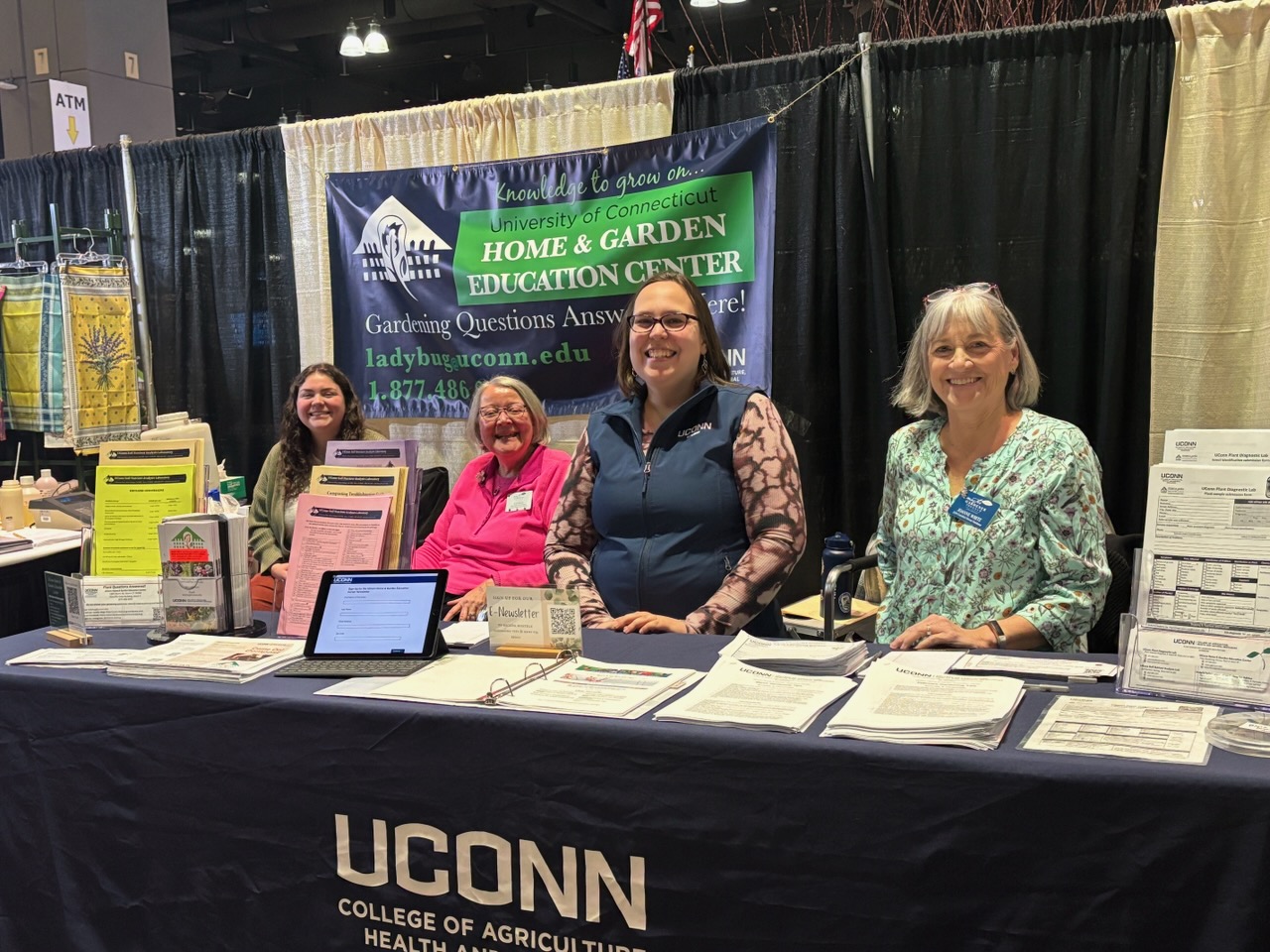
The UConn Home Garden Education Office, along with our partners in the UConn Plant and Soil Health Center will be hosting a booth again this year at the flower show!
Come visit us in the same location (Booth 417 & 419) to ask gardening questions, have your soil pH tested, and learn about our new facility opening in spring of 2026!
100 Columbus Blvd.
Hartford, CT 06103
Our staff will be presenting the following seminars throughout the weekend:
Thursday, February 19
- Invasive Plants In Your Garden, Lauren Kurtz
- 11:00 AM, Room 11
Friday, February 20
- Wild Mushrooms Just for Fun, Pamm Cooper
- 12:30 PM, Room 11
Saturday, February 21
- Goal Orientated Gardening, Heather Zidack
- 12:30 PM, Room 11
Sunday, February 22
- Soil Test to Success: Simple Numbers, Better Gardens, Avishesh Neupane
- 11:00 AM, Room 11
January Gardening Tips
- Check for frost heaving on perennials during thaws and press back into place. Cover the crowns with extra mulch as necessary.
- Start seeds of pansies, dusty miller, browallia, begonias, snapdragons, and delphiniums indoors under lights.
- Do not wait until late in the winter to order seeds as many of the seed companies most popular varieties sell out early.
- To determine how many seeds to order, map out your garden on graph paper, allowing adequate space between rows and ample room for vining crops such as pumpkins and winter squash.
- At month's end, start seeds of onions, leeks, broccoli, cabbage, and cauliflower indoors under lights.
- Check all house plants closely for insect infestations. Quarantine gift plants until you determine that they are not harboring any pests. Inspect under leaves and stems for white, cottony mealybugs, and look under leaves and on stems for scale insects.
- Don't walk on frozen grass, especially if there is no snow cover. Without the protection of snow, grass blades are easily broken causing die-back in your lawn.
- Avoid using salt to melt ice on driveways and sidewalks which may end up on the lawn, when possible use sand or kitty litter. This will help prevent salt damage to plant roots.
- Prune away storm-damaged branches promptly to prevent tearing of the bark. When pruning large limbs, always undercut first. This means to cut from the bottom up, one-third of the way through the limb, then finish by cutting from the top. The undercut keeps the limb from splitting and breaking off, which could damage the trunk and become an entryway for insects and diseases. Do not cut flush to the trunk as the collar or enlarged base of a branch produces hormones that help heal wounds.
- Bring pruning tools inside and clean them for the upcoming season. Disassemble hand pruners, and loppers. Sharpen the blades, oil the levers, and remove any rust.
- Whether you're shoveling snow, hauling firewood, out for a winter hike or playing in the snow make sure you're taking the proper safety precautions while out in the elements this winter!
We're Moving in April 2026
University of Connecticut
Roy E. Jones Building Annex
27 Manter Road, Storrs, CT, 06269
(In front of UConn Dairy Bar)

UConn Home Garden Education Office
Horticultural support and education for home garden issues related to plant health, garden pests, general plant care, and more.
UConn Plant Diagnostic Laboratory
Diagnosis of plant health and pest issues for commercial growers and the public.
UConn Soil Nutrient Analysis Laboratory
Soil chemistry testing including pH, nutrients, salinity, lime and fertilizer recommendations, and many others.
UConn Turf Diagnostic Lab
Turf diagnostics for golf courses, athletic fields, or other commercial turfgrass sites
What Stays the Same
We will continue to provide the professional and research-based support you’re used to, just in a convenient, central location. Our science-based testing protocols and result-driven recommendations reinforce our commitment to serving growers, landscapers, and the public with their plant and soil health issues.
What Gets Better
Combining current programs all under one roof provides an opportunity for more collaboration, outreach, and educational opportunities for our stakeholders.
- One easy-to-find location for soil, plant, and turf sample submissions
- Future expansion of diagnostic services available for plant and soil health analysis
- Collaboration between programs and increased opportunities for public outreach events
s.uconn.edu/plant-soil
This Month’s Newsletter Contributors:
Heather Zidack, Pamm Cooper, Lauren Kurtz, Emily Leahy, Holly McNamara, Zaira O’Leary