Newsletter

Invasives, Insect Eggs, Starting your Garden & Other April Gardening News

Close-up of a pink flower bud beginning to bloom against a soft blue sky, with the words “April 2026” in decorative lettering on the left.*

“I love spring anywhere, but if I could choose, I would always greet it in a garden."

— Ruth Stout

Big Changes for the HGEO! We're Moving This Month!

The UConn Home Garden Education Office & some of it's collaborators will be moving into the George Leigh Minor Plant and Soil Health Center on the week of April 27th. During the move, we will be closed to the public with limited phone/email availability to allow for a smooth transition. Our office be closed April 27th through May 1st and will reopen May 4th to help with your gardening needs, just in time for the growing season!

Closures may also impact the Soil Nutrient Analysis Lab and the UConn Plant Diagnostic Lab. Please check with them directly for more information regarding office closures during the move.

Living room filled with stacked cardboard moving boxes and numerous potted houseplants, with a floor lamp and a tall stack of books along the wall.
Photo by Dina Badamshina on Unsplash

Save the Date: Saturday, May 16th 2026

To celebrate the grand opening of the George Leigh Minor Plant & Soil Health Center we will be hosting an Open House with our partners in the Plant Diagnostic Lab, the Soil Nutrient Analysis Lab and the Department of Plant Science & Landscape Architecture.

Join us for tours of the new facility, family friendly activities, educational demonstrations, and more! 


 Catch Invasives in April

In April, many invasive plants are among the first to leaf out, making them easier to spot before other vegetation fills in.

Watch for green patches of lesser celandine carpeting moist lawns, stream banks, and woodland edges. The early leaves of  Japanese honeysuckle vines can be found climbing shrubs and fences. Invasive shrubs including Japanese barberry and  multiflora rose leaf out early and are seen on woodland edges and interior woods. This is an ideal time to scout your property, flag infestations, and plan management before these species flower and set seed later in the season. 

The First Signs of Spring: Spotting Invasive Plants

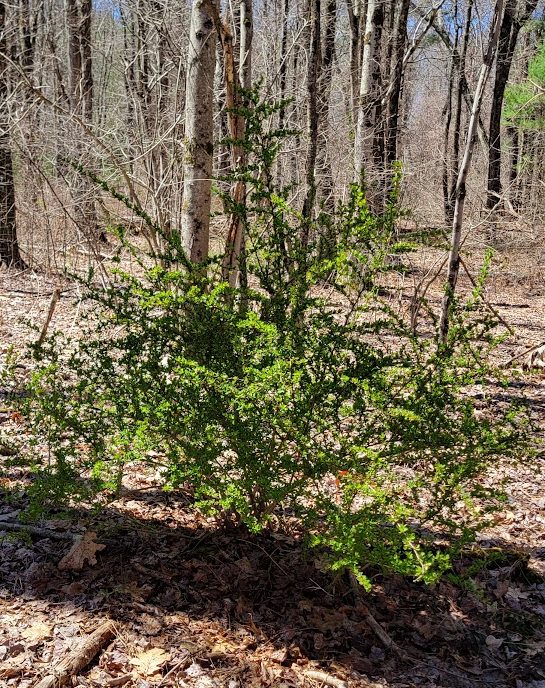
Bright green barberry shrub with small leaves growing among leaf litter in a leafless deciduous forest, with tall bare trees and blue sky in early spring

Bayberry in April. Photo by L. Kurtz, UConn Home Garden Education Office


 Interesting Insects: Scout for Egg Masses

Early spring is a great time to scout for pest eggs before the weather warms up enough for them to hatch. Finding and destroying egg masses before they hatch is a very effective method of pest control in your garden, landscape, and lawn. Three major pest eggs to look out for at this time of year are the eastern tent caterpillar, spongy moth, and spotted lanternfly.  

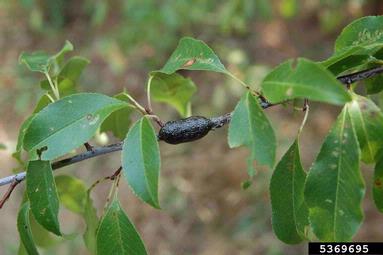
Eastern tent caterpillars are best known for the webs they build in the forks of tree branches in spring and early summer. Their egg masses hatch right as trees leaf out, so make sure to look for them before tree buds begin to open! These one-inch-wide egg masses are commonly found wrapped around small twigs on cherry, crabapple, and apple trees. Prune or peel them off and destroy.

Close-up of a twig with green oval leaves and a dark, elongated gall or insect casing attached to the branch.
Brian Kunkel, Bugwood.org

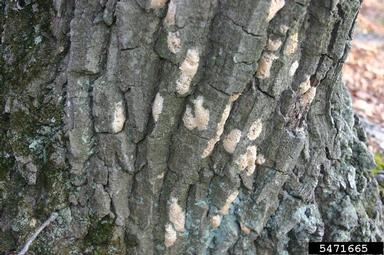
The Spongy Moth is an invasive species that defoliates hardwoods in New England. Eggs were laid in the summer and have overwintered on tree trunks, branches, stumps, and sometimes stone walls or buildings. The egg masses appear tan and velvety. The eggs hatch in May, so it’s important to scout them out and destroy them now. They can be scraped or brushed off into a bucket of soapy water or squished into the ground.

Close-up of rough gray tree bark marked with scattered pale, oval patches clustered along the crevices.
Leslie J. Mehrhoff, University of Connecticut, Bugwood.org

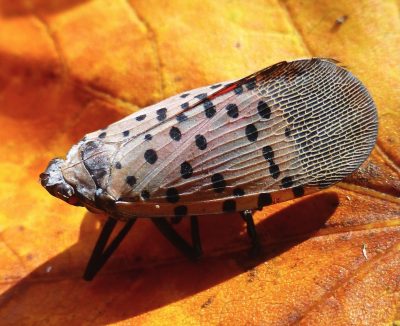
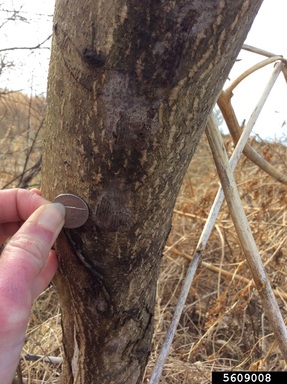
Finally, be on the lookout for Spotted Lanternfly egg masses. This insect is invasive and destructive to grapevines, hops, stone fruit trees, and hardwood trees. It lays its eggs on any hard surface, such as trees, stones, fences, firewood, or vehicles. Egg masses will appear as columns of brownish seed-like deposits, about an inch long. When you locate egg masses, first smash them, and then scrape them off the surface into a plastic zip bag filled with hand sanitizer or rubbing alcohol. Then, zip the bag shut and throw it away. Finally, report the location of egg masses to the CT Agricultural Experiment Station. 

Close-up of a tree trunk with rough, dark bark, showing a coin held against the trunk for size comparison in a dry, grassy woodland setting
Sara Lalk, Clemson University, Bugwood.org

 When Do I Get to Start Gardening?

When we have a few days of warm, sunny weather, gardeners get excited to get out and get to work!

Experienced gardeners tend to observe patterns and find natural milestones of when to start doing certain tasks. As an example, when the forsythia bloom, we often simultaneously see more activity in the garden and in the soil. This can act as a cue for certain management strategies in the garden.

If you dive into the phenology of our plants and insects, you will find that temperature consistency in various environments or conditions (soil, and air during the day or at night) fall pretty close in step with these observations, adding some scientific support to these methods.

However, New England Springs can throw us a curveball from time to time, and unpredictable conditions can throw our schedules significantly. Not too long ago, a late spring frost damaged many plants already in the ground!  

To take it a step further, looking at Growing Degree Days can help you determine when specific species of plants or insects may be emerging. Use this indicator to help you identify when to implement preventative measures for tricky garden pests or to help you determine if it's time to clean out your winter pollinator habitat with greater confidence. 

For a strong garden strategy, use a combination of tools including growing degree day calculators, soil temperature monitors, and your own observations of phenology to help you determine when the best time for any activity garden is for your specific location.


Native Plant Highlight: Sweet Fern

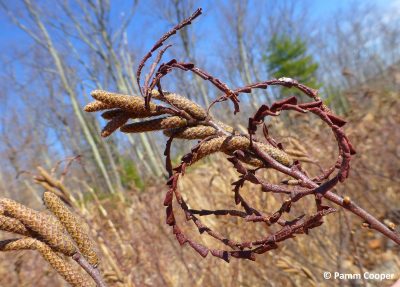
Close-up of sweet fern twigs with emerging curled leaves and fuzzy brown catkins, set against a woodland background of dry grasses and leafless trees under a blue sky.
Sweet Fern starting to leaf out in March. Pamm Cooper, UConn Home Garden Education Office

Sweet fern, Comptonia peregrinais a native shrub commonly found in acidic, dry, sandy soils. It is usually found in full sun but also can tolerate partial shade.

Look for it on slopes, roadsides, and disturbed sites such as power line rights-of-ways. Its fernlike leaves are aromatic when crushed. It flowers as early as March as it begins to leaf out. It is superb as a soil stabilizer on sandy slopes and where sandy soils support little else. It can form colonies over time via strong rhizomes.

Learn More About Sweet Fern

The CT Native Plant Availability List: Updated and even MORE user-friendly!

This native plant guide was created to assist municipalities, conservation organizations, homeowners, landscape architects, designers, and contractors with locating native plants for habitat restoration and wildlife enhancement.

The Connecticut Native Plant Availability List, by UConn Extension and CT DEEP Wildlife Division, identifies nurseries and garden centers that grow/sell native trees, shrubs, and perennials. Along with several nurseries that are new to the list, we have also added the ability for users to view the Availability List sorted by Nursery! 

CT Native Perennial, Tree & Shrub Availability List


Word from the WiSE

Women in Soil Ecology, UConn Student Chapter

Wait Now, Thrive Later: Soil Compaction 

This month, we’re bringing you a word on preventing soil compaction with spring patience. As temperatures rise heading into April, it’s exciting to start thinking about spring garden preparations. After a long winter and snowmelt, our soils are holding plenty of moisture, so giving them a little extra time can make a big difference. Working in soil that’s too wet, whether it be by walking on it or using equipment, can lead to soil compaction, sometimes referred to as the “silent thief” of plant growth. Compacted soil reduces the space roots need to grow, making it harder for plants to access water and nutrients.
The good news? It’s easy to check if your soil is ready. Just grab a handful of your soil and squeeze it and if it crumbles apart, you’re good to go! If it sticks together in a clump, it’s best to wait a little longer. A bit of patience now helps to create healthier soil, stronger roots, and a more successful garden all season long. Your plants will thank you! 

By Josenia Lopez, Plant Science Undergraduate Student


Weather Outlook

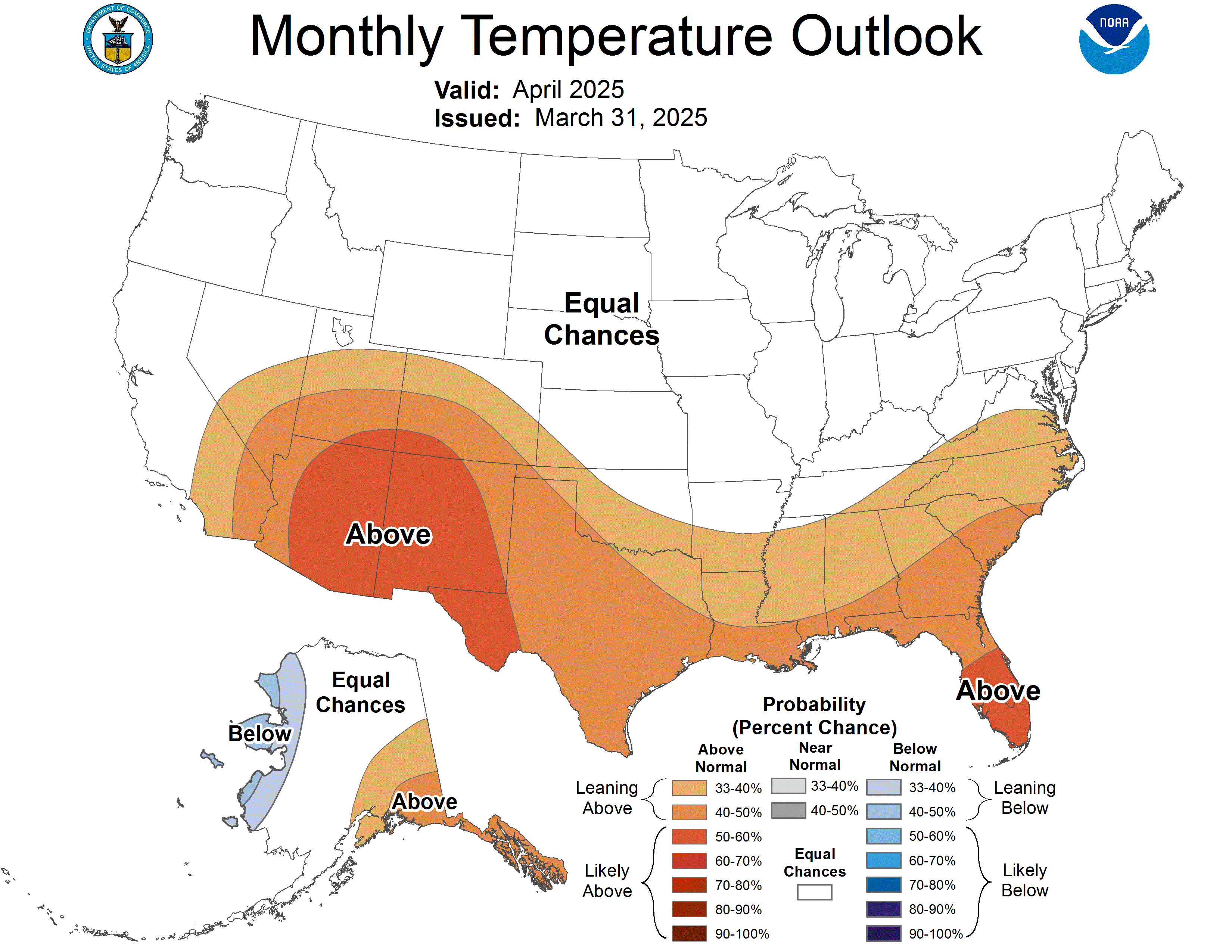
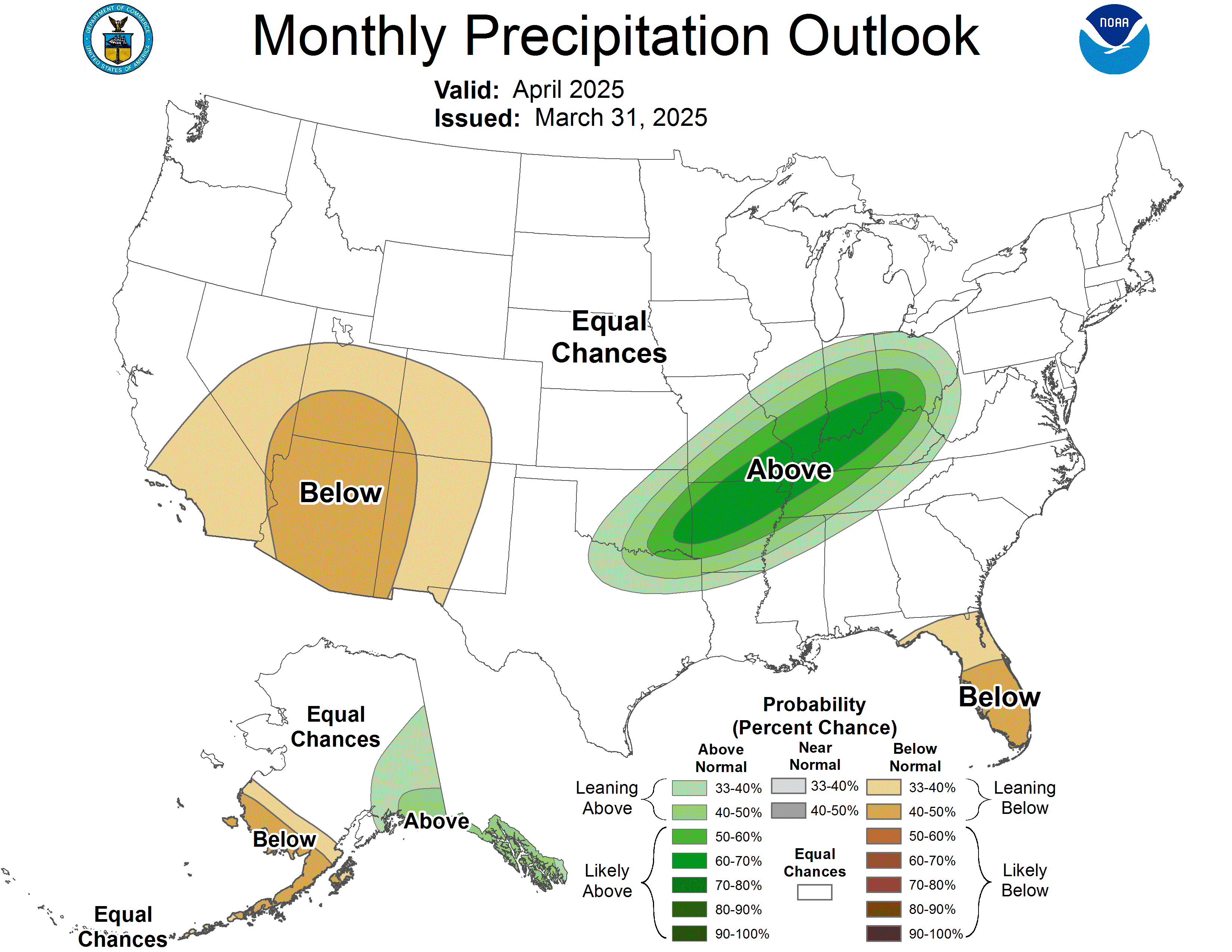
A seasoned gardener always keeps their eye to the sky at any time of year! Maps and the 30 day outlook from NOAA will help you stay prepared for any and all of your gardening chores! (Click image to see larger map.)

Monthly Temperature Outlook Map of United States
Monthly Precipitation Outlook Map of United States

Upcoming Events and Things to Do

        • Celebrate Earth Day (Apr. 22) & Arbor Day (Apr. 24) with celebrations around the state!
        • George Leigh Minor Plant & Soil Health Center Open House - May 16th, Storrs CT

        Join Us at Upcoming Talks

        Slime Molds & Lichens with Pamm Cooper
        April 13, 2026 - 1:00 PM
        Hosted by the Avon Garden Club
        The Church of St. Ann, 289 Arch Rd., Avon, CT  

        April Gardening Tips

            • Pull back mulch from perennials to allow the soil to warm up but be prepared to temporarily cover them if heavy frosts are predicted.
            • Freezing temperatures don’t harm pansies, but if they have been grown in a greenhouse they should be gradually exposed to outdoor temperatures before planting. Flowers can be damaged in frosts, but plants will survive.
            • Weather permitting, direct sow​ ​peas, ​carrots, ​radishes, ​lettuces, ​and​ ​spinach every two weeks through mid-May for staggered harvests.
            • Don't wait too long to remove mulches from strawberries. Once the leaves have emerged from under the straw and yellowing is evident, pull the mulch away from the tops of the plants and tramp it down between the rows. Keeping the base of the plants mulched helps keep the berries clean, controls weeds, and conserves moisture.
            • Check​ ​fruit​ ​trees​ ​for​ Eastern ​tent​ ​caterpillars, ​they​ ​emerge​ ​around​ ​the​ ​same​ ​time​ as ​leaves​ ​sprout.​ ​Blast​ ​nests​ ​with a​ ​strong​ ​spray​ ​of​ ​water​ ​to​ ​destroy​ ​them.
            • Apply pre-emergent crabgrass weed control when soil temperatures reach 50°F. Use a tool like this soil temperature map to track your timing. 
            • Do not use a pre-emergent weed control if you are trying to germinate seeds in the same area.
            • Complete​ ​removal​ ​of​ ​diseased, ​weak, ​or​ ​crossing​ ​branches​ ​on​ ​shrubs​ ​and​ ​small​ ​trees.
            • Place peony supports.
            • Start cleaning containers and pots so they are ready for planting.
            • Divide overcrowded summer or fall blooming perennials.


            We're Moving in April 2026

            New Location: 
            George Leigh Minor Plant and Soil Health Center
            University of Connecticut
            Roy E. Jones Building Annex
            27 Manter Road, Storrs, CT, 06269
            (In front of UConn Dairy Bar)
            Map of the Jones Annex across from the dairy bar

            UConn Home Garden Education Office

            Horticultural support and education for home garden issues related to plant health, garden pests, general plant care, and more.

            UConn Plant Diagnostic Laboratory

            Diagnosis of plant health and pest issues for commercial growers and the public.

            UConn Soil Nutrient Analysis Laboratory

            Soil chemistry testing including pH, nutrients, salinity, lime and fertilizer recommendations, and many others.

            UConn Turf Diagnostic Lab

            Turf diagnostics for golf courses, athletic fields, or other commercial turfgrass sites

            What Stays the Same

            We will continue to provide the professional and research-based support you’re used to, just in a convenient, central location. Our science-based testing protocols and result-driven recommendations reinforce our commitment to serving growers, landscapers, and the public with their plant and soil health issues.

            What Gets Better

            Combining current programs all under one roof provides an opportunity for more collaboration, outreach, and educational opportunities for our stakeholders.

            • One easy-to-find location for soil, plant, and turf sample submissions
            • Future expansion of diagnostic services available for plant and soil health analysis
            • Collaboration between programs and increased opportunities for public outreach events
            Watch for More Information Soon
            s.uconn.edu/plant-soil

            This Month’s Newsletter Contributors: 
            Heather Zidack, Pamm Cooper, Lauren Kurtz, Holly McNamara, Josenia Lopez

            Snow Cover, Lighting Needs, Snow Fleas, and More March News

            Purple and white crocus flowers blooming from the soil with green grass surrounding them, accompanied by bold text reading “March 2026.

            “March is a month of considerable frustration - it is so near spring and yet across a great deal of the country the weather is still so violent and changeable that outdoor activity in our yards seems light years away."

            — Thalassa Cruso

            We've Had a Lot of Snow - What Does it Mean for our Gardens?

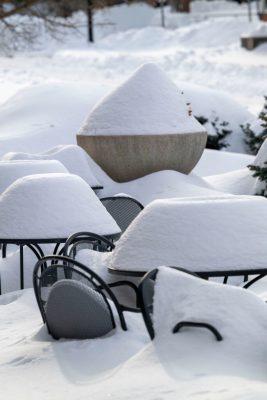
             Outdoor metal tables and chairs covered in deep snow, with large mounds of snow piled on top and around them in a winter landscape.
            Photo by Sean Flynn/UConn Photo

            It's been a temperamental winter! With extreme cold and lots of snow, many have asked us what to expect for their garden plants and even pest populations.
            Snow acts as nature's insulation during the winter. A heavy layer of snow will help keep temperatures at and below the soil level stable when compared to air temperatures like the blustery cold we've experienced this winter. Plant root zones are quite content with both a consistent temperature, and lots of available water about to saturate their root systems with the snow melting and forecasted rain.

            The bigger risk to plants is freezing and thawing. Snow weighing down branches can also lead to physical damage in the form of broken branches. As the snow thaws and refreezes, ice crystals surrounding evergreen needles can cause damage as well. In the more mild winters we've observed in previous years, freeze and thaw cycles lead to frost heaving, which leaves plant roots susceptible to winter damage.

            Piles of snow mixed with de-icing salts can cause trouble if on or near ornamental plants. Be sure to flush these areas with clean water in the spring to help reduce salinity in the soil. 


             Lighting Needs for Starting Seeds Indoors

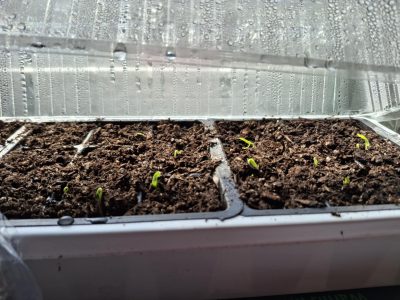
            Seed tray with soil-filled compartments and tiny green seedlings emerging. Clear plastic lid with condensation droplets, indicating a humid environment.
            Photo by Heather Zidack, UConn Home Garden Education Office

            Most windowsills in Connecticut are not bright enough or warm enough in late winter for starting seeds indoors.

            For sturdy seedlings, you’ll want to choose bright, full‑spectrum lights. Use LED or fluorescent fixtures rather than incandescent bulbs and keep them six to eight inches above the seedlings. Raise the lights as seedlings grow to prevent burning the leaves or leggy growth. Aim for 14 to 16 hours of light per day and use a timer, so seedlings get consistent lighting each day.


             Interesting Insects: Snow Fleas

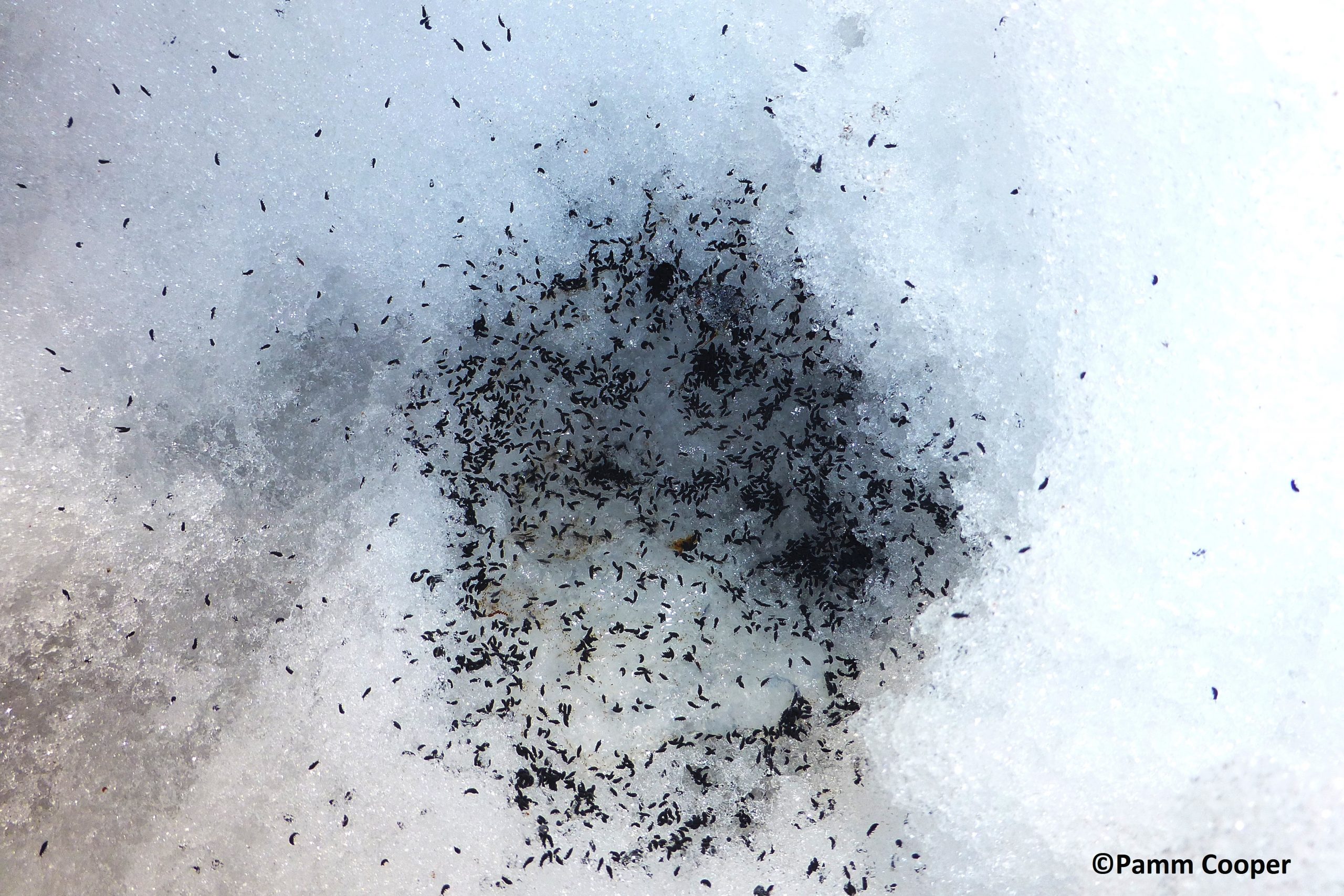
            Snow fleas (Hypogastruna nivicola)  are commonly seen during the winter months, especially against the backdrop of snow.

            They move in little jumps akin to fleas, but do so by flicking a furcula which sends them airborne to some extent. Click beetles also use a furcula in a similar fashion. These springtails  eat organic matter such as leaf litter, and can be found in damp environments year-round. 
             

            Cluster of tiny dark springtails gathered in a shallow depression in the snow, creating a dense patch against the white background

            Photo by Pamm Cooper, UConn Home & Garden Education Office


             Increasing Humidity for Houseplants

            The start of spring signals houseplants to resume active growth. To maintain healthy houseplants during this stage of their life, ensure proper humidity conditions in the growing environment are met.

            Spring air is often dry, depleting plants of moisture necessary to maintain their vigor. To promote humidity, place plants atop a tray of water with pebbles, mist occasionally, or set up a humidifier nearby.  Do not mist leaves, however, since this can create a favorable environment for disease. 

            Spring into action: easy tips for thriving houseplants


            Word from the WiSE

            Women in Soil Ecology, UConn Student Chapter

            Top Soil Tragedy: The Invasive Jumping Worm

            The invasive jumping worm, resembling the European earthworm, is typically identified by the thick white band encircling the body (clitellum), their “jumping” and erratic movements, and are typically surrounded by coffeeground-like castings.

            This pest is becoming a prominent issue in Connecticut, rapidly devouring organic matter and altering soil properties. Unlike the European earthworms, jumping worms produce castings that are hardened via mucus into clumps, and turn the top layer of soil rapidly into a heavily granular texture. These large castings negatively influence the surrounding environment and plants, making it harder for plant roots to securely anchor into the ground, take up water, nutrient absorption, and can cause rapid decline within an
            area.

            As of now, there is no standard method of eradicating or controlling the jumping worm population, however, there are some steps you can take to stay proactive and protect against the wicked worm, such as inspecting any root balls before planting, and using soil produced from a reputable source.

            By Zaira O’Leary, Soil Science Master’s Student, UConn PSLA


            Weather Outlook

            A seasoned gardener always keeps their eye to the sky at any time of year! Maps and the 30 day outlook from NOAA will help you stay prepared for any and all of your gardening chores! (Click image to see larger map.)

                Temperature map

            Precipitation Outlook


            Upcoming Events and Things to Do


                Educational Opportunities & Workshops


                      Join Us at Upcoming Talks

                      How to be an IPM Detective with Heather Zidack
                      March 5, 2026 - 1:00 PM
                      Hosted by the Wethersfield Garden Club
                      Solomon Welles House, Wethersfield, CT
                      Event Link - Please RSVP to wethersfieldgardenclubest1926@gmail.com

                      Good Bug/Bad Bug with Pamm Cooper
                      March 10, 2026 - 12:15 PM
                      Hosted by Leete's Island Garden Club
                      Nathaniel Greene Community Center
                      Guilford, CT

                      Gardening with Native Plants with Pamm Cooper
                      March 16, 2026 - 6:30 PM
                      Hosted by the Lutz Children's Museum
                      Manchester, CT

                      Connecticut Butterflies with Pamm Cooper
                      March 23, 2026
                      Hosted by East Hartford Garden Club
                      617 Hill St. East Hartford, CT


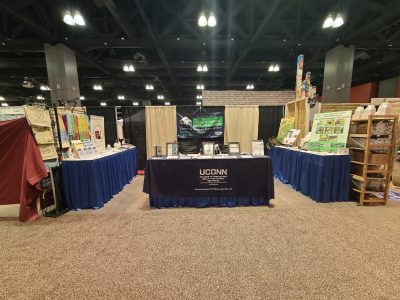
                      The CT Flower & Garden Show 2026

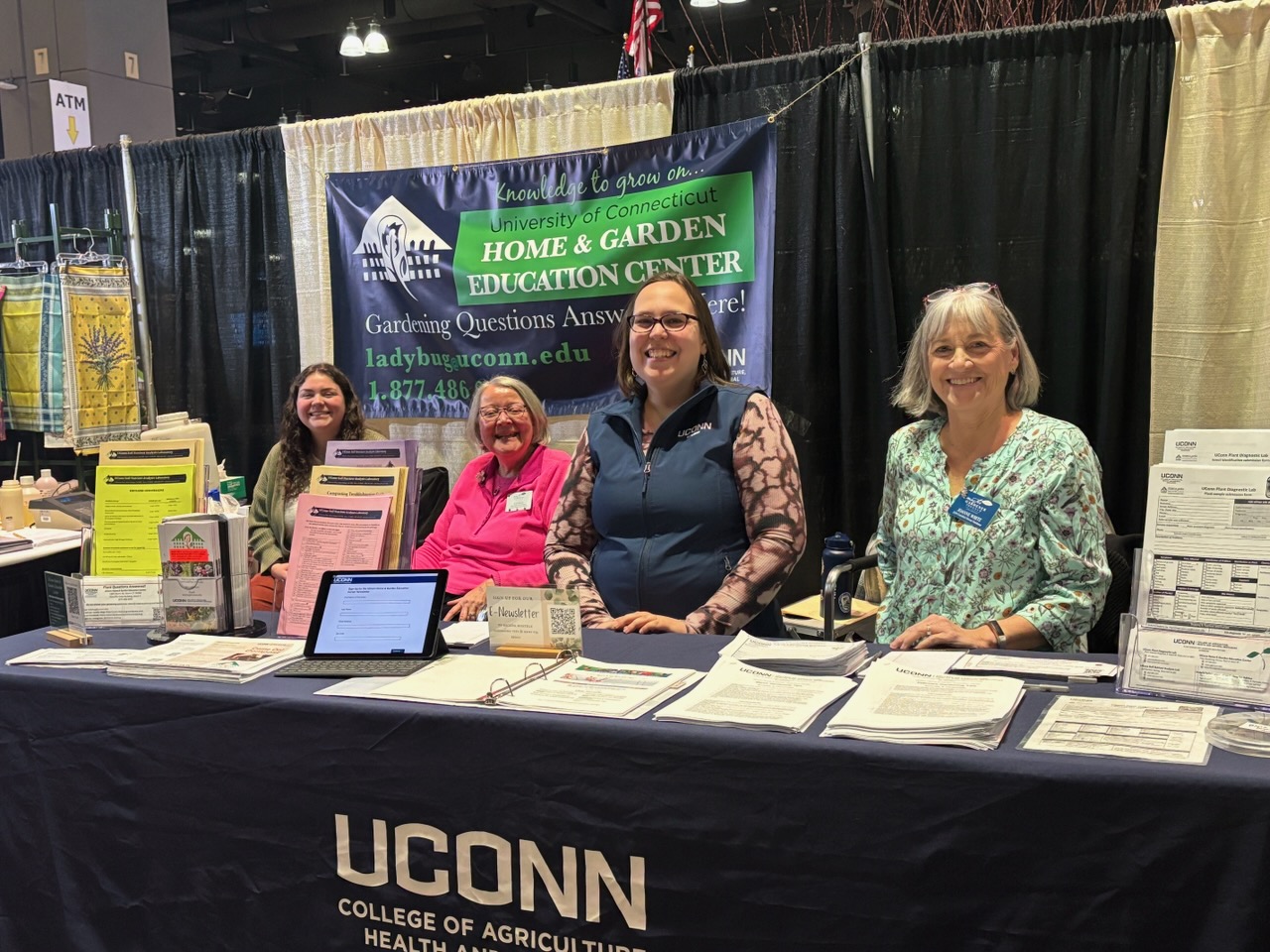
                      UConn booth with a central table displaying informational materials, flanked by blue‑skirted display tables on both sides inside a large convention hall.

                      Thank you to all of the volunteers, staff, and visitors that were part of making our booth a success! Mark your calendars! We'll be there again Feb. 18. - Feb 21 2027! 


                      March Gardening Tips

                        • Seeds of annuals that require 10-12 weeks of growth before transplanting can be started indoors now.
                        • Using sterile growing mix for starting seeds reduces problems with damping-off fungi. Avoid overwatering, which encourages root rots.
                        • Move woody plants before they begin new spring growth; transplant as soon as the soil is workable.
                        • Prune out and destroy dark, swollen black knot galls on twigs of cherry and plum before budbreak. On trees, shrubs, fruiting bushes and vines, prune off and destroy cankered twigs and any branches showing dieback. Prune shortly before budbreak, or wait until just after leaves have expanded.
                        • When buying houseplants in winter, be sure to wrap them well for the trip home and, if possible warm up the car. This prevents the foliage from freezing and protects tropicals from drafts.
                        • Check all house plants closely for insect infestations. Quarantine gift plants until you determine that they are not harboring any pests. Inspect under leaves and stems for white, cottony mealybugs, and look under leaves and on stems for scale insects. 
                        • Carefully remove winter mulches from planting beds as snow melts and temperatures warm but leave it nearby so that tender plants may be recovered if there is a frost.
                        • After the snow melts, flush areas that have been exposed to de-icing salts around the roots with fresh water.
                        • Keep any birdseed and pet food that is stored in the garage in tightly covered containers to prevent rodents and wildlife from getting into it.
                        • Start cleaning containers and pots so they are ready for planting.
                        • Save plastic milk jugs or 2-liter containers to use as individual hot caps or cloches. They will fit nicely over small garden plants, creating a free miniature greenhouse.


                        We're Moving in April 2026

                        New Location: 
                        George Leigh Minor Plant and Soil Health Center
                        University of Connecticut
                        Roy E. Jones Building Annex
                        27 Manter Road, Storrs, CT, 06269
                        (In front of UConn Dairy Bar)
                        Map of the Jones Annex across from the dairy bar

                        UConn Home Garden Education Office

                        Horticultural support and education for home garden issues related to plant health, garden pests, general plant care, and more.

                        UConn Plant Diagnostic Laboratory

                        Diagnosis of plant health and pest issues for commercial growers and the public.

                        UConn Soil Nutrient Analysis Laboratory

                        Soil chemistry testing including pH, nutrients, salinity, lime and fertilizer recommendations, and many others.

                        UConn Turf Diagnostic Lab

                        Turf diagnostics for golf courses, athletic fields, or other commercial turfgrass sites

                        What Stays the Same

                        We will continue to provide the professional and research-based support you’re used to, just in a convenient, central location. Our science-based testing protocols and result-driven recommendations reinforce our commitment to serving growers, landscapers, and the public with their plant and soil health issues.

                        What Gets Better

                        Combining current programs all under one roof provides an opportunity for more collaboration, outreach, and educational opportunities for our stakeholders.

                        • One easy-to-find location for soil, plant, and turf sample submissions
                        • Future expansion of diagnostic services available for plant and soil health analysis
                        • Collaboration between programs and increased opportunities for public outreach events
                        Watch for More Information Soon
                        s.uconn.edu/plant-soil

                        This Month’s Newsletter Contributors: 
                        Heather Zidack, Pamm Cooper, Lauren Kurtz, Emily Leahy, Zaira O'Leary

                        Tree ID, The Winter Garden, Birding, and other February News

                        Snow‑covered stone wall in front of a red barn and outbuildings under a winter sky, with “February 2026” written in pink script across the top.

                        “Every February, when the days grow long enough, the sun brings hope for new beginnings."

                        — Louise Hay

                        Identifying Trees in Winter

                        Snow-covered landscape with a large tree in the foreground, a wooden bench by a frozen pond, and bright sunlight shining through the tree’s branches against a clear blue sky.
                        Photo by Sean Flynn/UConn Photo

                        Believe it or not, winter is a great time to flex your tree identification skills. During the growing season, we have leaf shapes and arrangements to help us, but in the winter we have to look closer at the tree itself for answers. 

                        Instead of leaves, closely examine bark, twigs and buds in the winter for clues. Assess the branching pattern, overall size and environmental location for other hints. 

                        Like a proper gumshoe, check the ground for dropped leaves - keeping in mind that dropped leaves may be from the tree in question, or neighboring trees. These are best used for confirmation in addition to other characteristics.

                        There are plenty of resources and field guides out there to help you hone your skills. If you don't have a guide on hand, get good pictures so you can check them against a field guide when you are home. You can always send pictures to us for additional help! 


                        Gardening for Winter Interest

                        Dried coneflower stems in winter, each topped with a small mound of snow against a soft, snowy landscape.
                        Photo by Lauren Kurtz

                        Radiant berries, eye catching bark, snowcapped seeds, golden columnar grasses with feathery tops, and persistent green foliage are sure to brighten up the garden during the darkest months of year. Use this article to start planning now to enjoy your garden even more next winter.


                        Winter Birding: Horned Larks

                        Winter birding gets very interesting as many species are here only until early spring, and you need to get out soon to see them. The shoreline is a great place to find sanderlings, ruddy ducks, Brandt geese, dunlins and other winter visitors, but inland has its own thrills for winter birders.

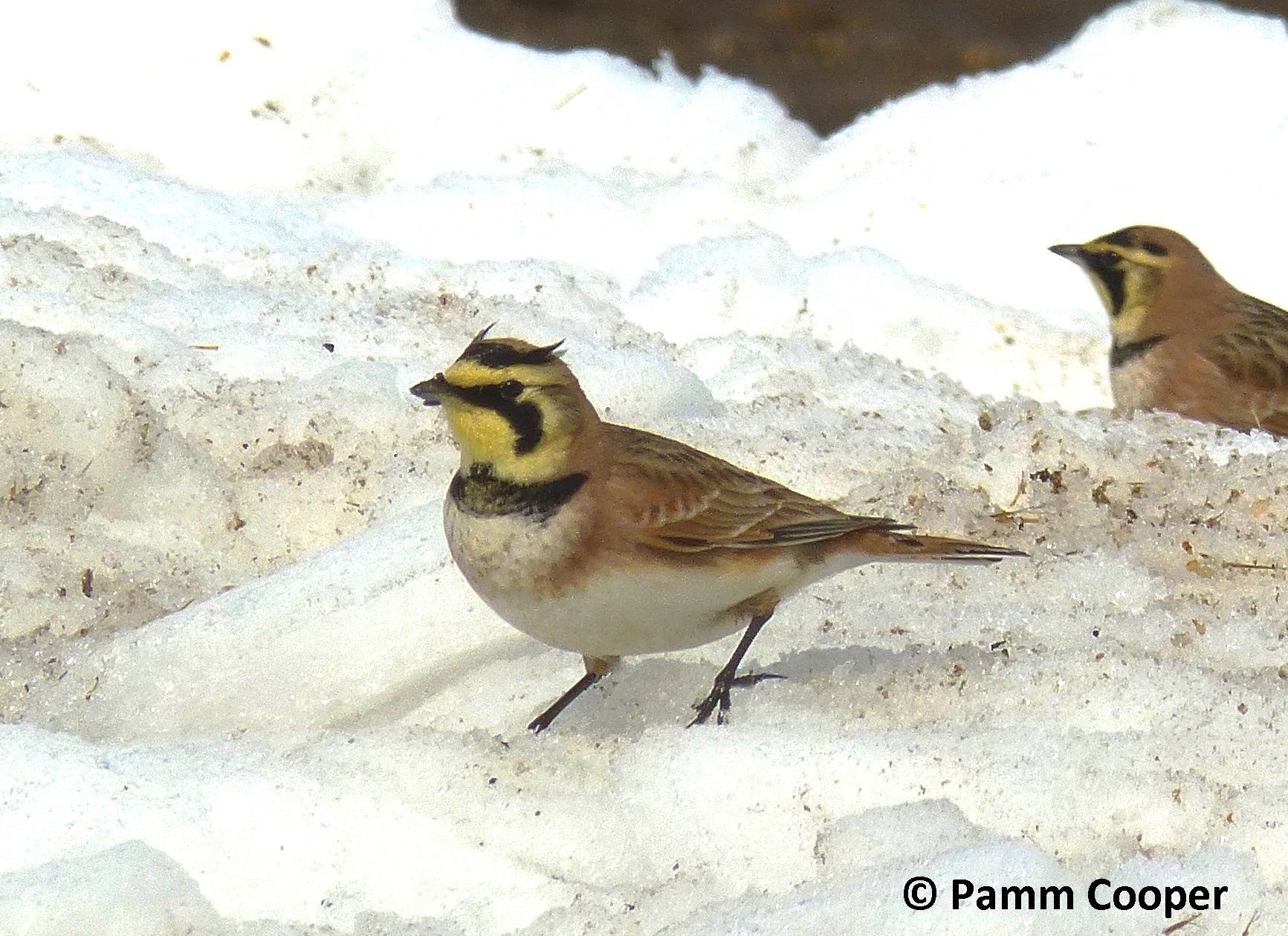
                        Horned larks are just one- look for these where snow melts near fields and pastures where seed is abundant. We have these birds now at UConn's Horsebean Hill along the roads between pastures.  They sometimes can be found at Meigs's Point, Hammonasset State Park, around the parking lot and grassy areas.

                        Two horned larks standing on snow, showing their yellow and black facial markings and brown wings.

                        Image © Russ Smiley


                        Native Plant: Bayberry

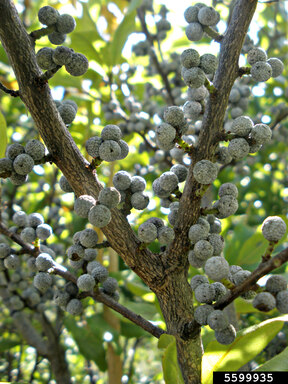
                        Clusters of small, round, grayish wax-coated berries growing tightly along the woody branches of a shrub, surrounded by green foliage
                        Photo by Ansel Oommen, Bugwood.org

                        Native to North America, bayberry (Myrica L.) is a deciduous shrub prevalent across eastern regions of the U.S. Northern bayberry (Myrica pensylvanica) is the most prominent variety in coastal areas of the northeast. Thus, it prefers moist, acidic soil with full sun and is tolerant of shoreline conditions like salt spray and high winds. Northern bayberry also withstands periods of drought. Shrubs grow in clusters, often along slopes or banks, acting as a means of control against erosion. 

                        Its dense, gray-green foliage has a narrow shape and a glossy appearance. Resin glands on leaf undersides produce a pleasant aroma when crushed. Northern bayberries are often dioecious—male and female flowers are on separate plants. Male and female flowers are both arranged in catkins. Male flowers are shades of dull yellow and green, while female flowers do not exhibit significant coloring—also lacking both sepals and petals. In the summer, female plants alone produce small, waxy fruit, provided that they are wind pollinated. Drupes can appear gray, white, or dull blue. Wildlife, mostly birds, utilizes them as a source of food. Bayberry fruit remains on shrubs until the following spring, sustaining the shrub with interest in appearance throughout all seasons.

                        Learn About Northern Bayberry

                        The Connecticut Native Perennial, Tree, & Shrub Availability List


                        Word from the WiSE

                        Women in Soil Ecology, UConn Student Chapter

                         Biochar: Turning Waste into Soil Opportunity

                        This month, we’re bringing you a word on biochar—a carbon-rich material made by heating biomass (like wood chips, manure solids, or crop residues) under low-oxygen conditions. Think of it as “charcoal for soils,” designed not to burn, but to stay stable and interact with soil processes over the long term.

                        Why is biochar getting so much attention? First, it can help build soil carbon because a portion of biochar is resistant to decomposition, allowing carbon to remain in soil longer than many fresh organic inputs. Depending on the biochar type and the soil it’s applied to, biochar may also improve water holding, aggregate stability, and nutrient retention by increasing surface area and creating more sites that hold onto nutrients. In acidic soils, some biochar can even act as a mild liming material, nudging pH upward—though the effect varies a lot by feedstock and production temperature.

                        A quick note: biochar isn’t “one-size-fits-all.” Some biochar can contain salts or trace contaminants, and fresh biochar may temporarily tie up nutrients if it isn’t “charged” first. A practical tip is to pre-condition biochar by mixing it with compost, manure, or a nutrient solution before application, then incorporate it ahead of planting so it has time to equilibrate with the soil.

                        Biochar can be a powerful tool—especially when matched thoughtfully to soil needs and management goals.

                        By Zheng Yiling, Soil Science Graduate Student UConn PSLA


                        Weather Outlook

                        A seasoned gardener always keeps their eye to the sky at any time of year! Maps and the 30 day outlook from NOAA will help you stay prepared for any and all of your gardening chores! (Click image to see larger map.)

                            Temperature map

                        Precipitation Outlook


                        Upcoming Events and Things to Do

                          • Nutmeg State Orchid Society Show and Sale
                            • West Harford Meeting & Conference Center, West Hartford, CT.
                            • March 21 12:00 PM - 5:00 PM
                              March 22 9:00 AM - 4:00 PM

                          Educational Opportunities & Workshops


                              The CT Flower & Garden Show 2026

                              The UConn Home Garden Education Office, along with our partners in the UConn Plant and Soil Health Center will be hosting a booth again this year at the flower show!

                              Come visit us in the same location (Booth 417 & 419) to ask gardening questions, have your soil pH tested, and learn about our new facility opening in spring of 2026! 

                              February 19th - 22nd
                              Connecticut Convention Center
                              100 Columbus Blvd.
                              Hartford, CT 06103

                              Volunteers at the HGEC Booth at the CT Flower & Garden Show 2025

                              Our staff will be presenting the following seminars throughout the weekend:

                              Thursday, February 19

                              • Invasive Plants In Your Garden, Lauren Kurtz 
                                • 11:00 AM, Room 11 

                              Friday, February 20

                              • Wild Mushrooms Just for Fun, Pamm Cooper
                                • 12:30 PM, Room 11

                              Saturday, February 21

                              • Goal Orientated Gardening, Heather Zidack
                                • 12:30 PM, Room 11

                              Sunday, February 22

                              • Soil Test to Success: Simple Numbers, Better Gardens, Avishesh Neupane
                                • 11:00 AM, Room 11

                              February Gardening Tips

                              • This is the time to start small-seeded flowers such as begonias and petunias.
                              • If you’re starting seeds under fluorescent lights, check the light tubes for signs of age. Dark rings on the ends of tubes means they should be replaced. Dispose of properly.
                              • If you potted bulbs for forcing last fall, check their progress. Soil should be barely moist. If tips have sprouted and have a few inches of growth, bring the pot into a cool, bright room (50 to 60 degrees F). Gradually expose the plant to increasing warmth, indirect sunlight, and increased watering. Feed once a week with half-strength houseplant fertilizer. To help the stems grow straight, turn the pot every day. When buds and foliage are fully developed, bring into full sunlight, and enjoy!
                              • If you are overwintering plants into your garage or cellar, check the soil to see if it needs water. If the soil is frozen, it may be in too cold of a spot.
                              • When buying houseplants in winter, be sure to wrap them well for the trip home and, if possible warm up the car. This prevents the foliage from freezing and protects tropicals from drafts.
                              • Check all house plants closely for insect infestations. Quarantine gift plants until you determine that they are not harboring any pests. Inspect under leaves and stems for white, cottony mealybugs, and look under leaves and on stems for scale insects. 
                              • Now is the time to order bare-root fruit trees. Consider placing an order from one of the CT Conservation Districts Spring Plant sales.
                              • When using salt to melt ice on walks and driveways, spread it carefully to avoid damage to lawns. Consider using sand or sawdust instead. After the snow melts, flush the area around the roots exposed to salt with fresh water.
                              • Inspect hemlocks for woolly adelgid. Plan to apply a dormant horticultural oil treatment in April if the cottony egg masses are found at the base of needles.
                              • Paint the handles of garden tools red or orange. This will preserve the wood and make the tools easier to locate when you lay them down in the garden or on the lawn.
                              • Whether you're shoveling snow, hauling firewood, out for a winter hike or playing in the snow make sure you're taking the proper safety precautions while out in the elements this winter!


                              We're Moving in April 2026

                              New Location: 
                              George Leigh Minor Plant and Soil Health Center
                              University of Connecticut
                              Roy E. Jones Building Annex
                              27 Manter Road, Storrs, CT, 06269
                              (In front of UConn Dairy Bar)
                              Map of the Jones Annex across from the dairy bar

                              UConn Home Garden Education Office

                              Horticultural support and education for home garden issues related to plant health, garden pests, general plant care, and more.

                              UConn Plant Diagnostic Laboratory

                              Diagnosis of plant health and pest issues for commercial growers and the public.

                              UConn Soil Nutrient Analysis Laboratory

                              Soil chemistry testing including pH, nutrients, salinity, lime and fertilizer recommendations, and many others.

                              UConn Turf Diagnostic Lab

                              Turf diagnostics for golf courses, athletic fields, or other commercial turfgrass sites

                              What Stays the Same

                              We will continue to provide the professional and research-based support you’re used to, just in a convenient, central location. Our science-based testing protocols and result-driven recommendations reinforce our commitment to serving growers, landscapers, and the public with their plant and soil health issues.

                              What Gets Better

                              Combining current programs all under one roof provides an opportunity for more collaboration, outreach, and educational opportunities for our stakeholders.

                              • One easy-to-find location for soil, plant, and turf sample submissions
                              • Future expansion of diagnostic services available for plant and soil health analysis
                              • Collaboration between programs and increased opportunities for public outreach events
                              Watch for More Information Soon
                              s.uconn.edu/plant-soil

                              This Month’s Newsletter Contributors: 
                              Heather Zidack, Pamm Cooper, Lauren Kurtz, Emily Leahy, Zheng Yiling

                              Fungus Gnats, Invasive Plants, Wildlife, and other January News

                              January 2026

                              “Winter, a lingering season, is a time to gather golden moments, embark upon a sentimental journey, and enjoy every idle hour"

                              — ­­John Boswell 

                              Frustrated with Fungus Gnats?

                              Someone once said "There are two types of people in this world. People who have fungus gnats, and liars!"

                              It's a common issue that almost everyone has had to manage at one point or another with their houseplants. These tiny pests feed on fungus that grows on decaying root tissue in the soil, often caused by overwatering.  While they may occasionally eat plant material, more often they're an indicator of a larger issue.

                              Scout often for an infestation, and try to let the soil dry out between waterings when possible to help keep them at bay. Chemical solutions out there are frequently short term solutions for infestations. They should be used in severe cases alongside cultural management practices for best results.


                              Scout for Invasives this Winter!

                              Dry grasses with feathery tops sway against a backdrop of leafless trees and a clear blue sky.
                              Photo by Lauren Kurtz, UConn Home Garden Education Office

                              Invasive Phragmites asutralis (Common Reed) is especially easy to spot during the winter months while most other wetland plants collapse and become nondescript brownish patches on the landscape.

                              Invasive phragmites remains, standing tall in dense stands with rigid stems and large, persistent seed heads. This rhizomatous grass grows 5 to 10 feet tall, which makes it easy to spot along the frozen edges of wetlands and waterbodies. The winter visibility makes this an ideal time for landowners and managers to map infestations or plan future control efforts.

                              A tree with a twisted trunk and bulging knot-like structure, being strangled by invasive vines, surrounded by leafless trees and sparse vegetation.
                              Photo by Pamm Cooper, UConn Home Garden Education Office

                              Another common observation at this time of the year is choking and girdling damage caused by invasive vines like Asiatic or Oriental Bittersweet (Celastrus orbiculatus). By bringing pruners with you as you scout, you can immediately respond to any damage you see from these vines on your property. 


                              Out In Nature

                              For Connecticut Bird Enthusiasts

                              UConn has worked in partnership with many organizations and agencies across the state to develop an online Bird Atlas. This project has been in the works since 2018 and is continuing to develop.

                              The atlas contains information on birds found in Connecticut and has a block map showing where they are found. They are currently working on species accounts which have specific information on individual birds such as the whistling ducks shown in the image. 

                              CT Bird Atlas

                              Three ducks with bright pink bills, gray heads, and reddish-brown bodies stand in shallow water. One duck spreads its wings wide, while the other two are lower, with one drinking or foraging.

                              Image © Russ Smiley

                              False Turkeytail Fungus

                              Also called the golden curtain crust, Stereum ostrea is a plant pathogen and a wood decay fungus. Ostera means “oyster” and aptly describes its shell- like fruiting body which is made up of concentric circles of many colors.

                              It resembles the Trametes versicolor which is called the turkey tail fungus. Look for all turkey tail fungi on dead wood throughout the winter months on branches, logs, stumps of trees, especially of oaks, maples and elms. These are beneficial, aiding in the decomposition of dead wood and in recycling nutrients.  

                              About False Turkey Tail

                              Cluster of bracket fungi with green and brown bands on a decaying log, surrounded by moss and fallen leaves.

                              Photo by Pamm Cooper, UConn Home Garden Education Office


                              Native Plant: Winterberry Holly

                              Clusters of bright red berries with elongated green leaves against a blurred outdoor background.

                              Winterberry holly in autumn. Photo by Emily Leahy, UConn Plant Diagnostic Lab

                              Clusters of bright red berries on thin, leafless branches against a muted background.

                              Winterberry holly in winter. Photo by Lauren Kurtz, UConn Home Garden Education Office

                              Bringing a pop of red to late fall and winter landscapes, winterberries (Ilex verticillata) bear brightly colored fruit which grows in clusters along its branches. This deciduous holly is native to eastern North America. Winterberries are often grown around ponds or swampy areas, as they are well-suited for moist, acidic soil environments.

                              As their common name implies, this type of holly is famed for its ability to produce vibrant red fruit which brightens otherwise dreary winter landscapes. To achieve this result, proper cross-pollination of plants must occur during blooming seasons. Winterberries are dioecious – meaning they have separate male and female plants. Female plants are capable of producing berries only after being fertilized by a nearby male plant. Generally, male plants can pollinate 20 female plants when they are within a 40-foot distance of each other.

                              Certain cultivars of female and male plants are paired with one another according to the compatibility of their blooming times.

                              Learn About Winterberry

                              Berry Good Pick for Winter Interest

                              The Connecticut Native Perennial, Tree, & Shrub Availability List


                              Word from the WiSE

                              Women in Soil Ecology, UConn Student Chapter

                              The Soil Life Under the Snow

                              As we inch towards shorter days, colder nights, and snow covered grounds, almost everyone is bundling up in heavy coats and winter boots, but what about life within the soil? You might think that soil life abruptly stops after the first snowflake, but that is often not the case.

                              Moles live in tunnels underground throughout the year, however, they do not hibernate and instead dig deeper to expand their tunnels in order to find food and protect themselves from the cold. Worms burrow deep into the ground, wind into a ball, cover themselves in a protective
                              slime coating, and enter a dormant state called (a)estivation. Microbes, a small but mighty community in soil, are still active during winter, and some bacteria even produce a chemical similar to antifreeze! Soil contains extremely diverse and essential communities, and just because the ground is freezing doesn’t mean they do!

                              By Zaira O’Leary, Soil Science Master’s Student, UConn PSLA


                              Weather Outlook

                              A seasoned gardener always keeps their eye to the sky at any time of year! Maps and the 30 day outlook from NOAA will help you stay prepared for any and all of your gardening chores! (Click image to see larger map.)

                                  Temperature map

                              Precipitation Outlook


                              Upcoming Events and Things to Do


                              Educational Opportunities & Workshops

                                • Basic Garden Maintenance: A Year-Long, Month by Month Plan - January 19, Vernon CT, 7-9pm

                                  Join the Vernon Garden Club for a presentation and discussion detailing how to properly care for your perennial gardens all year long!
                                  This free event is open to all, including non-members and non-residents of Vernon. No pre-registration required.

                                  First Congregational Church of Vernon
                                  695 Hartford Turnpike, Vernon, CT 06066
                                  Questions? VernonCTGardenClub@gmail.com

                                Join Us at Upcoming Talks

                                Walk on the Wild Side with Pamm Cooper
                                January 7, 2026 - 6:00 PM
                                Hosted by the Whiton Branch Library
                                100 North Main Street
                                Manchester, CT 06042

                                  The CT Flower & Garden Show 2026

                                  The UConn Home Garden Education Office, along with our partners in the UConn Plant and Soil Health Center will be hosting a booth again this year at the flower show!

                                  Come visit us in the same location (Booth 417 & 419) to ask gardening questions, have your soil pH tested, and learn about our new facility opening in spring of 2026! 

                                  February 19th - 22nd
                                  Connecticut Convention Center
                                  100 Columbus Blvd.
                                  Hartford, CT 06103

                                  Volunteers at the HGEC Booth at the CT Flower & Garden Show 2025

                                  Our staff will be presenting the following seminars throughout the weekend:

                                  Thursday, February 19

                                  • Invasive Plants In Your Garden, Lauren Kurtz 
                                    • 11:00 AM, Room 11 

                                  Friday, February 20

                                  • Wild Mushrooms Just for Fun, Pamm Cooper
                                    • 12:30 PM, Room 11

                                  Saturday, February 21

                                  • Goal Orientated Gardening, Heather Zidack
                                    • 12:30 PM, Room 11

                                  Sunday, February 22

                                  • Soil Test to Success: Simple Numbers, Better Gardens, Avishesh Neupane
                                    • 11:00 AM, Room 11

                                  January Gardening Tips

                                    • Check for frost heaving on perennials during thaws and press back into place. Cover the crowns with extra mulch as necessary.
                                    • Start seeds of pansies, dusty miller, browallia, begonias, snapdragons, and delphiniums indoors under lights.
                                    • Do not wait until late in the winter to order seeds as many of the seed companies most popular varieties sell out early.
                                    • To determine how many seeds to order, map out your garden on graph paper, allowing adequate space between rows and ample room for vining crops such as pumpkins and winter squash. 
                                    • At month's end, start seeds of onions, leeks, broccoli, cabbage, and cauliflower indoors under lights. 
                                    • Check all house plants closely for insect infestations. Quarantine gift plants until you determine that they are not harboring any pests. Inspect under leaves and stems for white, cottony mealybugs, and look under leaves and on stems for scale insects. 
                                    • Don't walk on frozen grass, especially if there is no snow cover. Without the protection of snow, grass blades are easily broken causing die-back in your lawn.
                                    • Avoid using salt to melt ice on driveways and sidewalks which may end up on the lawn, when possible use sand or kitty litter. This will help prevent salt damage to plant roots.
                                    • Prune away storm-damaged branches promptly to prevent tearing of the bark. When pruning large limbs, always undercut first. This means to cut from the bottom up, one-third of the way through the limb, then finish by cutting from the top. The undercut keeps the limb from splitting and breaking off, which could damage the trunk and become an entryway for insects and diseases. Do not cut flush to the trunk as the collar or enlarged base of a branch produces hormones that help heal wounds. 
                                    • Bring pruning tools inside and clean them for the upcoming season. Disassemble hand pruners, and loppers. Sharpen the blades, oil the levers, and remove any rust.
                                    • Whether you're shoveling snow, hauling firewood, out for a winter hike or playing in the snow make sure you're taking the proper safety precautions while out in the elements this winter!


                                    We're Moving in April 2026

                                    New Location: 
                                    George Leigh Minor Plant and Soil Health Center
                                    University of Connecticut
                                    Roy E. Jones Building Annex
                                    27 Manter Road, Storrs, CT, 06269
                                    (In front of UConn Dairy Bar)
                                    Map of the Jones Annex across from the dairy bar

                                    UConn Home Garden Education Office

                                    Horticultural support and education for home garden issues related to plant health, garden pests, general plant care, and more.

                                    UConn Plant Diagnostic Laboratory

                                    Diagnosis of plant health and pest issues for commercial growers and the public.

                                    UConn Soil Nutrient Analysis Laboratory

                                    Soil chemistry testing including pH, nutrients, salinity, lime and fertilizer recommendations, and many others.

                                    UConn Turf Diagnostic Lab

                                    Turf diagnostics for golf courses, athletic fields, or other commercial turfgrass sites

                                    What Stays the Same

                                    We will continue to provide the professional and research-based support you’re used to, just in a convenient, central location. Our science-based testing protocols and result-driven recommendations reinforce our commitment to serving growers, landscapers, and the public with their plant and soil health issues.

                                    What Gets Better

                                    Combining current programs all under one roof provides an opportunity for more collaboration, outreach, and educational opportunities for our stakeholders.

                                    • One easy-to-find location for soil, plant, and turf sample submissions
                                    • Future expansion of diagnostic services available for plant and soil health analysis
                                    • Collaboration between programs and increased opportunities for public outreach events
                                    Watch for More Information Soon
                                    s.uconn.edu/plant-soil

                                    This Month’s Newsletter Contributors: 
                                    Heather Zidack, Pamm Cooper, Lauren Kurtz, Emily Leahy, Holly McNamara, Zaira O’Leary

                                    Holiday Plants, Forcing Bulbs, Hawks & Other December News

                                    December 2025

                                    “You can tell a lot about a person by the way they handle three things: a rainy day, lost luggage and tangled Christmas tree lights.” 

                                    — Maya Angelou

                                    Gifted a Plant? Here's What You Should Know

                                    Poinsettias

                                    • 65°F to 70°F is ideal for them! Temperatures below 50°F can cause damage. 
                                    • Water when the first inch feels dry to the touch. Never let your poinsettia sit in water or dry out to the point of wilting 
                                    • They like bright, indirect, natural light.

                                    Poinsettia Care


                                    Christmas Cactus

                                    • Ideal temperature is 75°F - 80°F during the day
                                    • Water when the potting mix dries out
                                    • The prefer filtered light
                                    • These plants like to be pot-bound! 

                                    Christmas Cactus Care


                                    Amaryllis

                                    • Keep them at 70°F to 75°F during flowering period, cool them to 65°F after flowering to prolong their lifespan.
                                    • Do not let sit in water. Keep the soil slightly moist and increase watering when plant is flowering
                                    • They need at least 4 hours of direct sun per day
                                    • Remove the blossoms after flowering and continue care to keep them growing!

                                    Amaryllis Care


                                    A vibrant display of poinsettias in various colors, including red with white speckles, solid red, pink, and yellow-green, arranged among lush green foliage in a greenhouse setting.

                                    Photo by Heather Zidack, UConn Home Garden Education Office

                                    Cyclamen

                                    • These plants prefer temperatures between 50° and 60°F 
                                    • Keep the soil moist, but do not let it sit in water. These plants are sensitive to overwatering and highly susceptible to to rot
                                    • Provide bright, indirect light - though they are tolerant of shady conditions when maintained

                                    Cyclamen Care


                                    Other Houseplants

                                    • Always check the soil before watering
                                    • When transporting plants, keep them in paper bags to prevent cold damage
                                    • Avoid positioning them in drafty windows or doorway areas

                                    Houseplant Care


                                     Force Bulbs Now for Late-Winter Cheer

                                    Pink tulips in full bloom arranged in a red glass vase, placed on a wooden floor in sunlight near a wall and door.
                                    Photo by Holly McNamara, Uconn Plant Diagnostic Lab

                                    December is your last chance to encourage spring bulbs to bloom during the late winter gloom of February and March. Paper Whites, Daffodils, Amaryllis, Iris, Tulips, Hyacinth, and Crocus can produce enticing fragrances and colors during these otherwise bleak winter conditions.

                                    Forcing is the process of “tricking” bulbs into sprouting and blooming under artificially imposed conditions. There are often cultivars available for purchase that are specifically bred for forcing. Bulbs can be planted in commercial potting soil. Make sure there are at least 2” of soil beneath the bulbs to allow for root growth, in a pot with adequate drainage holes. With this technique, bulbs may be planted very close together for an aesthetically pleasing product. A 6” diameter pot can hold 3 large bulbs (hyacinth), 5-6 medium bulbs (tulips or daffodils), or up to 15 small bulbs (crocus).

                                    With the exception of paperwhites, most spring blooming bulbs must be subjected to a minimum of twelve weeks of cold temperatures, anywhere from 35-50°F, to prepare them for growth. This can be achieved by placing the pot in an unheated garage, crawl space, or refrigerator. After this cold period, the pot can be moved to a cool, sunny location, preferably between 50-60°F as the shoots and leaves begin to emerge. After one week, it can be moved to a warmer location out of direct sunlight. At this point in the process, the bulbs should bloom in three to four weeks.


                                    Keep an Eye out for Hawks

                                    Native Cooper's hawks, red-tailed hawks, and red-shouldered hawks are more frequently seen in the winter months when foliage is absent, and prey is easier for them to find.

                                    Cooper's hawks especially linger near bird feeders to get an easier shot at prey, but the larger hawks will often be nearby as well. 

                                    Red-shouldered hawk perched on bare tree branches with evergreen trees and blue sky in the background.

                                    A Red-Shouldered Hawk. Photo by Pamm Cooper, UConn Home Garden Education Office


                                    Native Plant: Witch Hazel

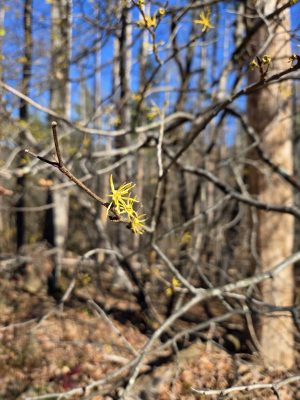
                                    Branches of witch hazel with clusters of yellow, ribbon-like flowers against a clear blue sky and autumn foliage.
                                    Photo by Pamm Cooper, UConn Home Garden Education Office


                                    Native witch hazel is a good choice for a Connecticut landscape plant. A small tree or multi- trunked shrub, its spiky, yellow flowers are the last native blooms to appear in New England. Often, late active insects like flies, honeybees and bumblebees are found visiting its flowers as other pollen and nectar sources are no longer available.


                                    Word from the WiSE

                                    Women in Soil Ecology, UConn Student Chapter

                                    Happy World Soil Day!

                                    This month, UConn’s Women in Soil Ecology bring you a word on celebrating World Soil Day.
                                    World Soil Day is December 5th, 2025 and the theme of this year’s celebration is Healthy Soils for Healthy Cities, emphasizing the need to consider the state of soil health in urban landscapes.

                                    When we think of soil health, we often think about the soil in our home gardens or large-scale agricultural fields. Soil health practices are just as important in urban environments, but much of the soil is sealed away with cement and other impermeable surfaces. Healthy urban soil absorbs rainfall, reduces flooding, and supports effective stormwater management. It helps regulate temperature and can lessen the urban heat island effect. It also stores carbon, can help to improve air quality, and supports biodiversity by providing a habitat for urban wildlife.

                                    Beyond the environmental benefits, it also can enhance human well-being. It can improve mental and physical health by generating more opportunities for outdoor recreation and strengthening connection with nature. By recognizing and sharing the value of healthy urban soils with others, we can help to rethink urban spaces and promote more resilient and healthier cities. 

                                    By Nora Doonan – Soil Science PhD Student, UConn PSLA


                                    Weather Outlook

                                    A seasoned gardener always keeps their eye to the sky at any time of year! Maps and the 30 day outlook from NOAA will help you stay prepared for any and all of your gardening chores! (Click image to see larger map.)

                                        Temperature map

                                    Precipitation Outlook


                                    Upcoming Events and Things to Do


                                    Educational Opportunities & Workshops

                                    Join Us at Upcoming Talks

                                    Good Bug/Bad Bug with Pamm Cooper
                                    December 13, 2025 - 2:00 PM
                                    Hosted by the Mary Cheney Public Library
                                    586 Main Street
                                    Manchester, CT 06040

                                      Supplement Your Garden Produce with CT Grown Products! 

                                      Connecticut is rich in agricultural history, with many operational farms that have lots to offer local markets! As you plan your holiday feasts this season, consider buying local, CT grown products.

                                      Supporting local CT Agriculture is a way that gardeners can supplement the fresh foods they grow in their garden, with seasonal offerings from year round operations.


                                      December Gardening Tips

                                      • Holiday plants, including amaryllis, mistletoe, and yew are toxic and should be kept away from children and pets. Contact Poison Control at 1-800-222-1222 immediately if you suspect a problem.
                                      • Be sure to keep poinsettia away from heat sources, drafts, and cold air. Keep soil consistently moist, but not soggy. Poinsettia that dry out droop dramatically and drop their flowers. Try something a bit more unusual like a cyclamen or kalanchoe for holiday plants.
                                      • Decorative foil around the roots of holiday plants can hold water and drown them. Either remove it when you water, or poke drainage holes in the foil and use a saucer
                                      • Wooden A-frame structure protecting a green shrub in front of a house with white siding and blue shutters.”Consider protecting vulnerable plants from heavy snow sliding from the roof (see image)
                                      • Build a physical barrier of mesh galvanized steel hardware cloth (1/4 to 1/2 inch) around the base of vulnerable trees to prevent voles from feeding
                                      • Harvest any leeks and root vegetables such as carrots and parsnips that are still in the garden
                                      • Check produce that you have in storage. Sort out any that show signs of disease and dispose of them
                                      • Do not use fertilizer to melt ice. This creates nitrogen runoff issues that could damage local bodies of water
                                      • Tap the evergreen branches gently to remove snow and ice to prevent the branches from breaking
                                      • Store your opened bags of fertilizer in a sealed plastic bag or plastic waterproof container with a snugly fitting lid in a dry location to avoid caking
                                      • If you have a real Christmas tree, recycle it after the holidays are through. Cut off branches and use as insulation over perennials. In spring, chip or shred branches to create mulch or add to the compost pile


                                      Wishing you joy, peace and happiness this holiday season!


                                      - The UConn Plant and Soil Health Team

                                      Bronze husky statue adorned with a festive wreath, surrounded by illuminated evergreen trees at night.

                                      We're Moving in April 2026

                                      New Location: 
                                      George Leigh Minor Plant and Soil Health Center
                                      University of Connecticut
                                      Roy E. Jones Building Annex
                                      27 Manter Road, Storrs, CT, 06269
                                      (In front of UConn Dairy Bar)
                                      Map of the Jones Annex across from the dairy bar

                                      UConn Home Garden Education Office

                                      Horticultural support and education for home garden issues related to plant health, garden pests, general plant care, and more.

                                      UConn Plant Diagnostic Laboratory

                                      Diagnosis of plant health and pest issues for commercial growers and the public.

                                      UConn Soil Nutrient Analysis Laboratory

                                      Soil chemistry testing including pH, nutrients, salinity, lime and fertilizer recommendations, and many others.

                                      UConn Turf Diagnostic Lab

                                      Turf diagnostics for golf courses, athletic fields, or other commercial turfgrass sites

                                      What Stays the Same

                                      We will continue to provide the professional and research-based support you’re used to, just in a convenient, central location. Our science-based testing protocols and result-driven recommendations reinforce our commitment to serving growers, landscapers, and the public with their plant and soil health issues.

                                      What Gets Better

                                      Combining current programs all under one roof provides an opportunity for more collaboration, outreach, and educational opportunities for our stakeholders.

                                      • One easy-to-find location for soil, plant, and turf sample submissions
                                      • Future expansion of diagnostic services available for plant and soil health analysis
                                      • Collaboration between programs and increased opportunities for public outreach events
                                      Watch for More Information Soon
                                      s.uconn.edu/plant-soil

                                      This Month’s Newsletter Contributors: 
                                      Heather Zidack, Pamm Cooper, Holly McNamara, Nora Doonan

                                      Bugs, Supermoons, Oaks & Other November News

                                      November 2025

                                      “Even if something is left undone, everyone must take time to sit still and watch the leaves turn.

                                      —  Elizabeth Lawrence

                                      Who's Buggin You?

                                      multi-colored Asian ladybeetle on a flower

                                      Photo by Pamm Cooper, UConn Home & Garden Education Center

                                      Stink bug

                                      Photo by David R. Lance, USDA APHIS PPQ, Bugwood.org

                                      You may find yourself with an abundance of Asian Lady Beetles and Brown Marmorated stink bugs in your home as the weather cools down. There are many ways to keep these pests at bay over the winter months:  

                                      • Use weather stripping or caulking to prevent them from entering through cracks in doors or windows 
                                      • Remove them with a vacuum and immediately dispose of the contents to prevent them from returning.  
                                      • They dislike strong smells. Place cloves, citronella candles, bay leaves near windows or doors to repel them. Similarly, you can make a spray by mixing water with a few drops of spearmint, peppermint, lavender, or lemongrass essential oil and spray it around entry points.    
                                      • Plant or place chrysanthemums around your home, as they have a natural ladybug-repelling chemical 
                                      • Scrub areas where the insects congregate with soapy water or vinegar to get rid of their pheromone trails, which could attract more insects.  

                                      Supermoons

                                      A supermoon in the night sky
                                      Photo by Sean Flynn/UConn Photo

                                      With our gardens cleaned up, it's time to embrace other natural wonders. On Wednesday November 5, we will see the second of four consecutive supermoons! This November supermoon will appear 7.9% larger than what we see in the sky on an average night. It is expected to be the largest and brightest of 2025.

                                      A great place to view the supermoons in Storrs is from the top of the Horsebarn Hill pasture at UConn. The moon will begin to rise in the east around sunset.


                                      Identifying Oaks by Their Leaves & Acorns

                                      Two acorns attached to an oak branch
                                      Turkey oak leaves and acorns. Photo by Pamm Cooper, UConn Home & Garden Education Center

                                      All oaks belong to the genus Quercus and belong to one of two groups- white oaks or red oaks.
                                      The white oak group has leaves with seven to nine rounded lobes and are a deep green to blue-green with pale green leaf undersides. Leaves are widest in the middle.

                                      The red oak group has leaf lobes with bristled tips, and some have deeply cut sinuses and very narrow leaf bases.

                                      Acorns of the white oak group mature in a single year, while the acorns of the red oak group mature in two years. Fall is a perfect time to identify our native oaks as acorns are present and leaves are still on the trees.


                                      Native Plant: Sourwood

                                      A tree turning red against a brick building
                                      A Sourwood tree in South Windsor, CT. Photo by Pamm Cooper,
                                      UConn Home & Garden Education Center

                                      Sourwood, Oxydendrum arboreum, is a small to medium tree that is native to eastern and southern U.S. Small, bell-like flowers on large downward flowing panicles appear in summer and are very attractive to bees. The dry, creamy to silver fruit capsules are a striking contrast to the red fall foliage.


                                      Word from the WiSE

                                      Women in Soil Ecology, UConn Student Chapter

                                      When the Worlds of Wine and WiSE Collide!

                                      This month, UConn’s Women in Soil Ecology brings you a word on soils and wine from one of our students currently studying abroad in Italy:

                                      What does soil science have to do with wine? Well, everything! The same as other plants, grapes prefer certain climates, soil types, and nutrient levels. Additives to wine can cover up these imbalances in the ground. The real magic is when a farmer can monitor the terroir, all the natural environmental factors affecting a wine, just right to display the true farm-to-table taste.

                                      Depending on the climate of the vineyard, different soil types will be beneficial. What you would consider necessary for other plants, like well-draining soil or adequate plant hydration, may be the opposite for a vineyard. This is because sometimes, in the case of grapes, it is good to stress them appropriately to improve the flavor concentration.

                                      Soil fertility refers to the well-balanced mix of nutrients in the ground. For grape vines, it's very important to ensure that there is just enough of vital nutrients, since too much nutrition would encourage overvigorous growth, creating a diluted flavor.

                                      So next time you drink your favorite wine, remember how well balanced the soil had to be to get that perfect glass!

                                      By Ella May, Plant Science Undergraduate Student


                                      Weather Outlook

                                      A seasoned gardener always keeps their eye to the sky at any time of year! Maps and the 30 day outlook from NOAA will help you stay prepared for any and all of your gardening chores! (Click image to see larger map.)

                                          Temperature map

                                      Precipitation Outlook


                                      Upcoming Events and Things to Do


                                                Educational Opportunities & Workshops

                                                          2025 UConn Native Plants and Pollinators Conference

                                                          UConn Native Plants & Polinators Conference November 13, 2025 Storrs CTInformation & Registration

                                                          Join Us at Upcoming Talks

                                                          Good Bug/Bad Bug with Pamm Cooper
                                                          November 3, 2025 - 11:00 AM
                                                          Hosted by the Old Saybrook Garden Club
                                                          Grace Episcopal Church, 336 Main Street, Old Saybrook CT

                                                          Lichens and Slime Molds of Connecticut with Pamm Cooper
                                                          November 10, 2025 - 7:00 PM 
                                                          Hosted by the Manchester Garden Club
                                                          Assumption Church Hall, 27 Adams Street South, Manchester CT


                                                            Supplement Your Garden Produce with CT Grown Products! 

                                                            Connecticut is rich in agricultural history, with many operational farms that have lots to offer local markets! As you plan your holiday feasts this season, consider buying local, CT grown products.

                                                            Supporting local CT Agriculture is a way that gardeners can supplement the fresh foods they grow in their garden, with seasonal offerings from year round operations.


                                                            November Gardening Tips

                                                              • Wait to spread winter mulch until after the ground has frozen. Mulching beforehand can delay dormancy and makes a good home for voles. Once the ground has frozen (but before it snows), mulch fall planted perennials by placing 3 to 5 inches of pine needles, straw, chopped leaves around them
                                                              • Finish the cleanup of the vegetable garden or beds, removing all plant debris
                                                              • Cut back perennials that were covered in powdery mildew during the summer. Cut stalks to the ground and dispose of them
                                                              • Continue to thoroughly water trees, shrubs, planting beds, lawn areas and recently planted evergreens until a hard frost. Plants should go into the winter well-watered
                                                              • Beets, parsnips, and carrots can be covered with a thick layer of straw or leaves and left in the ground for harvest, as needed, during the winter. This may not be an option in areas with heavy vole populations
                                                              • Keep mowing your lawn as long as the grass is growing. Meadow voles and field mice will damage turf and nearby trees and shrubs if they have long grass for food and cover
                                                              • Remove any mummified remaining fruits from trees, rake up and dispose of old leaves
                                                              • Pull stakes and plant supports. Clean them with a 10% bleach solution before storing for the winter
                                                              • Shut off and drain outside faucets
                                                              • Consider providing sunflower hearts instead of whole seeds. It will provide a better source of calories for the birds and eliminates hull waste beneath the feeder
                                                              • Clay and ceramic pots can crack over the winter if they fill with rain or melted snow that subsequently freezes and expands. Empty pots and place upside down under a tarp or store them in a shed or the garage

                                                              This Month’s Newsletter Contributors: 
                                                              Heather Zidack, Pamm Cooper, Holly McNamara, Ella May, Emily Leahy, Dr. Nick Goltz

                                                              Garlic, Garden Wind Down & Other October News

                                                              October 2025

                                                              “October is the month for painted leaves.... As fruits and leaves and the day itself acquire a bright tint just before they fall, so the year near its setting. October is its sunset sky; November the later twilight.

                                                              — Henry David Thoreau, "Autumnal Tints"

                                                              It's Time to Plant Garlic!

                                                              October is the month to plant garlic! This easy to grow vegetable is planted now, hibernates in the ground over the winter, and is ready for harvest come early summer. Garlic is often propagated via cloning. A single clove will form an entire bulb, which will then be broken apart and the process starts over again. Here are some tips for growing:

                                                              • Garlic cloves
                                                                Photo by H. Zidack, UConn Home & Garden Education Center

                                                                Look for hardneck varieties of garlic, as they are best suited to the New England Climate.

                                                              • Some softneck varieties are hardy, but do not plant cloves from the grocery store. Commercially grown garlic usually comes from California or China, and is not adapted to our New England climate. Produce sold in stores may also be treated with growth inhibitors which will prevent sprouting.
                                                              • Break up the garlic bulb, but do not peel the cloves before putting them in the ground - their skin is meant to protect the tender tissue inside, which stores energy for the next season. 
                                                              • Plant cloves with the pointy side up in loose soil, at a depth of 1 to 3 inches, depending on the variety and size of the clove.
                                                              • Provide 6-8 inches of spacing between cloves.
                                                              • Cover your bed with a straw or leaf mulch to help insulate the new bulbs. 


                                                              As the Garden Winds Down...

                                                              By October, many gardeners are ready to put their gardens to bed, or at least put parts of their gardens to bed. Here's a few helpful tips to help you tuck in those vegetable gardens!

                                                              • Before cleaning up your garden for the season, make a quick sketch or diagram of where you planted various crops. Use this as a reference next spring so you can practice crop rotation strategies. This is also a useful disease prevention technique against pathogens which overwinter in the soil.
                                                                • Add notes about what varieties were successful and what suffered to help you with seed selection this winter!
                                                              • Remove entire plants. Dispose of any leaves and plant material that were infected by disease, or heavily infested by insect pests. Compost only healthy plant material to help prevent the spread of problems next season.
                                                              • Clean up any dropped fruit to prevent volunteers next spring. (Or leave them for a fun experiment!)
                                                              • Save seeds from matured flowers and fruit for next year's garden
                                                              • Consider having your soil tested this fall to be ready to ammend as soon as spring kicks off next year!
                                                              • Find a way to cover the soil. If you have not already planted cover crops or winter vegetables, you can use healthy leaves, straw, or mulch to help keep your garden soil covered to prevent erosion during the winter. 
                                                                • Pro Tip: Shred leaves before using them as mulch to help them break down faster 

                                                              Sooty Blotch and Fly Speck on Apples

                                                              An apple showing symptoms of sooty blotch and flyspeck
                                                              Cheryl Kaiser, University of Kentucky, Bugwood.org

                                                              Seeing fruit that looks less than stellar while apple picking this fall? Sooty blotch and fly speck,  interesting group of fungi that affect apple, may be to blame.

                                                              Sooty blotch causes brown, grey, or black smudges on an apple’s surface that can be easily wiped off. While clusters of small black dots on the apple’s external surface, more difficult to clean off than sooty blotch, are likely due to an infection of fly speck. Several different fungi can cause Sooty Blotch and Flyspeck, and these two issues may appear together or separately.

                                                              Fortunately, these concerns are only "skin deep" as they say. Apples that have been infected by either of these diseases are perfectly safe to eat, although their aesthetic value has been diminished. You can use apples of this nature to make treats such as apple butter, apple cider, or applesauce.  


                                                              Native Plant: New England Aster

                                                              Purple aster flowers with a bumblebee
                                                              Photo by H. Zidack, UConn Home & Garden Education Center

                                                              An excellent choice for late-season beauty for your garden is the New England aster, a Connecticut-native perennial with notable ecosystem benefits. This plant produces daisy-like flowers in brilliant shades of violet starting in late August and continuing through October. They fit perfectly in pollinator gardens, rain gardens, or as accent plants in a landscape.

                                                              This plant is extremely hardy. It can tolerate a wide range of conditions and soil types, from full sun to partial shade, and dry to wet ground conditions. They grow in USDA Plant Hardiness Zones 3 to 8 (https://planthardiness.ars.usda.gov/). In addition, they are resistant to many pests and diseases and may offer worthy competition against the weeds in your garden.

                                                              During the late growing season, many pollinators rely on the New England Aster as one of the few remaining sources of pollen and nectar, especially the migrating Monarch butterflies. Including this species in your garden will promote beneficial insects and pollinators to your garden from late summer through late fall, helping them thrive when their food sources become scarce.

                                                              New England Asters can grow to be between 3 and 5 feet in height and produce rough, velvety leaves. From early to late fall, they form clumps of vibrant flowers. Their natural habitat includes areas with open ground and high moisture, including prairies, lake shores, and wet meadows. They’re also often found on roadsides or along railroads, a testament to their hardiness and resilience.   


                                                              Word from the WiSE

                                                              Women in Soil Ecology, UConn Student Chapter

                                                              Load Your Logs: Mushroom Cultivation

                                                              This month, UConn’s Women in Soil Ecology brings you a word on mushroom cultivation. Have you ever thought you were able to grow food from agricultural waste? Logs make a great environment to grow your own mushrooms!

                                                              Is it expensive to grow desired strains? Not really! It depends on how much you want to grow, and which mushrooms. Just remember these principles:

                                                              • Different mushrooms have different requirements; some like specific types of wood better than others - know your mushroom species beforehand. 
                                                              • Reduce Competition: There are a lot of microorganisms in the environment looking for food, some of them like the same food your desired mushrooms do, or they would even like to eat your desired mushrooms! To avoid competition, you should sterilize your tools with 70% alcohol. Some fungicultors recommend using the log as it comes and some would recommend rinsing them with hot water before inoculation. You may want to increase the inoculum (the amount of mushroom you put to grow) when you are not in a sterile environment to improve chances of success. 
                                                              • Monitor Humidity: mushrooms require between 70-75% humidity in their substrate (the place where they grow). When the log is fresh, the amount of water is considered ideal, but you should keep irrigating at least once per day. 
                                                              • Mushrooms are not plants, they don’t need light to grow; in fact, they don’t like light when growing. Keep your logs under shade. 

                                                              Kits are readily available for novice home cultivators. Remember, never consume or cultivate mushrooms that are not properly identified as many species can be toxic!

                                                              Always remember to be cautious but enthusiastic as you keep learning about fungi! 

                                                              By Paulette Goyes, Soil Science and Mycology Ph.D. student


                                                              Weather Outlook

                                                              A seasoned gardener always keeps their eye to the sky at any time of year! Maps and the 30 day outlook from NOAA will help you stay prepared for any and all of your gardening chores! (Click image to see larger map.)

                                                                  Temperature map

                                                              Precipitation Outlook


                                                              In the Garden & Pest Alerts

                                                              UConn Pest Alerts

                                                              During the growing season, UConn Extension publishes a regular pest alert for both vegetable and fruit producers. Additionally, the New England Vegetable Management Guide offers a lot of information about specific vegetable crops.

                                                              While the target audience for these publications is usually commercial growers, home gardeners can learn a lot from these materials including identification and management of common pests in your veggie gardens!

                                                              If you ever need confirmation on an ID or have additional questions about what you read in these reports, please do not hesitate to reach out to us at the Home & Garden Education Center! We're happy to help your gardens thrive.

                                                              UConn Vegetable Pest Alerts

                                                              UConn Fruit Pest Messages

                                                              New England Vegetable Management Guide


                                                              Knowledge to Grow On

                                                              Mum in partial bloom
                                                              Photo by H. Zidack, UConn Home & Garden Education Center


                                                              Upcoming Events and Things to Do


                                                                      Educational Opportunities & Workshops


                                                                                Supplement Your Garden Produce with CT Grown Products! 

                                                                                Connecticut is rich in agricultural history, with many operational farms that have lots to offer local markets! 

                                                                                Supporting local CT Agriculture is a way that gardeners can supplement the fresh foods they grow in their garden, with seasonal offerings from year round operations.

                                                                                Consider attending a local farmers market, joining Community Supported Agriculture (CSA's), or even stopping by your nearest farm stand to see what they have to offer!  


                                                                                October Gardening Tips

                                                                                • Dig and store tender bulbs, corms, rhizomes, and tubers in a cool, dark, place.
                                                                                • Keep collecting matured seeds. Dry them out and place them in labeled brown coin envelopes within an air tight container, and store in a cool place.
                                                                                • When finding an indoor location for houseplants that have been out all summer, keep plants away from drafts, vents and sources of heat
                                                                                • Examine houseplants carefully for insect pests before bringing them back inside. Give them a good grooming if necessary. You may want to spray plants with insecticidal soap after hosing off the foliage. Let the plants dry first.
                                                                                • Beets, parsnips, and carrots can be covered with a thick layer of straw or leaves and left in the ground for harvest, as needed, during the winter. This may not be an option in areas with heavy vole populations.
                                                                                • Prune fall-bearing raspberries after harvest.
                                                                                • If rain is lacking, continue to thoroughly water trees, shrubs, planting beds, and lawn areas. It is especially important to keep newly planted evergreens watered
                                                                                • Keep lawn areas seeded in September well-watered
                                                                                • Use a mulching blade to chop leaves finely and let them decompose on the lawn
                                                                                • Outwit hungry squirrels and chipmunks by planting bulbs in established groundcovers.
                                                                                • Drain garden hoses and store in a shed, garage, or basement for the winter. Turn off all outside faucets.

                                                                                This Month’s Newsletter Contributors: 
                                                                                Heather Zidack, Emily Leahy, Holly McNamara, Paulette Goyes, Dr. Nick Goltz

                                                                                Perennials, Fall Foliage, and Other September News

                                                                                September 2025

                                                                                September days have the warmth of summer in their briefer hours, but in their lengthening evenings a prophetic breath of autumn.

                                                                                — Rowland E. Robinson

                                                                                Fall Perennial Chores

                                                                                The fall is a great time to plant, transplant, and divide perennials. Here are a few tips to help you maintain your perennial gardens:

                                                                                Daylily leaves emerging from the ground in spring
                                                                                In the spring of 2025, the plant came back strong. Photo by Heather Zidack, UConn Home & Garden Education Center

                                                                                Recently transplanted daylily wilting in the garden
                                                                                Daylilies were divided and planted in the fall of 2024. The stress and shock of the move was apparent upon planting. Photo by Heather Zidack, UConn Home & Garden Education Center

                                                                                • Divide spring blooming perennials in the autumn. Later season bloomers can be divided in the spring. 
                                                                                • If perennials start to die from the center out, it may be time to divide them. This is very common in plants like hostas and ornamental grasses. 
                                                                                • Cut perennials back to 6 inches before transplanting.
                                                                                • Aim to do your planting and transplanting 4 to 6 weeks before the first frost in order to give your plants enough time to settle in before the ground freezes.
                                                                                • Newly transplanted perennials should be adequately hydrated and monitored until the ground freezes. Plants should get one inch of water per week. If rain is not meeting that minimum, supplemental water will be needed.
                                                                                • Plant spring bulbs at this time too, including daffodils, tulips and hyacinth. 


                                                                                Perennials

                                                                                How and When to Divide Perennials


                                                                                Fall Foliage Predictions are Here!

                                                                                Fall foliage in a mountain landscape
                                                                                Photo by Heather Zidack, UConn Home & Garden Education Center

                                                                                The beauty of fall leaves here in New England is undeniable, and while many of us are hanging on to the last days of summer, the changing of leaves will be here sooner than we realize!

                                                                                Some sources are predicting a slightly earlier autumn change of leaves this year. And some of us have already noticed early leaf drop in our trees and shrubs at home from a stressful growing season. Weather events, environmental pressures, and the natural physiology of our beloved trees all factor in to when, why and how the leaves change colors each year. Know what to look out for so you can plan your leaf peeping accordingly!

                                                                                CT DEEP Fall Foliage Report

                                                                                2025 Fall Foliage Prediction Map

                                                                                How Weather Affects Fall Colors

                                                                                Fall Colors: A lesson in Color Theory and Chemistry


                                                                                 Hope for Biologic Control of Spotted Lanternfly

                                                                                Spotted Lanternfly Cornell Fact Sheet
                                                                                Spotted Lanternfly Life Cycle. Photo by Cornell IPM

                                                                                In the late summer/early fall, we start to see Spotted Lanternfly moths flying around, bringing a heightened awareness to this invasive pest.
                                                                                As research continues, there are promising findings that native species may be starting to find and prey on the Spotted Lanternfly. While findings are still preliminary, many of the beneficial predators identified have already been found to benefit our gardens with other common pests.

                                                                                Promoting a healthy garden ecosystem, removing the Tree of Heaven host plants, and regular scouting are still the best methods for control at this point, but keep an eye out for future findings!

                                                                                Natural Insect Predators May Serve as Allies in Spotted Lanternfly Battle

                                                                                Detection of Spotted Lanternfly by Bats

                                                                                Spotted Lanternfly Resources for Connecticut


                                                                                Native Plant: Fringed Gentian

                                                                                Purple fringed gentian flowers
                                                                                Photo by Pamm Cooper, UConn Home & Garden Education Center

                                                                                Mother Nature likes to save her best flowers for last.

                                                                                Fringed Gentian (Gentianopsis crinita), one of New England’s most beautiful wildflowers, makes its appearance from late August to October in wet meadows and fields, on stream banks and in moist open woods. It's one of the last native wildflowers to bloom each year in the Northeast. The flower is easily identified by its fine fringed petals and striking blue to purple-blue color. 
                                                                                 

                                                                                Learn More About Fringed Gentian

                                                                                The Connecticut Native Perennial, Tree, & Shrub Availability List


                                                                                Word from the WiSE

                                                                                Women in Soil Ecology, UConn Student Chapter

                                                                                The Best Time to Lime!

                                                                                This month, we bring you a word on the best time to lime your soil. Fall is fast approaching, and it is an excellent time to have your soil pH tested for a fall application of lime. Applying lime in the fall guarantees that the lime has adequate time to react with the soil to increase the pH by spring. Lime is best applied 6 months prior to when the desired pH for the crop is needed.

                                                                                pH can affect the availability of nutrients in the soil and overall plant health and growth. Natural processes like rainfall and human activities like the usage of nitrogen fertilizers can accelerate a decline in soil pH. As the soil acidifies, the solubility of aluminum and manganese can increase, which can be toxic to plants with a low tolerance. The addition of lime can raise the pH and add calcium and/or magnesium to the soil. Beneficial soil microorganisms that aid in nutrient cycling do not thrive in strongly acidic soils, as well as the bacteria that fix nitrogen in association with legume plants. Set yourself up for success in the spring and have your soil pH tested.

                                                                                By Nora Doonan, Soil Science Graduate Student


                                                                                Weather Outlook

                                                                                A seasoned gardener always keeps their eye to the sky at any time of year! Maps and the 30 day outlook from NOAA will help you stay prepared for any and all of your gardening chores! (Click image to see larger map.)

                                                                                    Temperature map

                                                                                Precipitation Outlook


                                                                                In the Garden & Pest Alerts

                                                                                Baldfaced Hornets & Yellowjackets

                                                                                Baldfaced hornets and yellow jackets will be active until cold weather arrives. In late summer, when flowers are scarce, they often obtain food from fallen or rotting fruit like apples, crabapples, figs, grape and others. They are very attracted to sugars and may sip from hummingbird feeders and open soda cans.

                                                                                Paper nests will remain intact long after the hornets or wasps have died off due to the arrival of persistent cold weather. The nests are not used again.

                                                                                Are Baldfaced Hornets Friends or Foes?

                                                                                Why Are There So Many Yellowjackets in the Fall?

                                                                                Baldfaced hornet on rotting fruit

                                                                                Photo by Pamm Cooper,
                                                                                UConn Home & Garden Education Center

                                                                                UConn Pest Alerts

                                                                                During the growing season, UConn Extension publishes a regular pest alert for both vegetable and fruit producers. Additionally, the New England Vegetable Management Guide offers a lot of information about specific vegetable crops.

                                                                                While the target audience for these publications is usually commercial growers, home gardeners can learn a lot from these materials including identification and management of common pests in your veggie gardens!

                                                                                If you ever need confirmation on an ID or have additional questions about what you read in these reports, please do not hesitate to reach out to us at the Home & Garden Education Center! We're happy to help your gardens thrive.

                                                                                UConn Vegetable Pest Alerts

                                                                                UConn Fruit Pest Messages

                                                                                New England Vegetable Management Guide


                                                                                Upcoming Events and Things to Do


                                                                                      From late August to Mid-October, hundreds of thousands of Tree Swallows near the mouth of the Connecticut River converge at dusk and form large clouds from which they descend into the communal roost along the shoreline. Just west of the mouth of the Connecticut River in Old Lyme is Goose Island,  seventy-five acres of uninhabited reeds making it a mecca for the Tree Swallows.  There are many ways to observe this phenomenon. By boat or kayak. It is a spectacle that no one who is interested in birds should miss.


                                                                                      Educational Opportunities & Workshops


                                                                                              Supplement Your Garden Produce with CT Grown Products! 

                                                                                              Connecticut is rich in agricultural history, with many operational farms that have lots to offer local markets! 

                                                                                              Supporting local CT Agriculture is a way that gardeners can supplement the fresh foods they grow in their garden, with seasonal offerings from year round operations.

                                                                                              Consider attending a local farmers market, joining Community Supported Agriculture (CSA's), or even stopping by your nearest farm stand to see what they have to offer!  


                                                                                              September Gardening Tips

                                                                                                    • Lawn seeding, whether it's renovation, repair, or spot seeding should take place between August 15th and September 15th
                                                                                                    • Mid to late September is a great time to add accent plants, like vivid mums and starry asters, that will provide autumn colors in the landscape. Use them along with cool-colored ornamental cabbages and kales to replace bedraggled annuals in containers as well
                                                                                                    • Visit a local nursery or garden center and select spring flowering bulbs to add to your gardens. Plant the bulbs among perennials, under trees and shrubs, or in larger groups for a splendid spring show. Choose colors that complement other spring flowering plants as well as nearby plantings. Work a little Bulb Booster or 5-10-10 into the bottom of the planting holes.
                                                                                                    • Examine houseplants carefully for insect pests before bringing them back inside. Give them a good grooming if necessary. You may want to spray plants with insecticidal soap after hosing off the foliage. Let the plants dry first.
                                                                                                    • As tomatoes end their production, cut down plants, pick up any debris and put dead/diseased plant parts in the trash or take to a landfill. Many diseases will over-winter on old infected leaves and stems so these are best removed from the property.
                                                                                                    • If pesky seedlings of woody plants, such as maple, elm or hackberry are found growing in your yard, remove them as soon as possible so they won’t take over gardens and other landscape plantings.
                                                                                                    • Continue to water any new tree, shrub, or perennial plantings until the first hard frost if fall rains are scarce.
                                                                                                    • Limit herbaceous plant material located a few feet away from the house to eliminate hiding places for insects and mice that could wind up indoors as temperatures plummet.
                                                                                                    • Continue to turn and moisten compost piles to speed decomposition.
                                                                                                    • Scout for and remove bagworm egg masses from evergreen shrubs to eliminate the spring hatch from over-wintered eggs. 
                                                                                                    • Late season cabbage and beets can stay in the garden until a light frost for best flavor. Some root crops, including certain varieties of beets, carrots and parsnips, may be left in the ground for storage. Wait until temperatures drop and growth stops and cover with a thick layer of straw or leaves. Harvest as needed during the winter. This may not be an option in areas with heavy vole populations.

                                                                                                    This Month’s Newsletter Contributors: 
                                                                                                    Heather Zidack, Pamm Cooper, Marie Woodward, Nora Doonan

                                                                                                    Weeds, Strawberries, Butterflies, and Other August News

                                                                                                    August 2025

                                                                                                    “A late summer garden has a tranquility found no other time of the year.”

                                                                                                    — William F. Longgood

                                                                                                    Overwhelmed by Weeds?

                                                                                                    A garden bed with bare soil, weeds, and a hand tiller
                                                                                                    It doesn't take long for weeds to creep into garden beds! Photo by Heather Zidack, UConn Home & Garden Education Center

                                                                                                    This season's pattern of lots of rain and lots of heat have made it difficult for gardeners to get out into their gardens, while creating the perfect environment for weeds to thrive!

                                                                                                    We've been getting quite a few calls regarding weed management and invasive species control as gardens are booming with unwelcome guests. And while there is no one[size-fits-all approach to weed management, here are the key points to remember: 

                                                                                                    • “Nature abhors a vacuum." Leaving bare soil or undisturbed garden areas will more likely lead to the development of weeds. Instead, keep the soil covered until you intend to plant. Encourage dense plantings of cover crops in vegetable gardens, utilize groundcovers, or consider using mulch of a thickness of 3" or more for walkways and desired plant-free areas.
                                                                                                    • Minimize the seed bank. Keep weeds mowed or cut back before flowers or fruit emerge. Turn the soil, or ensure dense plantings don't allow seeds to germinate by shading out the area or preventing good soil contact. Consider pre-emergents if you have a history of recurrence.
                                                                                                    • Sometimes (not always) weeds can be an indication of soil fertility. Therefore, soil amendments may be more effective than spraying or hand pulling. Get your soil tested to know for sure!
                                                                                                    • If considering garden chemicals, always make sure to identify the weed and use only products that are labeled for that plant. Read the label in full for all information regarding application rates, safety and environmental considerations.
                                                                                                    • Be patient and persistent with management. Total eradication and control may eed multiple seasons before you see results. Keep at it!

                                                                                                    Weed Control in Landscapes Non-Chemical Measures

                                                                                                    Weeds as Indicators of Soil and Growing Conditions in Turf

                                                                                                    CIPWG Invasive Plant List


                                                                                                    Renovate Your Strawberry Beds

                                                                                                    To promote continuous success of strawberries in your garden, take time this August to perform renovations to your plants. Maintenance such as clipping tall growth, removing weak or dead leaves, and fertilization will help to maximize the productivity of your strawberries in the coming years. Mulching, ensuring adequate water intake, and weeding are also necessary for upkeep of strong plants. These techniques maximize yields and protect against disease prevalence.

                                                                                                    End of Season Strawberry Renovation - UConn HGEC

                                                                                                    Renovation of Strawberry Plantings - University of Nebraska-Lincoln


                                                                                                    Where are the butterflies?

                                                                                                    Small brown butterfly on a twig
                                                                                                    Banded Hairstreak Butterfly. Photo by Pamm Cooper,
                                                                                                    UConn Home & Garden Education Center

                                                                                                    Are you seeing fewer butterflies in your garden? You're not alone.

                                                                                                    New studies have determined that over the past two decades in the continental United States, the populations of hundreds of butterfly species have fallen by 22%. These declines are commonly attributed to pesticide use, habitat loss, and climate change. This is concerning because butterflies play important roles in pollination, cycling nutrients, and are a significant food source for other organisms such as birds.

                                                                                                    However, conservation biologists have created a roadmap for recovering butterfly populations across the US, and their best chance at recovery starts in your backyard. Actions you can take include providing as much habitat as possible for these animals and keeping these areas pesticide-free.  

                                                                                                    As U.S. butterfly populations plummet, scientists map a road to recovery

                                                                                                    Study raises the possibility of a country without butterflies


                                                                                                    Native Plant: August Flowering Perennials

                                                                                                    Bonset, Spotted joe-pye weed, and goldenrod blooming in a meadow
                                                                                                    Photo by Pamm Cooper, UConn Home & Garden Education Center

                                                                                                    Native spotted Joe-pye Weed (Eupatorium maculatum), Boneset (Eupatorium perfoliatum) and certain moisture-loving goldenrods (Solidago spp.) can often be found in dampish soils in open areas. They are often found together in the wild, and all three are attractive to pollinators and butterflies.

                                                                                                    These natives bloom at the same time in late July through early September, making them a good addition to a moist garden area that could use some color in late summer. There are many native goldenrods that will do fine in drier soils, as well, making them a versatile plant.

                                                                                                    Learn More About Boneset

                                                                                                    Learn More About Goldenrods

                                                                                                    Learn More About Spotted Joe-pye Weed

                                                                                                    The Connecticut Native Perennial, Tree, & Shrub Availability List


                                                                                                    Word from the WiSE

                                                                                                    Women in Soil Ecology, UConn Student Chapter

                                                                                                    Surf the Web on Web Soil Survey!

                                                                                                    This month, UConn’s Women in Soil Ecology brings you a word on Web Soil Survey. Are you ever curious about the soil in your yard and wish there was some way you could learn more information about it? You’re in luck, because there is an online web tool that allows you to do just that!

                                                                                                    Web Soil Survey is a free online tool that allows you to input an address and select an area of interest to view a soil map and soils data in that area. This information is provided by the National Cooperative Soil Survey, which is operated by the USDA Natural Resources Conservation Service (NRCS). This tool can help you decide what plants to grow based on your soil conditions, as well as aid in other land planning. Web Soil Survey contains a lot of information, but an interesting feature is the soil health data, which can provide descriptions and ratings for key soil health indicators. 

                                                                                                    By Nora Doonan, Soil Science Graduate Student


                                                                                                    Weather Outlook

                                                                                                    A seasoned gardener always keeps their eye to the sky at any time of year! Maps and the 30 day outlook from NOAA will help you stay prepared for any and all of your gardening chores! (Click image to see larger map.)

                                                                                                        Temperature map

                                                                                                    Precipitation Outlook


                                                                                                    In the Garden & Pest Alerts

                                                                                                    Tobacco Budworms

                                                                                                    Tobacco budworm caterpillars, can be pests of many flowering plants in the tobacco family. Petunias, geraniums, snapdragons and Calibrachoa are just a few of the plants whose buds and flowers can be damaged by this caterpillar.

                                                                                                    Check plants that have stopped flowering to see if buds have been eaten or damaged. Check inside flowers for these caterpillars as they have a preference for reproductive flower parts and petals.

                                                                                                    Hand- picking them off is the best control method. Most insecticides should not be used on flowers as pollinator may be killed or injured. BtK is normally ineffective.

                                                                                                    Tobacco Budworm

                                                                                                    Tobacco budworm on pink flower bud

                                                                                                    Photo by Pamm Cooper,
                                                                                                    UConn Home & Garden Education Center

                                                                                                    UConn Pest Alerts

                                                                                                    During the growing season, UConn Extension publishes a regular pest alert for both vegetable and fruit producers. Additionally, the New England Vegetable Management Guide offers a lot of information about specific vegetable crops.

                                                                                                    While the target audience for these publications is usually commercial growers, home gardeners can learn a lot from these materials including identification and management of common pests in your veggie gardens!

                                                                                                    If you ever need confirmation on an ID or have additional questions about what you read in these reports, please do not hesitate to reach out to us at the Home & Garden Education Center! We're happy to help your gardens thrive.

                                                                                                    UConn Vegetable Pest Alerts

                                                                                                    UConn Fruit Pest Messages

                                                                                                    New England Vegetable Management Guide


                                                                                                    Upcoming Events and Things to Do


                                                                                                        Educational Opportunities & Workshops


                                                                                                              Supplement Your Garden Produce with CT Grown Products! 

                                                                                                              Connecticut is rich in agricultural history, with many operational farms that have lots to offer local markets! 

                                                                                                              Supporting local CT Agriculture is a way that gardeners can supplement the fresh foods they grow in their garden, with seasonal offerings from year round operations.

                                                                                                              Consider attending a local farmers market, joining Community Supported Agriculture (CSA's), or even stopping by your nearest farm stand to see what they have to offer!  


                                                                                                              August Gardening Tips

                                                                                                                  • Lawn seeding, whether it's renovation, repair, or spot seeding should take place between August 15th and September 15th
                                                                                                                  • Container and hanging plants may need additional water later in the day if hot and windy conditions prevail. Check plants again at day’s end to see if any additional water is necessary
                                                                                                                  • Fertilize container plantings and hanging baskets if they look yellow with a ½ strength dose of a balanced liquid fertilizer.
                                                                                                                  • Fertilize perennials with a 5-10-5 or 5-10-10 product to encourage continued blooming.
                                                                                                                  • Remove old plants that have stopped producing to eliminate a shelter for insects and disease organisms. Replant sites with chard, quick maturing beans or cucumbers, leafy greens etc.
                                                                                                                  • Put netting on fruit trees and bushes a few weeks before the fruit begins to ripen to protect it from birds and squirrels
                                                                                                                  • Raise your mowing height to 3 inches during hot weather and mulch clippings if possible
                                                                                                                  • Even though tomatoes continue to ripen after picking, fruits develop greatest flavor when allowed to ripen on plants. The exception is cherry tomatoes since many varieties are prone to splitting. Pick any almost ripe ones before a heavy rain.
                                                                                                                  • Renovate strawberry beds by mowing to a height of 1 ½ inches, thinning plants and side-dressing with a balanced fertilizer
                                                                                                                  • To reduce the number of pests on your fruit trees for the coming year practice good sanitation by removing and destroying all fallen fruit. Do not compost it.
                                                                                                                  • Do not add weeds with mature seed heads to the compost pile. Many weed seeds can remain viable and germinate next year when the compost is used.

                                                                                                                  This Month’s Newsletter Contributors: 
                                                                                                                  Heather Zidack, Pamm Cooper, Holly McNamara, Emily Leahy, Nora Doonan

                                                                                                                  Succession Planting, Herb Harvesting and Other July News

                                                                                                                  June 2025

                                                                                                                  "Flowers are wilting
                                                                                                                  My enthusiasm, too
                                                                                                                  Only weeds survive."

                                                                                                                  — Gaia Garden

                                                                                                                  There's Still Plenty of Planting Time

                                                                                                                  A garden bed of garlic with half of the plants removed
                                                                                                                  Once the garlic is removed from this bed, something new will have to go in! Photo by Heather Zidack, UConn Home & Garden Education Center

                                                                                                                  This year’s wacky weather set our gardens up on what feels like a very strange schedule. Typically, by this point in the season we start to sit back and wait for the tomatoes to ripen, but if you want a garden that stretches into autumn, the work continues!

                                                                                                                  As of July 1st, we are 106 days away from the Farmer’s Almanac’s anticipated first Frost Date (Oct. 15th in Storrs, CT). That’s still plenty of time to grow!

                                                                                                                  Succession planting helps keep your garden space constantly active through the growing season. It may look like planting a new crop immediately after one has completed its cycle in the garden, or staggered plantings for an extended harvest. We looked at this briefly in our May Newsletter as a way to maximize space. Here's some tips to keep rolling with succession planting this summer:

                                                                                                                  • Continue planting bush beans from seed every 2 weeks through the end of July for a bountiful harvest!  
                                                                                                                  • Did you harvest your garlic this month? Are your cool season crops past their prime or starting to bolt? Replace them and direct seed new plants!  
                                                                                                                    • Look at days to maturity to ensure there is enough time for the plants to develop before frost hits 
                                                                                                                    • Don’t follow up with the same thing in the same planting space – rotate your crops for better soil and plant health! 
                                                                                                                    • There are varieties of cucumber, squash and zucchini that can still be planted 
                                                                                                                    • Many types of greens and root vegetables like carrot, radish, turnip and beet can be planted in July  
                                                                                                                  • Replace vegetable plants that are no longer producing with annuals that have short flowering time for late season beauty 
                                                                                                                  • Allow the garden bed to “rest” by planting a cover crop
                                                                                                                  • Don’t put away those grow lights just yet! Cool season crops, like brassicas, may need to be started indoors. The summer heat outdoors may inhibit germination or growth. 

                                                                                                                  What You Can Plant Mid-July

                                                                                                                  Succession Planting

                                                                                                                  Fall Vegetable Gardening


                                                                                                                  Harvesting Herbs in Your Summer Garden!

                                                                                                                  Including herbs in summer gardens is a common practice due to their low-maintenance care and delicious flavors that pair well with many summertime dishes and drinks.

                                                                                                                  Herbs should be harvested when the oils responsible for aroma and flavor are at their peak. This harvest time is determined by the growing conditions of each individual plant, rather than a specific month or day.

                                                                                                                  Many herbs are most flavorful and ready to harvest just as the flower buds first appear, but before they are fully open. It’s best to harvest them in the late morning, after the dew has dried and before the hot afternoon sun draws out their delicate flavor.  However, some species, like cilantro, may become bitter as the plant starts to flower. Bottom line: know your plants!

                                                                                                                  Annual herbs such as basil and parsley can be harvested until frost. Perennial herbs such as oregano, thyme, mint and chives can be clipped until late August.

                                                                                                                  For your perennial herbs, stop harvesting about one month before the frost date, because late pruning could encourage tender growth that cannot harden-off before winter. 

                                                                                                                  Growing, Harvesting & Drying Herbs

                                                                                                                  Harvesting & Preserving Herbs for the Home Gardener


                                                                                                                  Native Plant: Swamp Milkweed (Asclepias incarnata)

                                                                                                                  Eastern Tiger Swallowtail butterfly on pink flowers of the swamp milkweed
                                                                                                                  Photo by Pamm Cooper, UConn Home & Garden Education Center

                                                                                                                  Swamp Milkweed (Asclepias incarnata) is native to most of the U.S. It's flowers bloom from mid-July to mid-August in the Northeast. A. incarnata is one of many native Milkweeds including A. tuberosa, A. syriaca and others. 

                                                                                                                  Look for it in moist habitats such as pond, stream, and river edges or in moist areas of meadows. Pink flowers are highly attractive to butterflies, moths, bees and other pollinators.

                                                                                                                  Learn More About Swamp Milkweed

                                                                                                                  Common CT Milkweeds

                                                                                                                  The Connecticut Native Perennial, Tree, & Shrub Availability List


                                                                                                                  Word from the WiSE

                                                                                                                  Women in Soil Ecology, UConn Student Chapter

                                                                                                                  Sweet Summer Strawberries!

                                                                                                                  This month, we bring you a word on a sweet summer berry you can easily grow at home - strawberries! Strawberries can be purchased from three main groups: June-bearing, ever-bearing, and day-neutral. For one summer harvest of large berries, gardeners can opt for June-bearing; For two harvests of smaller berries, grab some ever-bearing strawberries. For continuous production all season long, plant day-neutral strawberries. Plant strawberries in the ground in slightly acidic, well-drained soil; Or, if you are space-limited, ever-bearing and day-neutral varieties do well in window boxes that are at least 1ft deep. In fact, planting strawberries in window boxes and keeping them off the ground helps protect them from some pests and diseases which may reduce yields. Enjoy strawberries fresh from the vine, or try your hand at a USDA-approved canning recipe to have strawberry jam year-round. 

                                                                                                                  By Abigayle Ward, Soil Science Graduate Student


                                                                                                                  Weather Outlook

                                                                                                                  A seasoned gardener always keeps their eye to the sky at any time of year! Maps and the 30 day outlook from NOAA will help you stay prepared for any and all of your gardening chores! (Click image to see larger map.)

                                                                                                                      Temperature map

                                                                                                                  Precipitation Outlook


                                                                                                                  In the Garden & Pest Alerts

                                                                                                                  In the Garden: Cabbage Worms, Moths and Loopers, Oh My!


                                                                                                                  Start scouting in July for the various types of caterpillars that can damage your brassicas! Along with lots of holes chewed into leaves, caterpillars typically leave waste behind known as "frass."

                                                                                                                  Search on the undersides of leaves and inside the center of plants where leaves are tightly condensed. Once you find the pest, identify it properly for the best control methods! Use Bacillus thuringiensis to control them, or incorporate row covers before a problem is observed to keep pests out.

                                                                                                                  Caterpillars on Cole Crops

                                                                                                                  Stripped cabbage worm on brassica

                                                                                                                  Photo by Heather Zidack,
                                                                                                                  UConn Home & Garden Education Center

                                                                                                                  UConn Pest Alerts

                                                                                                                  During the growing season, UConn Extension publishes a regular pest alert for both vegetable and fruit producers. Additionally, the New England Vegetable Management Guide offers a lot of information about specific vegetable crops.

                                                                                                                  While the target audience for these publications is usually commercial growers, home gardeners can learn a lot from these materials including identification and management of common pests in your veggie gardens!

                                                                                                                  If you ever need confirmation on an ID or have additional questions about what you read in these reports, please do not hesitate to reach out to us at the Home & Garden Education Center! We're happy to help your gardens thrive.

                                                                                                                  UConn Vegetable Pest Alerts

                                                                                                                  UConn Fruit Pest Messages

                                                                                                                  New England Vegetable Management Guide


                                                                                                                  Knowledge to Grow On


                                                                                                                  Upcoming Events and Things to Do


                                                                                                                    Educational Opportunities & Workshops

                                                                                                                      • CT State Parks have multiple events happening this month!

                                                                                                                      Save the Date for the 4th Annual UConn IPM Seminar for the Home Gardener

                                                                                                                      Black and red moth with long antennae on a squash leaf.
                                                                                                                      Squash Vine Borer Moth
                                                                                                                      Photo by Heather Zidack, UConn Home & Garden Education Center

                                                                                                                      Thursday, August 14th, 2025
                                                                                                                      9:00 AM - 1:00 PM

                                                                                                                      UConn Research Farm
                                                                                                                      99 Agronomy Road, Storrs, CT 06268

                                                                                                                      Learn basic principles of Integrated Pest Management and techniques to implement in your gardens with a day designed for the home gardener.  Speakers from the UConn IPM team will present on various topics to help you improve the plant and soil health of your gardens, lawns, and landscapes.

                                                                                                                      Learn About the UConn IPM Program

                                                                                                                      Event Details


                                                                                                                      Supplement Your Garden Produce with CT Grown Products! 

                                                                                                                      Connecticut is rich in agricultural history, with many operational farms that have lots to offer local markets! 

                                                                                                                      Supporting local CT Agriculture is a way that gardeners can supplement the fresh foods they grow in their garden, with seasonal offerings from year round operations.

                                                                                                                      Consider attending a local farmers market, joining Community Supported Agriculture (CSA's), or even stopping by your nearest farm stand to see what they have to offer!  


                                                                                                                      July Gardening Tips

                                                                                                                        • Water early in the morning to reduce the loss of water to evaporation during the hottest days
                                                                                                                        • Container and hanging plants may need additional water later in the day if hot and windy conditions prevail. Check plants again at day’s end to see if any additional water is necessary
                                                                                                                        • Pinching back herbs to stop flowering will keep the best flavor in the leaves and encourage branching. Herbs can be air dried, dried quickly in the microwave, or frozen
                                                                                                                        • Cucumbers are heavy drinkers and feeders. Keep the soil evenly moist during hot spells to avoid bitter fruit and side-dress plants with 1/4 cup of 10-10-10 fertilizer or the equivalent in mid-July
                                                                                                                        • Plant cool-season crops such as broccoli, spinach, kale, lettuce, and chard where they will be shaded from the sun
                                                                                                                        • Put netting on fruit trees and bushes a few weeks before the fruit begins to ripen to protect it from birds and squirrels
                                                                                                                        • Raise your mowing height to 3 inches during hot weather and mulch clippings if possible
                                                                                                                        • Fertilize roses for the last time in mid-July
                                                                                                                        • Control mosquitoes by eliminating all sources of stagnant water. Clean bird baths and pet’s outdoor dishes often
                                                                                                                        • Check family members and pets for ticks after being outside, especially when in tall grass or wooded areas. If necessary, send ticks to the Connecticut Veterinary Medical Diagnostic Laboratory for testing
                                                                                                                        • Leaky garden hoses and fittings can waste water. Check hoses while they are under full pressure and make repairs

                                                                                                                        This Month’s Newsletter Contributors: 
                                                                                                                        Heather Zidack, Pamm Cooper, Holly McNamara, Abigayle Ward