
“I love spring anywhere, but if I could choose, I would always greet it in a garden."
— Ruth Stout
Big Changes for the HGEO! We're Moving This Month!
The UConn Home Garden Education Office & some of it's collaborators will be moving into the George Leigh Minor Plant and Soil Health Center on the week of April 27th. During the move, we will be closed to the public with limited phone/email availability to allow for a smooth transition. Our office be closed April 27th through May 1st and will reopen May 4th to help with your gardening needs, just in time for the growing season!
Closures may also impact the Soil Nutrient Analysis Lab and the UConn Plant Diagnostic Lab. Please check with them directly for more information regarding office closures during the move.

Save the Date: Saturday, May 16th 2026
To celebrate the grand opening of the George Leigh Minor Plant & Soil Health Center we will be hosting an Open House with our partners in the Plant Diagnostic Lab, the Soil Nutrient Analysis Lab and the Department of Plant Science & Landscape Architecture.
Join us for tours of the new facility, family friendly activities, educational demonstrations, and more!
Catch Invasives in April
In April, many invasive plants are among the first to leaf out, making them easier to spot before other vegetation fills in.
Watch for green patches of lesser celandine carpeting moist lawns, stream banks, and woodland edges. The early leaves of Japanese honeysuckle vines can be found climbing shrubs and fences. Invasive shrubs including Japanese barberry and multiflora rose leaf out early and are seen on woodland edges and interior woods. This is an ideal time to scout your property, flag infestations, and plan management before these species flower and set seed later in the season.
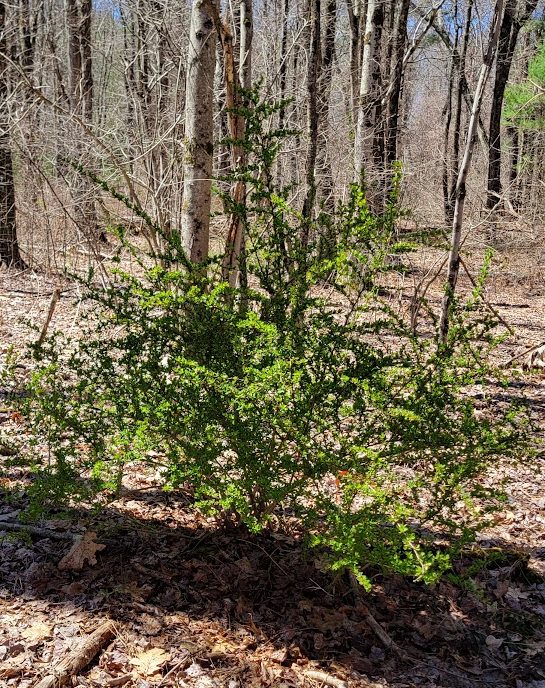
Bayberry in April. Photo by L. Kurtz, UConn Home Garden Education Office
Interesting Insects: Scout for Egg Masses
Early spring is a great time to scout for pest eggs before the weather warms up enough for them to hatch. Finding and destroying egg masses before they hatch is a very effective method of pest control in your garden, landscape, and lawn. Three major pest eggs to look out for at this time of year are the eastern tent caterpillar, spongy moth, and spotted lanternfly.
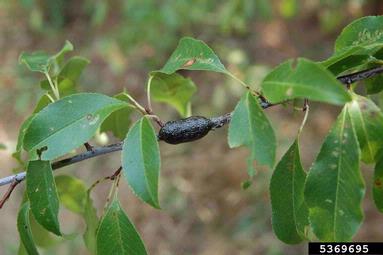
Eastern tent caterpillars are best known for the webs they build in the forks of tree branches in spring and early summer. Their egg masses hatch right as trees leaf out, so make sure to look for them before tree buds begin to open! These one-inch-wide egg masses are commonly found wrapped around small twigs on cherry, crabapple, and apple trees. Prune or peel them off and destroy.
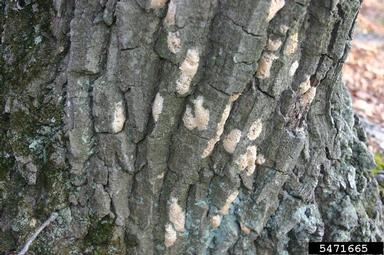
The Spongy Moth is an invasive species that defoliates hardwoods in New England. Eggs were laid in the summer and have overwintered on tree trunks, branches, stumps, and sometimes stone walls or buildings. The egg masses appear tan and velvety. The eggs hatch in May, so it’s important to scout them out and destroy them now. They can be scraped or brushed off into a bucket of soapy water or squished into the ground.
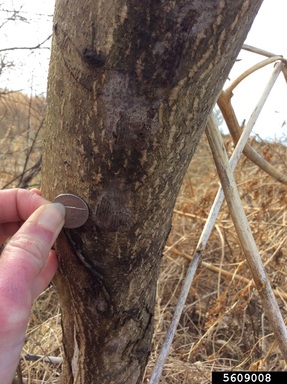
Finally, be on the lookout for Spotted Lanternfly egg masses. This insect is invasive and destructive to grapevines, hops, stone fruit trees, and hardwood trees. It lays its eggs on any hard surface, such as trees, stones, fences, firewood, or vehicles. Egg masses will appear as columns of brownish seed-like deposits, about an inch long. When you locate egg masses, first smash them, and then scrape them off the surface into a plastic zip bag filled with hand sanitizer or rubbing alcohol. Then, zip the bag shut and throw it away. Finally, report the location of egg masses to the CT Agricultural Experiment Station.
When Do I Get to Start Gardening?
When we have a few days of warm, sunny weather, gardeners get excited to get out and get to work!
Experienced gardeners tend to observe patterns and find natural milestones of when to start doing certain tasks. As an example, when the forsythia bloom, we often simultaneously see more activity in the garden and in the soil. This can act as a cue for certain management strategies in the garden.
If you dive into the phenology of our plants and insects, you will find that temperature consistency in various environments or conditions (soil, and air during the day or at night) fall pretty close in step with these observations, adding some scientific support to these methods.
However, New England Springs can throw us a curveball from time to time, and unpredictable conditions can throw our schedules significantly. Not too long ago, a late spring frost damaged many plants already in the ground!
To take it a step further, looking at Growing Degree Days can help you determine when specific species of plants or insects may be emerging. Use this indicator to help you identify when to implement preventative measures for tricky garden pests or to help you determine if it's time to clean out your winter pollinator habitat with greater confidence.
For a strong garden strategy, use a combination of tools including growing degree day calculators, soil temperature monitors, and your own observations of phenology to help you determine when the best time for any activity garden is for your specific location.
Native Plant Highlight: Sweet Fern
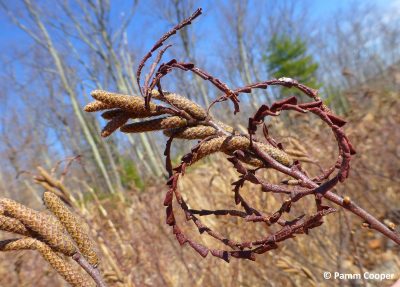
Sweet fern, Comptonia peregrina, is a native shrub commonly found in acidic, dry, sandy soils. It is usually found in full sun but also can tolerate partial shade.
Look for it on slopes, roadsides, and disturbed sites such as power line rights-of-ways. Its fernlike leaves are aromatic when crushed. It flowers as early as March as it begins to leaf out. It is superb as a soil stabilizer on sandy slopes and where sandy soils support little else. It can form colonies over time via strong rhizomes.
The CT Native Plant Availability List: Updated and even MORE user-friendly!
This native plant guide was created to assist municipalities, conservation organizations, homeowners, landscape architects, designers, and contractors with locating native plants for habitat restoration and wildlife enhancement.
The Connecticut Native Plant Availability List, by UConn Extension and CT DEEP Wildlife Division, identifies nurseries and garden centers that grow/sell native trees, shrubs, and perennials. Along with several nurseries that are new to the list, we have also added the ability for users to view the Availability List sorted by Nursery!
Word from the WiSE
Women in Soil Ecology, UConn Student Chapter
Wait Now, Thrive Later: Soil Compaction
This month, we’re bringing you a word on preventing soil compaction with spring patience. As temperatures rise heading into April, it’s exciting to start thinking about spring garden preparations. After a long winter and snowmelt, our soils are holding plenty of moisture, so giving them a little extra time can make a big difference. Working in soil that’s too wet, whether it be by walking on it or using equipment, can lead to soil compaction, sometimes referred to as the “silent thief” of plant growth. Compacted soil reduces the space roots need to grow, making it harder for plants to access water and nutrients.
The good news? It’s easy to check if your soil is ready. Just grab a handful of your soil and squeeze it and if it crumbles apart, you’re good to go! If it sticks together in a clump, it’s best to wait a little longer. A bit of patience now helps to create healthier soil, stronger roots, and a more successful garden all season long. Your plants will thank you!
By Josenia Lopez, Plant Science Undergraduate Student
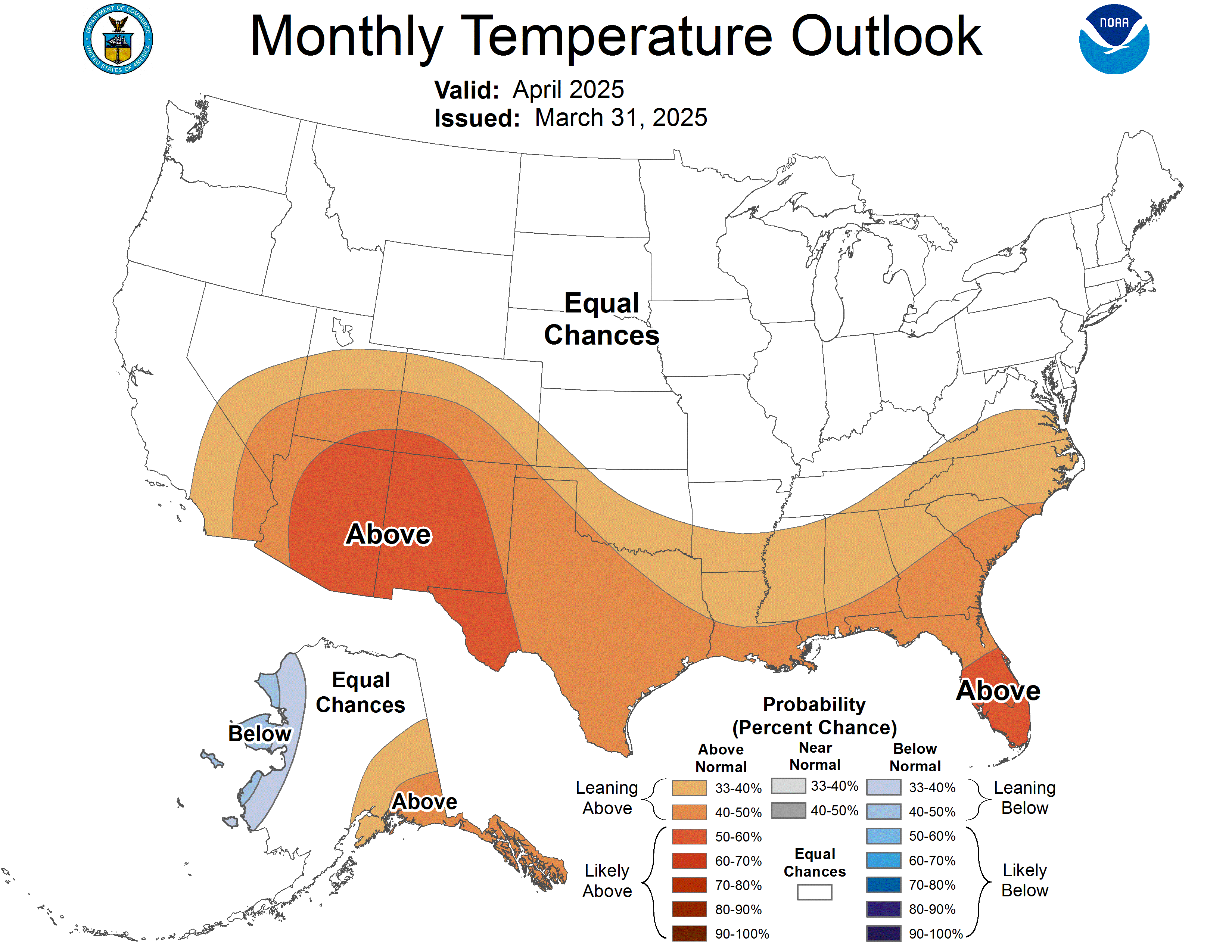
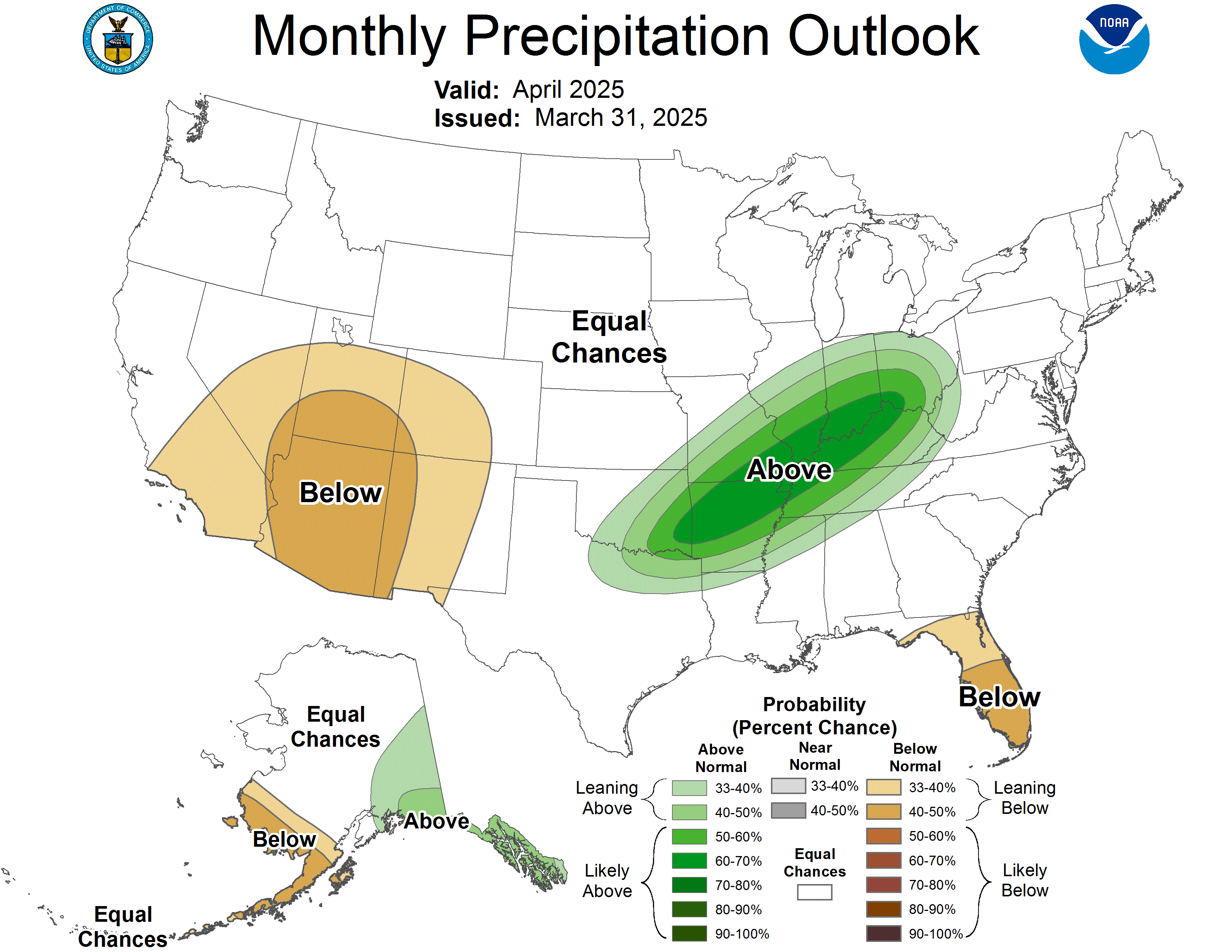
Knowledge to Grow On
Read our Ladybug Blogs Written Weekly
Protecting the Pollinators: Why Connecticut’s Native Bees Depend on Healthy Soil
Propagate houseplants to use as summer annuals
Find Us in the Media
The Carbon Sink Under Your Feet: Why Your Lawn Matters

Photo by Sydney Herdle/UConn Photo
Upcoming Events and Things to Do
- Tree Rings & Earth Things - April 16th, Hampton CT
- Gardens of the Gilded Age - April 29th, Hartford CT
- Local Farmers Markets, CSAs and farm stands start opening in April
- Naturally Natchaug Clean Water Festival - May 2nd, Mansfield CT
- George Leigh Minor Plant & Soil Health Center Open House - May 16th, Storrs CT
Join Us at Upcoming Talks
April 13, 2026 - 1:00 PM
Hosted by the Avon Garden Club
The Church of St. Ann, 289 Arch Rd., Avon, CT
April Gardening Tips
- Pull back mulch from perennials to allow the soil to warm up but be prepared to temporarily cover them if heavy frosts are predicted.
- Freezing temperatures don’t harm pansies, but if they have been grown in a greenhouse they should be gradually exposed to outdoor temperatures before planting. Flowers can be damaged in frosts, but plants will survive.
- Weather permitting, direct sow peas, carrots, radishes, lettuces, and spinach every two weeks through mid-May for staggered harvests.
- Don't wait too long to remove mulches from strawberries. Once the leaves have emerged from under the straw and yellowing is evident, pull the mulch away from the tops of the plants and tramp it down between the rows. Keeping the base of the plants mulched helps keep the berries clean, controls weeds, and conserves moisture.
- Check fruit trees for Eastern tent caterpillars, they emerge around the same time as leaves sprout. Blast nests with a strong spray of water to destroy them.
- Apply pre-emergent crabgrass weed control when soil temperatures reach 50°F. Use a tool like this soil temperature map to track your timing.
- Do not use a pre-emergent weed control if you are trying to germinate seeds in the same area.
- Complete removal of diseased, weak, or crossing branches on shrubs and small trees.
- Place peony supports.
- Start cleaning containers and pots so they are ready for planting.
- Divide overcrowded summer or fall blooming perennials.
University of Connecticut
Roy E. Jones Building Annex
27 Manter Road, Storrs, CT, 06269
(In front of UConn Dairy Bar)

UConn Home Garden Education Office
Horticultural support and education for home garden issues related to plant health, garden pests, general plant care, and more.
UConn Plant Diagnostic Laboratory
Diagnosis of plant health and pest issues for commercial growers and the public.
UConn Soil Nutrient Analysis Laboratory
Soil chemistry testing including pH, nutrients, salinity, lime and fertilizer recommendations, and many others.
UConn Turf Diagnostic Lab
Turf diagnostics for golf courses, athletic fields, or other commercial turfgrass sites
What Stays the Same
We will continue to provide the professional and research-based support you’re used to, just in a convenient, central location. Our science-based testing protocols and result-driven recommendations reinforce our commitment to serving growers, landscapers, and the public with their plant and soil health issues.
What Gets Better
Combining current programs all under one roof provides an opportunity for more collaboration, outreach, and educational opportunities for our stakeholders.
- One easy-to-find location for soil, plant, and turf sample submissions
- Future expansion of diagnostic services available for plant and soil health analysis
- Collaboration between programs and increased opportunities for public outreach events
s.uconn.edu/plant-soil
This Month’s Newsletter Contributors:
Heather Zidack, Pamm Cooper, Lauren Kurtz, Holly McNamara, Josenia Lopez