
A Cold Spring, Garden Design and other June News

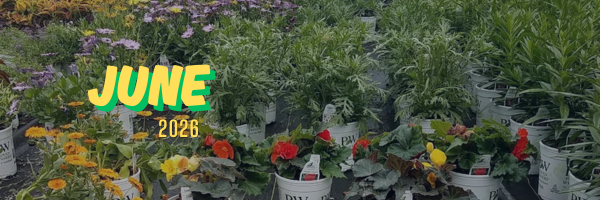
Rows of potted flowering plants and leafy green foliage arranged in a garden center, with colorful blooms in yellow, orange, red, and purple. Bold text reading “JUNE 2026” appears over the image.

"It is the month of June,
The month of leaves and roses,
When pleasant sights salute the eyes,
And pleasant scents the noses..."

—  Nathaniel P. Willis  

We Have Officially Moved to our New Location!

Last month, The UConn Home Garden Education Office & our partners at the Plant Diagnostic Lab & Soil Nutrient Analysis Lab successfully completed our move to our new location. 

Our phone numbers and email contacts have stayed the same, however our new address is: 

George Leigh Minor Plant and Soil Health Center
27A Manter Road, Unit 4115
Storrs, CT, 06269-4115

Thank you to our clients and stakeholders for your patience and understanding during our move.

Brick building exterior with a sign reading “UConn George Leigh Minor Plant and Soil Health Center,” featuring a ramp, stairs, metal railings, and utility cabinets in front of a wooden slat fence.

It's Been Cold - How Will It Affect My Garden?

This spring has been on the cooler side, and gardeners are feeling the stress. We've been getting a lot of inquiries about what, when, and how to cover plants during these cold snaps and wondering how it will affect what's already been planted. Here are the facts: 

  •  Soil temperatures are warm and slower to shift compared to air temperatures. Warm soil will help keep plants warm during these cold snaps, especially when you are able to build a small, cloth tent around your tender plants when cold nights are in the forecast.
  • Mulch can also help stabilize the temperature in the garden, protecting against short term temperature extremes.
  • Many plants in the garden, if properly transitioned before being planted earlier this month, are likely to have hardened off. A few cold nights may cause stress, but should not kill the plants. 
  • Cold temperatures can cause stunting or delayed growth, especially in warm season crops like tomatoes, basil, peppers and eggplant. 
  • Physical signs of cold damage can include browning or purpling foliage, wilting or deformation or flower/leaf drop 

What Can I Do?

  • Plants will recover from cold damage without much intervention. If able, water plants thoroughly before temperature drops, as moist soil retains more heat than dry soil. After the event, continue normal watering as needed to prevent drought stress, but avoid fertilizing until plants resume active growth.
  • Injured plant tissue does not heal in the sense that damage will be reversed over time. Look for healthy, unblemished new growth as a sign of the plant's recovery. 
  • Delay pruning until the danger of additional temperature dips have passed and new growth appears. At that point, remove clearly dead or damaged tissue.
  • Be patient! At times, damage may take time to appear. If growth delays have occurred, there is still plenty of growing season left for your plants to recover and produce.

Garden Design Tips

Are you establishing a new garden bed at home? Use these tips to help you create a purposeful and balanced garden design. 

  • Avoid planting in straight rows. Utilize curves and natural lines to create a design that the eye can follow smoothly. Stagger plants in the landscape to make plantings look intentional, but not too structured.
  • Plant in groups of odd numbers. This helps to create a more natural look. Even pairs often gives the impression of too much uniformity
  • Plan for each season. In perennial gardens, especially, leave space for plants that flower in other seasons for a long display of color.
  • When planting within the same season, it is important to select flower colors that blend well together. However, if one perennial flowers in summer, and another flowers in fall, it is much less likely that they will overlap and contrast one another. 
  • Keep mature size in mind. It can be very tempting to plant masses of plants that are fresh out of the pot. But even those one gallon perennials may get pretty big after a couple of seasons. Whenever you are planting trees, shrubs and perennials, it is important to consider what their final, mature size will be so that you can leave enough room. Consider putting annuals in between during years your plants are establishing to better fill the space. 

Basic Garden Design


 Interesting Insects: Four Lined Plant Bug
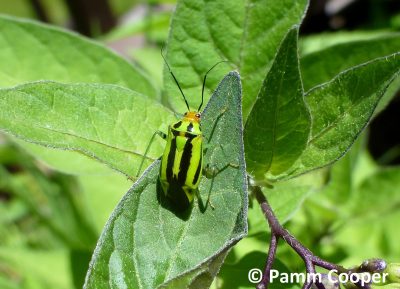
Bright green and black four-lined plant bug resting on a green leaf, with long black antennae and an orange head visible against surrounding foliage.
Photo by Pamm Cooper, UConn Home Garden Education Office

Egg hatch can be as early as late April in Connecticut. Nymphs develop and feed for about a month, reach adult stage and mate Eggs are laid on the host plants where they overwinter. There is thankfully only one generation a year.  Feeding injury from nymphs and adults causes black or brown sunken spots to form on the foliage host plants. These areas may be mistaken for leaf spot diseases. There are over 250 host plants including mints, herbs, dandelions, thistles and other plants. Cut down host plants and remove material in the fall as eggs may have been inserted into them.

Four Lined Plant Bug


Invasive Plants to Scout for in June

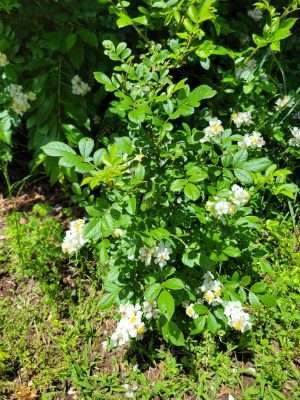
A leafy green shrub with clusters of small white flowers and yellow centers growing in a sunlit garden bed, surrounded by grass and other plants.
Photo by Lauren Kurtz, UConn Home Garden Education Office

Look for flowering invasives now and remove them before they set seeds.

Depending on site conditions and local timing, invasives flowering in June in Connecticut include Oriental bittersweet (Celastrus orbiculatus), multiflora rose (Rosa multiflora), Japanese honeysuckle (Lonicera japonica), burning bush (Euonymus alatus), and dame's rocket (Hesperis matronalis).

Removing invasives before they set seed will prevent them from spreading more seeds into the environment. The management strategy to use varies by habitat and species. Visit the Connecticut Invasive Plant Working Group website for more specific information. 
 

CT Invasive Plant Working Group


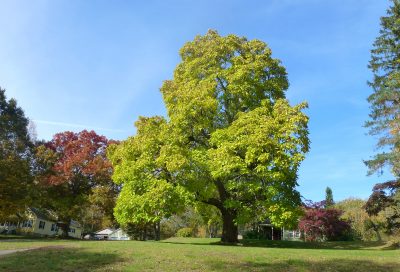
Native Plant Highlight: Northern Catalpa

Large deciduous tree with bright green leaves standing in an open grassy yard under a clear blue sky, with houses and other trees showing early fall color in the background.
Photo by Pamm Cooper, UConn Home Garden Education Office

This native tree is known for its heart-shaped leaves, bean- like fruits and large clusters of showy white flowers with yellow and purple spots inside. Flowers are visited during the day  by hummingbirds, bees, and moths and by night by many diverse species of moths, especially sphinx moths. The large trees have angular branching that makes for winter interest.

Learn More About Northern Catalpa

The CT Native Plant Availability List: Updated and even MORE user-friendly!

This native plant guide was created to assist municipalities, conservation organizations, homeowners, landscape architects, designers, and contractors with locating native plants for habitat restoration and wildlife enhancement.

The Connecticut Native Plant Availability List, by UConn Extension and CT DEEP Wildlife Division, identifies nurseries and garden centers that grow/sell native trees, shrubs, and perennials. Along with several nurseries that are new to the list, we have also added the ability for users to view the Availability List sorted by Nursery!
CT Native Perennial, Tree & Shrub Availability List


Word from the WiSE

Women in Soil Ecology, UConn Student Chapter

Native Plant-Fungal Associations

This month, UConn’s Women in Soil Ecology bring you a word on native plant associations with fungi in Connecticut (CT). These associations occur across several types of mycorrhizal fungi, each interacting with plants in unique ways. Mycorrhizal fungi form symbiotic relationships with the roots of most land plants. Overall, these fungi can enhance nutrient uptake, improve water absorption, aid in pathogen and disease suppression, stress response, and improve soil function for plants. 

The lady slipper orchid (Cypripedium species) is an example of a highly specialized symbiotic relationship with mycorrhizal soil fungi. The fungus invades the orchid seeds and provides vital carbohydrates and nutrients required for germination and seedling development, continuing to aid the mature plant in return for water and soil minerals. Another example is the ghost pipe (Monotropa uniflora), which is a plant that is found in deeply shaded CT forests. This plant steals nutrients from Ericoid mycorrhizal fungi connected to surrounding trees. Ericoid mycorrhizal fungi form sheaths around plant roots and create a network of hyphae between root cells without penetrating the cells, called Hartig net. Wild Geranium (Geranium maculatum) is another native plant that benefits from mycorrhizal associations, specifically with arbuscular mycorrhizal fungi. These fungi penetrate root cells and create specialized structures called arbuscules, which facilitates the exchange between the fungus and the plant.

These hidden underground partnerships play a vital role in maintaining healthy forests, resilient ecosystems, and productive soils throughout Connecticut. 

By Nora Doonan, Soil Science PhD Student, UConn PSLA


Weather Outlook

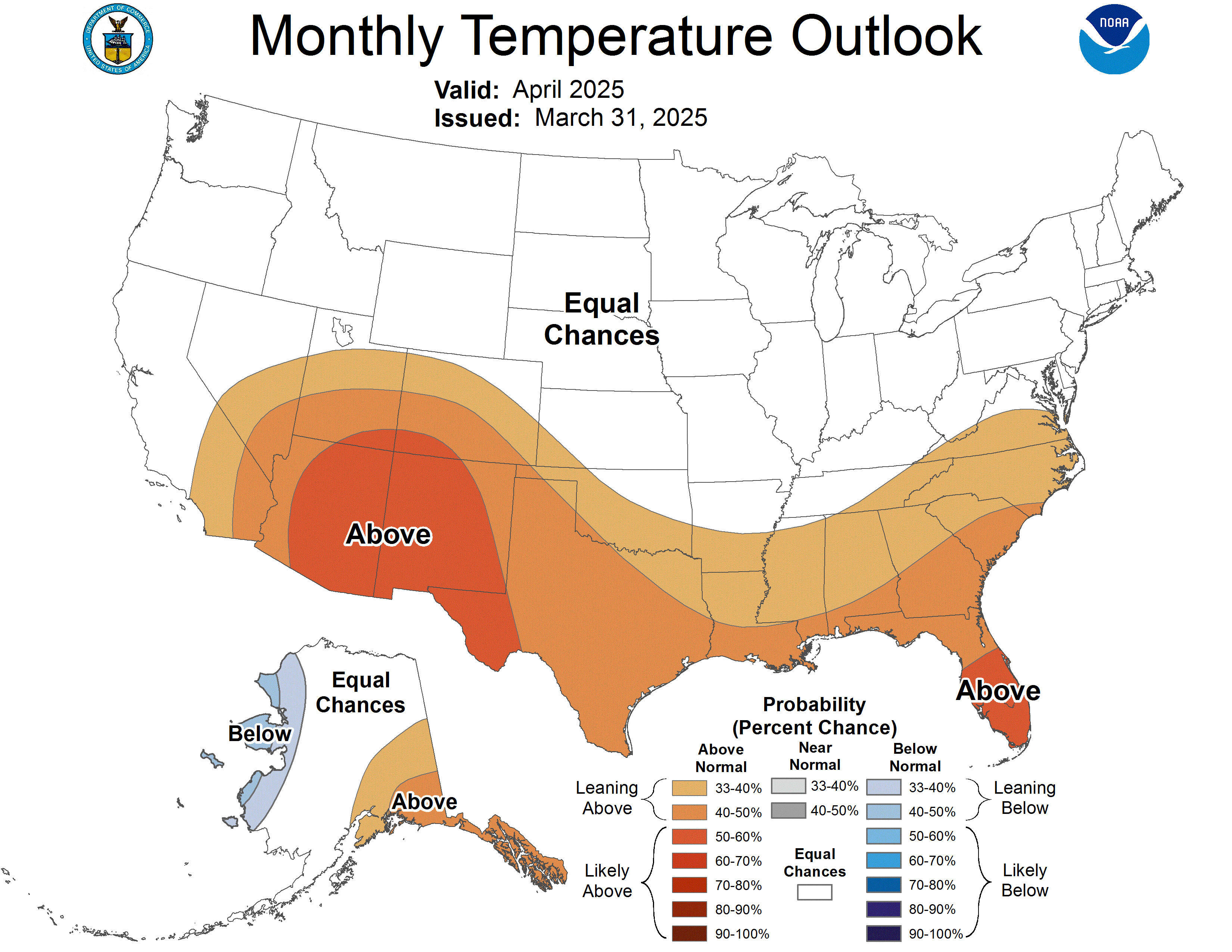
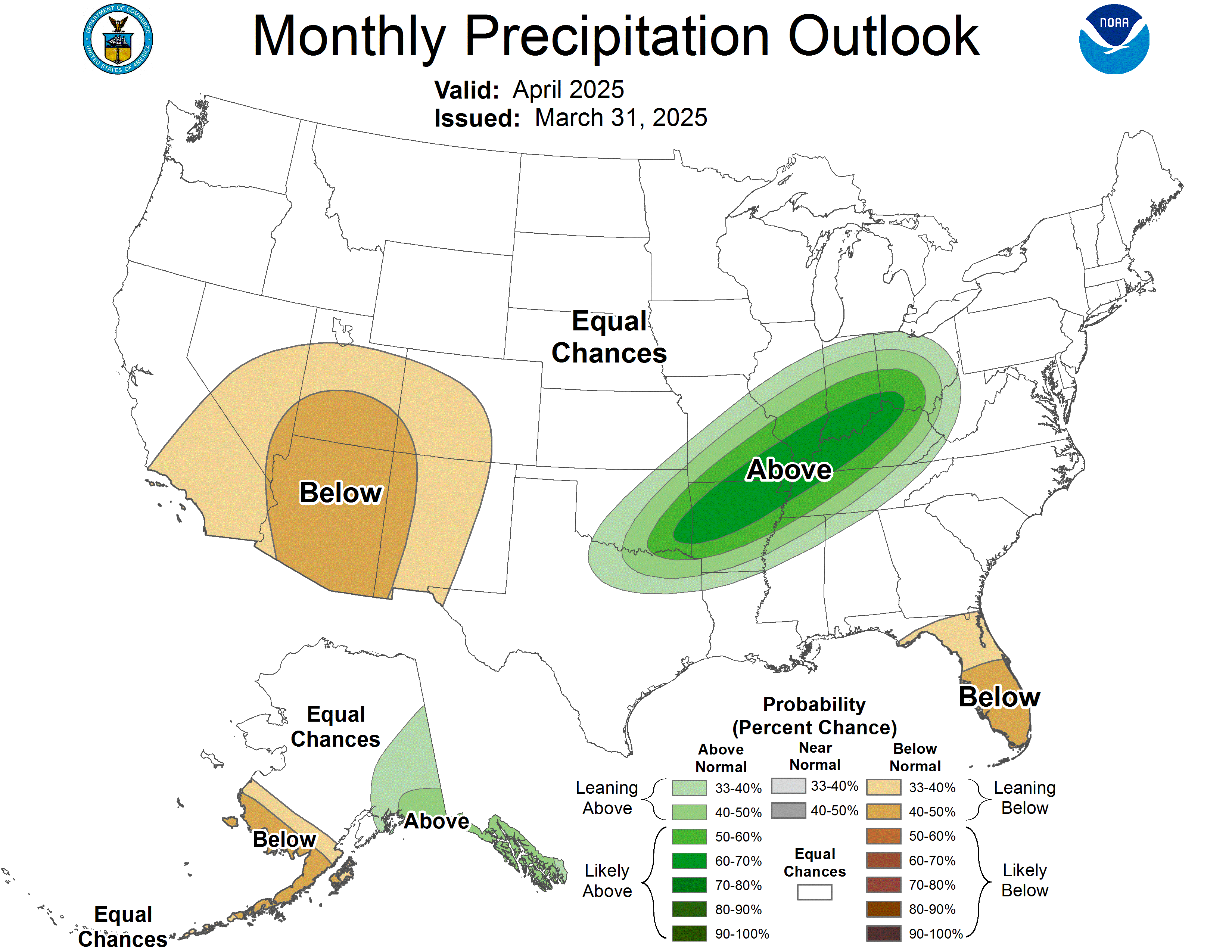
A seasoned gardener always keeps their eye to the sky at any time of year! Maps and the 30 day outlook from NOAA will help you stay prepared for any and all of your gardening chores! (Click image to see larger map.)

Monthly Temperature Outlook Map of United States
Monthly Precipitation Outlook Map of United States

We Need Your Input!

The UConn Home and Garden Education Center is asking for your input to help guide future programs and services. Please take a few minutes to complete our needs assessment survey and share what topics, resources, and support would be most helpful to you.

Your feedback will help shape upcoming educational offerings and strengthen our ability to serve Connecticut gardeners.

Thank you for your feedback!

If you have any questions about this survey, please email us at ladybug@uconn.edu

Take the Survey!


Upcoming Events and Things to Do


            June Gardening Tips

                    • Keep on top of weeds during the early summer when they are small and easy to pull. If you keep your garden plants well-watered and fertilized, they will quickly fill in bare spaces and give weeds fewer places to grow.
                    • Sow seeds of fast-growing annuals like marigolds, zinnias, and cosmos directly in the garden
                    • Lightly cultivate soil after a heavy rain to avoid compaction. A layer of mulch reduces the soil crusting and compaction caused by raindrops.
                    • You can move houseplants outside to the deck or patio and enjoy them outdoors for the summer. It is best to gradually introduce them to more direct sunlight to prevent the leaves from being burned.
                    • There is still time to sow seeds of beans, beets, carrots, cucumbers, and summer squash.
                    • Harvest early season fruits such as strawberries when they are at their peak.
                    • Do not use a pre-emergent weed control if you are trying to germinate seeds in the same area.
                    • Heavy rains encourage slug problems. Check for slugs during rainy periods and hand pick the pests.
                    • June bugs, can be annoying as they bounce on your window screens attracted by your house lights. The larvae do eat plant roots and the adult beetles forage on trees and shrubs although they do not seem to cause the excessive damage associated with Oriental beetles or Japanese beetles.
                    • Mosquitoes breed in standing water. To discourage them, change the water in bird baths and outdoor pet dishes every few days.
                    • Mow lawns often enough to remove no more than one-third the total height per mowing. There is no need to remove clippings unless excessive or diseased.


                    We've Moved to Our New Location!

                    New Location: 
                    George Leigh Minor Plant and Soil Health Center
                    University of Connecticut
                    Roy E. Jones Building Annex
                    27 Manter Road, Storrs, CT, 06269
                    (In front of UConn Dairy Bar)
                    Map of the Jones Annex across from the dairy bar

                    UConn Home Garden Education Office

                    Horticultural support and education for home garden issues related to plant health, garden pests, general plant care, and more.

                    UConn Plant Diagnostic Laboratory

                    Diagnosis of plant health and pest issues for commercial growers and the public.

                    UConn Soil Nutrient Analysis Laboratory

                    Soil chemistry testing including pH, nutrients, salinity, lime and fertilizer recommendations, and many others.

                    UConn Turf Diagnostic Lab

                    Turf diagnostics for golf courses, athletic fields, or other commercial turfgrass sites

                    What Stays the Same

                    We will continue to provide the professional and research-based support you’re used to, just in a convenient, central location. Our science-based testing protocols and result-driven recommendations reinforce our commitment to serving growers, landscapers, and the public with their plant and soil health issues.

                    What Gets Better

                    Combining current programs all under one roof provides an opportunity for more collaboration, outreach, and educational opportunities for our stakeholders.

                    • One easy-to-find location for soil, plant, and turf sample submissions
                    • Future expansion of diagnostic services available for plant and soil health analysis
                    • Collaboration between programs and increased opportunities for public outreach events
                    Watch for More Information Soon
                    s.uconn.edu/plant-soil

                    This Month’s Newsletter Contributors: 
                    Pamm Cooper, Lauren Kurtz, Emily Leahy, Zaira O'Leary, Heather Zidack