Cut Flowers

Keeping Valentines Day Flowers Fresh

By Heather Zidack, UConn Home Garden Education Office

Valentine’s Day is one of the biggest holidays, next to Mother’s Day, in the floral industry. Whether you’re buying fresh cut flowers, or a potted plant for someone special, helping them keep those flowers looking their best can be part of the gift you give this year.  
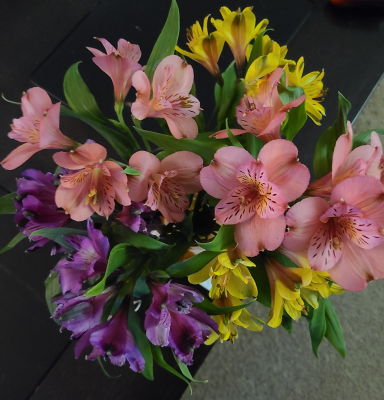
Pink, yellow, and purple Alstroemeria flowers arranged together in a small bouquet with green leaves.
Photo by H. Zidack

Start by selecting flowers that look healthy and vibrant. You want flowers with firm petals, with buds just starting to open or have just recently opened. Avoid flowers that are releasing pollen, are discolored, or have drooping foliage. Check the stems for rigidity and make sure that plant material is clean with no indications of mold or decay. When you purchase your flowers, many florists will give you packaging to help reduce their exposure to the extreme cold as you carry them to your car. This is an important step, so don’t skip it if you can! Avoiding large temperature fluctuations will keep your flowers fresh for longer.  

When you get home with your flowers find a vase that is clean and free of debris. Always wash vases with warm, soapy water in between uses to prevent the transmission of bacteria and disease from one bouquet to the next. Add fresh, tepid water. Remove all plastic, rubber bands, and other packaging from your bouquet. Cut each flower stem at a 45-degree angle using hand pruners or snips. Using scissors, or knives that aren’t sharp may crush the vascular tissue and prevent the flowers from taking up water, leading to faster decline. Remove any leaves that would sit below the water line before placing stems into the vase.  

If you have a bouquet of roses, take special care when you are preparing their stems. These flowers will live longer if you cut their stems under water, using the same 45-degree angle, and place them in your vase of water as quickly as possible. This extra step ensures that air bubbles don’t work their way into the vascular tissue and will keep your roses fresh for longer. When we see roses develop a “floppy neck,” this is most often the cause. While it is possible to revive your roses from this issue, it is best to try to avoid it altogether.  

There are many anecdotes out there regarding additives to provide food and antimicrobial agents to the water to help your flowers last longer. Many of these anecdotes aren’t based in research. If your bouquet comes with a flower food packet, mix it as instructed and use it in your vase. However, if you don’t have one, don’t worry about adding anything. Instead, focus on ensuring that you are giving your flowers fresh, clean water. 

Decay and microbial growth are two of the biggest reasons our cut flowers pass quickly. Many of the strategies mentioned above help to mitigate this concern, but it is important to keep a watchful eye. Besides washing your vase in between use, sanitize your flower snips or pruners in between uses as well and watch the water quality in your vase, replacing it every couple of days with fresh, cool, water. Always change the water if it appears murky or cloudy in the vase.  

When changing your water, make a fresh cut 1-2 inches up the stem to ensure that the vascular system is staying open and clean of any debris or bacteria. If stems are starting to get mushy, cut high enough above the decay, or consider removing the stem entirely from the arrangement. Keep your flowers in a location that is bright but avoid direct sunlight, and keep them away from drafts, or entryways where large temperature fluctuations are likely. Lastly, know when to say goodbye and dispose of any flowers that are past bloom, or showing signs of decay. You may notice that you’ll need a smaller vase as you cut your stems shorter or remove flowers as they pass. A mason jar makes for a great display for those longest lasting flowers!  

There’s no doubt that fresh flowers bring vibrancy and life into our homes during these blustery, winter months. Whether you’re buying a bouquet for yourself, or for someone special this Valentine’s day, keep a close eye on them and you’ll be sure to have long lasting blooms to enjoy!  

The UConn Home Garden Education Office supports UConn Extension’s mission by providing answers you can trust with research-based information and resources. For gardening questions, contact us toll-free at (877) 486-6271, visit our website athomegarden.cahnr.uconn.edu, or reach out to your local UConn Extension Center atextension.uconn.edu/locations.  

This article was published in the Hartford Courant February 15, 2026

DIY – Grow Flowers for Cutting

By Dawn Pettinelli, UConn Home & Garden Education Center

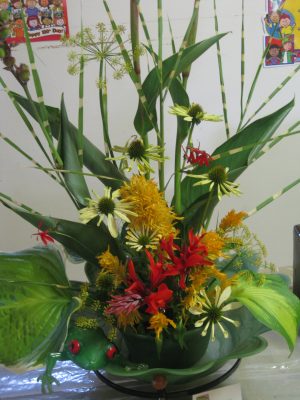
Cut flower arrangment
Fresh cut flowers - Photo by dmp2024

Do you just love fresh flower arrangements for the table or even that single bloom in a vase by your bedside? Wouldn’t it feel great to just stroll out your back door, clip some blossoms, bring them inside and enjoy their beauty? There’s no reason that you can’t. Even a small yard or garden space can yield blossoms for cutting.

While many of us have flowering perennials and even woody plants that make for great arrangements, perhaps a dedicated cut flower planting would provide many more stems for cutting and not create any empty spaces in our garden designs. When planning your cut flower garden, first decide where it should go. The majority of blooming plants need at least 6 to 8 hours of sun each day, a well-drained, fertile soil and adequate water during dry spells. As with all garden plants, a soil test is a great way to find out what is needed to add to soils before planting but without a soil test, follow the directions on fertilizer packages.

There’s still time to prepare new beds for cut flower plantings but another alternative would be to turn over part of the vegetable garden to cut flower production. Probably your vegetable garden already has great soil and is located in a sunny area.

The hardest part of designing a cut flower garden is selecting what plants to grow. There are so many beautiful and exciting flowers to choose from. A good suggestion is to grow easy flowers at first and then progress on to more demanding ones. Another important factor to consider is which flowers need to be purchased as transplants (or started inside earlier under lights) and which can be easily grown by sowing seeds directly in the garden. While there are a number of flowering plants that can be started by direct seeding, you’ll get faster blooms if you purchase or grow your own transplants.

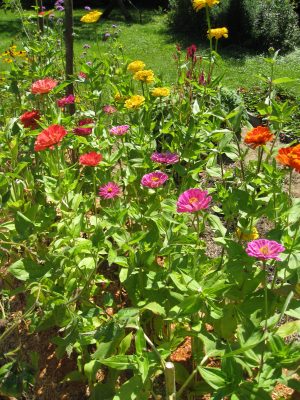
Zinnias planted in a row
Zinnias - Photo by dmp2024

Some that I typically grow each year from seed are zinnias, the tall African marigolds, cosmos, bachelor buttons, calendulas, nasturtiums, and some sunflowers. Cool weather calendulas and bachelor buttons can be sown now but wait until later in the month to plant the rest. A number of cutting annuals will self-seed if blossoms are allowed to mature and the beds are not heavily mulched. Some that spring up for me include ageratums, verbena, ammi, nigella, and wheat celosia. If you have some known self-seeders, wait a bit longer to prepare or till beds to see what sprouts.

Those best purchased as transplants include rudbeckia, snapdragons, cleome, stock, strawflowers, globe amaranth, tithonia, asters and amaranth. Some might have tiny seeds or be slower to germinate or just need a longer time until they produce flowers so starting with transplants may be a good option.

Two annual bulbs that are great for cutting are gladioli and dahlias. A few glad corms can be planted every other week until about mid-June to provide a summer full of spiky, colorful blooms. Dahlia tubers planted mid-May generally start producing blooms by late July but continue until a heavy frost.

There really are quite a few potential cut flower candidates to choose from. Feel free to select whatever colors and flower forms appeal to you most. From a designer’s viewpoint, consider what colors would be most compatible with where you want to place arrangements indoors. Also, whether making more formal arrangements or informal bouquets, flower shape plays a prominent role. Often the most attractive arrangements are filled with an assortment of shapes featuring a focal flower, spiky exclamation points, mounded shapes to hold the arrangement together, greenery for filling spaces and delicate airy springs to lighten the mood. I find mints, artemisia, and ferns make good fillers while grasses, kalimeris, boltonia, and white wood asters provide an airy touch.

The majority of annual flowers do fine at about a 9 by 9 inch spacing so you can pack them in pretty close. Do note that for copious blooms, a fertile soil and adequate water are essential. Maintenance also includes dead-heading, or removal of spent flowers to encourage the production of more blooms. Keep an eye out for plant pests as well.

Even beginning gardeners can set aside some space to grow beautiful flowers for enjoyment indoors. Try out a few this year, make notes on their performance and change up the plant rooster as they gain your approval or not.

For cultural information on growing various species of cut flowers or on other gardening topics, feel free to contact us, toll-free, at the UConn Home & Garden Education Center at (877) 486-6271, visit our website at www.homegarden.cahnr.uconn.edu or contact your local Cooperative Extension center.