Snow Cover, Lighting Needs, Snow Fleas, and More March News

Purple and white crocus flowers blooming from the soil with green grass surrounding them, accompanied by bold text reading “March 2026.

“March is a month of considerable frustration - it is so near spring and yet across a great deal of the country the weather is still so violent and changeable that outdoor activity in our yards seems light years away."

— Thalassa Cruso

We've Had a Lot of Snow - What Does it Mean for our Gardens?

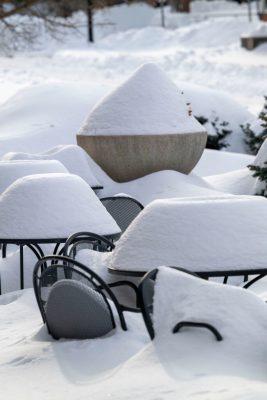
 Outdoor metal tables and chairs covered in deep snow, with large mounds of snow piled on top and around them in a winter landscape.
Photo by Sean Flynn/UConn Photo

It's been a temperamental winter! With extreme cold and lots of snow, many have asked us what to expect for their garden plants and even pest populations.

Snow acts as nature's insulation during the winter. A heavy layer of snow will help keep temperatures at and below the soil level stable when compared to air temperatures like the blustery cold we've experienced this winter. Plant root zones are quite content with both a consistent temperature, and lots of available water about to saturate their root systems with the snow melting and forecasted rain.

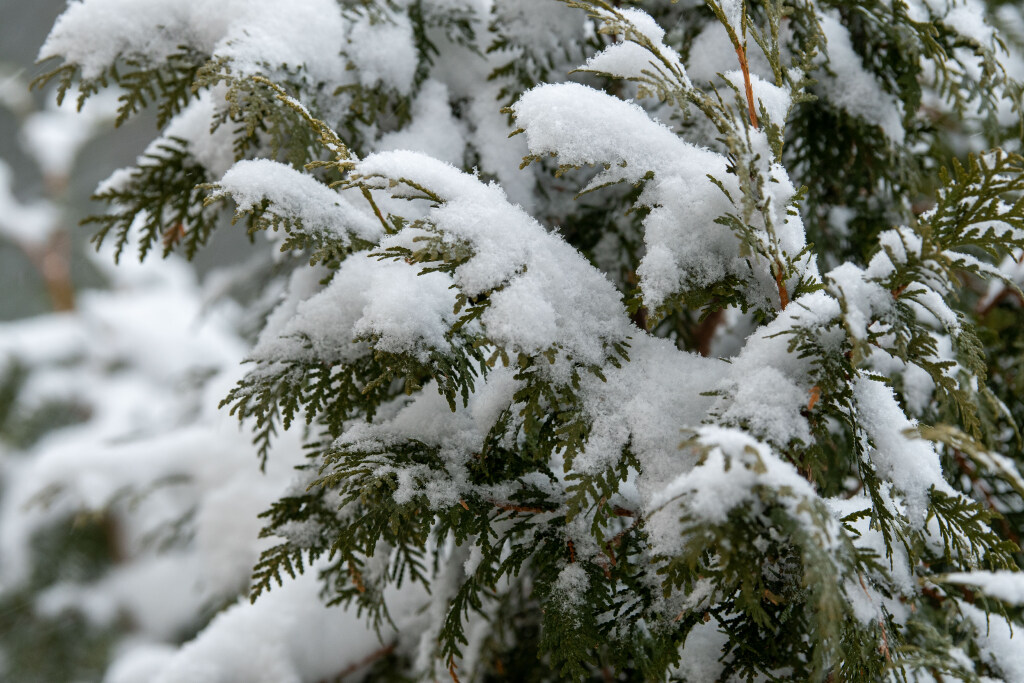
The bigger risk to plants is freezing and thawing. Snow weighing down branches can also lead to physical damage in the form of broken branches. As the snow thaws and refreezes, ice crystals surrounding evergreen needles can cause damage as well. In the more mild winters we've observed in previous years, freeze and thaw cycles lead to frost heaving, which leaves plant roots susceptible to winter damage.

Piles of snow mixed with de-icing salts can cause trouble if on or near ornamental plants. Be sure to flush these areas with clean water in the spring to help reduce salinity in the soil. 


 Lighting Needs for Starting Seeds Indoors
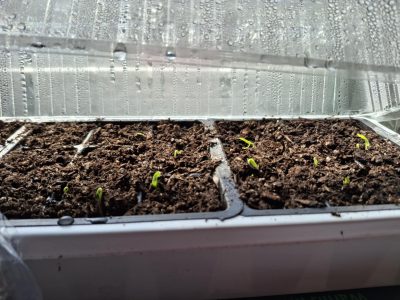
Seed tray with soil-filled compartments and tiny green seedlings emerging. Clear plastic lid with condensation droplets, indicating a humid environment.
Photo by Heather Zidack, UConn Home Garden Education Office

Most windowsills in Connecticut are not bright enough or warm enough in late winter for starting seeds indoors.

For sturdy seedlings, you’ll want to choose bright, full‑spectrum lights. Use LED or fluorescent fixtures rather than incandescent bulbs and keep them six to eight inches above the seedlings. Raise the lights as seedlings grow to prevent burning the leaves or leggy growth. Aim for 14 to 16 hours of light per day and use a timer, so seedlings get consistent lighting each day.


 Interesting Insects: Snow Fleas

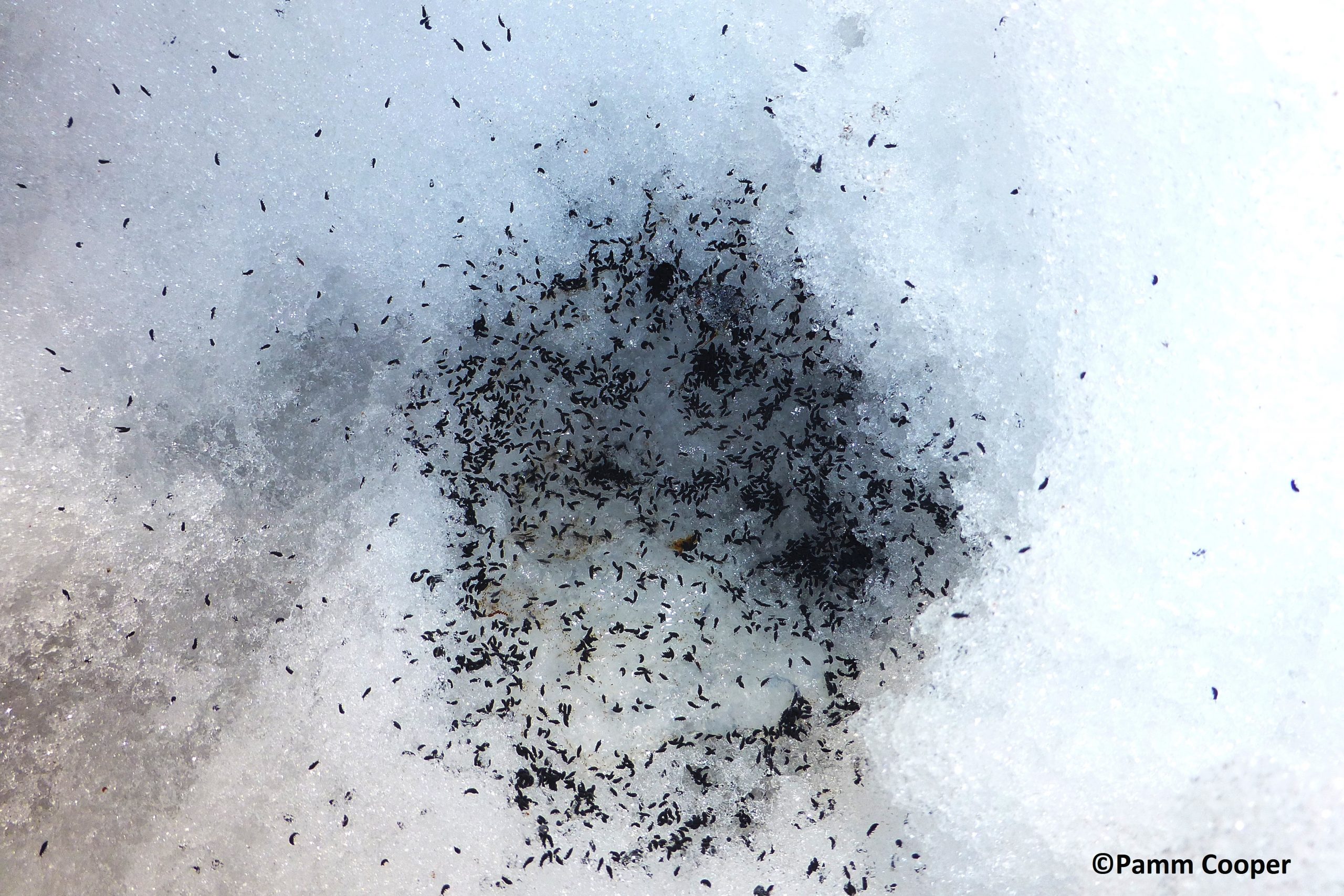
Snow fleas (Hypogastruna nivicola)  are commonly seen during the winter months, especially against the backdrop of snow.

They move in little jumps akin to fleas, but do so by flicking a furcula which sends them airborne to some extent. Click beetles also use a furcula in a similar fashion. These springtails  eat organic matter such as leaf litter, and can be found in damp environments year-round. 
 

Cluster of tiny dark springtails gathered in a shallow depression in the snow, creating a dense patch against the white background

Photo by Pamm Cooper, UConn Home & Garden Education Office


 Increasing Humidity for Houseplants

The start of spring signals houseplants to resume active growth. To maintain healthy houseplants during this stage of their life, ensure proper humidity conditions in the growing environment are met.

Spring air is often dry, depleting plants of moisture necessary to maintain their vigor. To promote humidity, place plants atop a tray of water with pebbles, mist occasionally, or set up a humidifier nearby.  Do not mist leaves, however, since this can create a favorable environment for disease. 

Spring into action: easy tips for thriving houseplants


Word from the WiSE

Women in Soil Ecology, UConn Student Chapter

Top Soil Tragedy: The Invasive Jumping Worm

The invasive jumping worm, resembling the European earthworm, is typically identified by the thick white band encircling the body (clitellum), their “jumping” and erratic movements, and are typically surrounded by coffeeground-like castings.

This pest is becoming a prominent issue in Connecticut, rapidly devouring organic matter and altering soil properties. Unlike the European earthworms, jumping worms produce castings that are hardened via mucus into clumps, and turn the top layer of soil rapidly into a heavily granular texture. These large castings negatively influence the surrounding environment and plants, making it harder for plant roots to securely anchor into the ground, take up water, nutrient absorption, and can cause rapid decline within an
area.

As of now, there is no standard method of eradicating or controlling the jumping worm population, however, there are some steps you can take to stay proactive and protect against the wicked worm, such as inspecting any root balls before planting, and using soil produced from a reputable source.

By Zaira O’Leary, Soil Science Master’s Student, UConn PSLA


Weather Outlook

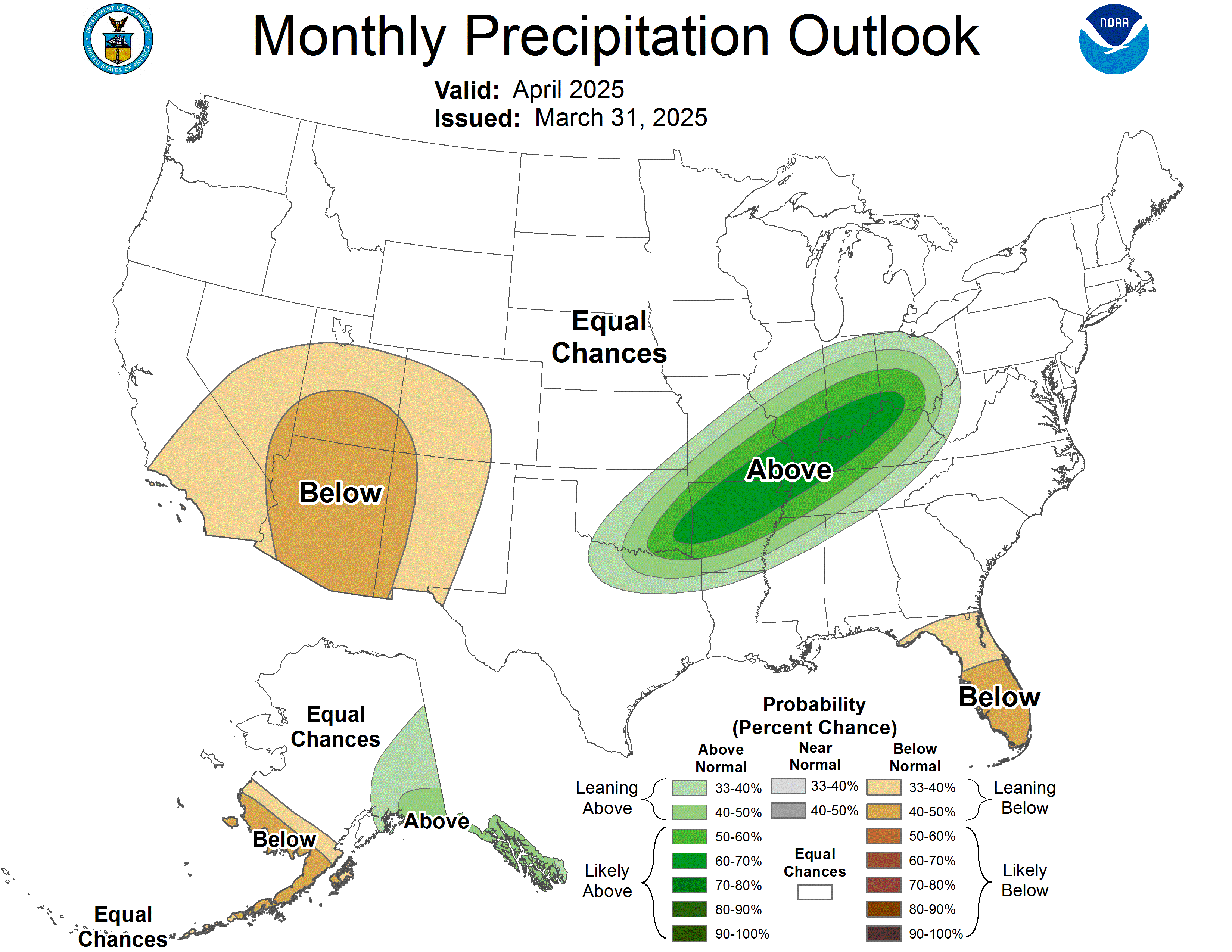
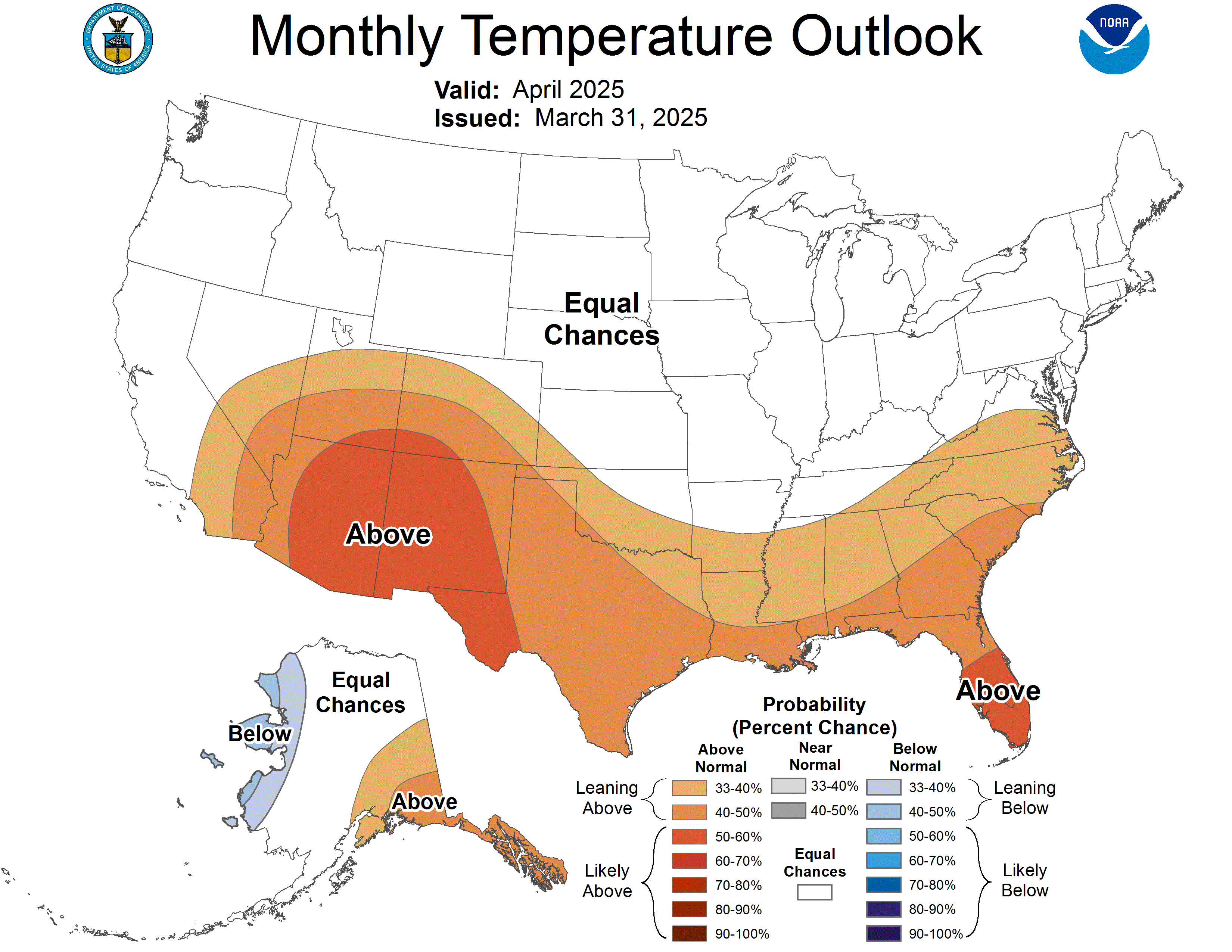
A seasoned gardener always keeps their eye to the sky at any time of year! Maps and the 30 day outlook from NOAA will help you stay prepared for any and all of your gardening chores! (Click image to see larger map.)

    Temperature map

Precipitation Outlook


Upcoming Events and Things to Do


      Educational Opportunities & Workshops


            Join Us at Upcoming Talks

            How to be an IPM Detective with Heather Zidack
            March 5, 2026 - 1:00 PM
            Hosted by the Wethersfield Garden Club
            Solomon Welles House, Wethersfield, CT
            Event Link - Please RSVP to wethersfieldgardenclubest1926@gmail.com

            Good Bug/Bad Bug with Pamm Cooper
            March 10, 2026 - 12:15 PM
            Hosted by Leete's Island Garden Club
            Nathaniel Greene Community Center
            Guilford, CT

            Gardening with Native Plants with Pamm Cooper
            March 16, 2026 - 6:30 PM
            Hosted by the Lutz Children's Museum
            Manchester, CT

            Connecticut Butterflies with Pamm Cooper
            March 23, 2026
            Hosted by East Hartford Garden Club
            617 Hill St. East Hartford, CT


            The CT Flower & Garden Show 2026

            UConn booth with a central table displaying informational materials, flanked by blue‑skirted display tables on both sides inside a large convention hall.

            Thank you to all of the volunteers, staff, and visitors that were part of making our booth a success! Mark your calendars! We'll be there again Feb. 18. - Feb 21 2027! 


            March Gardening Tips

              • Seeds of annuals that require 10-12 weeks of growth before transplanting can be started indoors now.
              • Using sterile growing mix for starting seeds reduces problems with damping-off fungi. Avoid overwatering, which encourages root rots.
              • Move woody plants before they begin new spring growth; transplant as soon as the soil is workable.
              • Prune out and destroy dark, swollen black knot galls on twigs of cherry and plum before budbreak. On trees, shrubs, fruiting bushes and vines, prune off and destroy cankered twigs and any branches showing dieback. Prune shortly before budbreak, or wait until just after leaves have expanded.
              • When buying houseplants in winter, be sure to wrap them well for the trip home and, if possible warm up the car. This prevents the foliage from freezing and protects tropicals from drafts.
              • Check all house plants closely for insect infestations. Quarantine gift plants until you determine that they are not harboring any pests. Inspect under leaves and stems for white, cottony mealybugs, and look under leaves and on stems for scale insects. 
              • Carefully remove winter mulches from planting beds as snow melts and temperatures warm but leave it nearby so that tender plants may be recovered if there is a frost.
              • After the snow melts, flush areas that have been exposed to de-icing salts around the roots with fresh water.
              • Keep any birdseed and pet food that is stored in the garage in tightly covered containers to prevent rodents and wildlife from getting into it.
              • Start cleaning containers and pots so they are ready for planting.
              • Save plastic milk jugs or 2-liter containers to use as individual hot caps or cloches. They will fit nicely over small garden plants, creating a free miniature greenhouse.


              We're Moving in April 2026

              New Location: 
              George Leigh Minor Plant and Soil Health Center
              University of Connecticut
              Roy E. Jones Building Annex
              27 Manter Road, Storrs, CT, 06269
              (In front of UConn Dairy Bar)
              Map of the Jones Annex across from the dairy bar

              UConn Home Garden Education Office

              Horticultural support and education for home garden issues related to plant health, garden pests, general plant care, and more.

              UConn Plant Diagnostic Laboratory

              Diagnosis of plant health and pest issues for commercial growers and the public.

              UConn Soil Nutrient Analysis Laboratory

              Soil chemistry testing including pH, nutrients, salinity, lime and fertilizer recommendations, and many others.

              UConn Turf Diagnostic Lab

              Turf diagnostics for golf courses, athletic fields, or other commercial turfgrass sites

              What Stays the Same

              We will continue to provide the professional and research-based support you’re used to, just in a convenient, central location. Our science-based testing protocols and result-driven recommendations reinforce our commitment to serving growers, landscapers, and the public with their plant and soil health issues.

              What Gets Better

              Combining current programs all under one roof provides an opportunity for more collaboration, outreach, and educational opportunities for our stakeholders.

              • One easy-to-find location for soil, plant, and turf sample submissions
              • Future expansion of diagnostic services available for plant and soil health analysis
              • Collaboration between programs and increased opportunities for public outreach events
              Watch for More Information Soon
              s.uconn.edu/plant-soil

              This Month’s Newsletter Contributors: 
              Heather Zidack, Pamm Cooper, Lauren Kurtz, Emily Leahy, Zaira O'Leary