So, you started your seeds, have been watching them attentively, and spring is knocking at the door. It’s still a little too early to put some things outside, but overzealous gardeners may find themselves swimming in seedlings that need management. Consider taking these steps to help you and your seedlings find a comfortable compromise as they wait to go outdoors.
If you haven’t done so already, thinning your seedlings is an important step in ensuring that the plants you put in the ground will be robust and strong. As a fellow gardener, I’m familiar with the pain of disposing of “perfectly good seedlings.” However, this isn’t an entirely true belief. Seedlings that are not thriving in optimum conditions, may be indicating to you that they aren’t strong for planting in the garden.
Thinning prevents crowding and allows for more air flow between seedlings. When crowded, seedlings compete for water, nutrition, light, and space. By thinning, we ensure that plants have enough resources to grow healthy. Thinning also helps to encourage airflow, which can reduce the risk of fungal development. Fungal pathogens can lead to issues like “damping off,” and other plant diseases that put your seedlings at risk.
You may decide to thin your plants by snipping out weaker seedlings at the base. If you have the heart, the patience and the amount of valuable bench space to dedicate to extra seedling trays or containers, you may decide to carefully tease apart seedlings and replant them for one last chance.
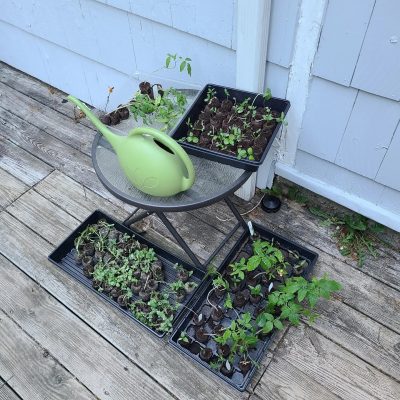
Your strongest seedlings should be potted up into a larger container to encourage them to continue to grow. Putting seedlings into 3- or 4-inch pots (or recycled plastic cups with holes in the bottom) gives them a little bit extra wiggle room while we wait out these temperature fluctuations of a New England spring. Extra space for the root zone will allow the plants to continue to expand. More roots mean more water and nutrient uptake, leading to healthy growth. This practice may also help reduce watering needs on your part, since there is more media to hold moisture in the root zone.
Are your tomato seedlings getting leggy? You can bury the stems of the tomato seedlings to help promote adventitious root development. Remove the cotyledons and any small leaves that you intend to bury below the soil line. Make sure to leave at least one third of the plant’s total height above the soil line to continue healthy growth.
To this point, our seedlings have grown in optimum conditions, or as close to optimum as we’ve been able to provide. Not only have these conditions been ideal, they’ve also been consistent. When your plants get out to the garden, the new environment may be shocking. Hardening off is a process of transitioning them from their ideal growing conditions, into a more realistic environment. Any plant, whether it is a new seedling, a beloved houseplant, or a sheltered patio tropical, needs this transition when moving from inside to outside.
Take your plants on “field trips” during warm spring days by placing them outside in a location with bright, indirect light. Full sun may be too strong for seedlings that have been acclimating with grow lights or through sunny windows so introduce direct light incrementally.
Using cold frames can help to transition your plants from indoors to outdoors. These small, unheated enclosures use the sun’s energy to store heat like a greenhouse. This helps to reduce the drastic temperature swing of nightfall and insulate plants from frosts during the temperamental spring season. Crack them open during warm days for ventilation and to help start reducing humidity.
When conditions are right for hardening off and planting your seedlings, continue to monitor weather conditions. Late spring in New England has been known to throw us a cold snap or two. If frost/freeze warnings occur, bring in potted plants and use a frost cover or breathable fabric to cover in-ground plants as frost protection. Garden stakes will help keep fabric from directly touching your plants and help create a warm air pocket around them to survive those incidental cold nights.
Spring in New England is a season of transition. Warm days may signal planting time, but cool nights and shifting conditions remind us to move forward carefully. By thinning crowded seedlings, giving roots room to grow, and easing plants gradually into outdoor conditions, gardeners can help reduce stress and build resilience. A little patience and flexibility now can pay off with healthier transplants, stronger growth, and a more successful garden as the season continues to unfold.
The UConn Home Garden Education Office supports UConn Extension’s mission by providing answers you can trust with research-based information and resources. For gardening questions, contact us toll-free at (877) 486-6271, visit our website at homegarden.cahnr.uconn.edu, or reach out to your local UConn Extension Center at extension.uconn.edu/locations.