Seedlings

Keep Your Seedlings Going Strong! 

By Heather Zidack, UConn Home Garden Education Office 

So, you started your seeds, have been watching them attentively, and spring is knocking at the door. It’s still a little too early to put some things outside, but overzealous gardeners may find themselves swimming in seedlings that need management. Consider taking these steps to help you and your seedlings find a comfortable compromise as they wait to go outdoors. 

If you haven’t done so already, thinning your seedlings is an important step in ensuring that the plants you put in the ground will be robust and strong. As a fellow gardener, I’m familiar with the pain of disposing of “perfectly good seedlings.” However, this isn’t an entirely true belief. Seedlings that are not thriving in optimum conditions, may be indicating to you that they aren’t strong for planting in the garden.  

Thinning prevents crowding and allows for more air flow between seedlings. When crowded, seedlings compete for water, nutrition, light, and space. By thinning, we ensure that plants have enough resources to grow healthy. Thinning also helps to encourage airflow, which can reduce the risk of fungal development. Fungal pathogens can lead to issues like “damping off,” and other plant diseases that put your seedlings at risk.   

You may decide to thin your plants by snipping out weaker seedlings at the base. If you have the heart, the patience and the amount of valuable bench space to dedicate to extra seedling trays or containers, you may decide to carefully tease apart seedlings and replant them for one last chance. 
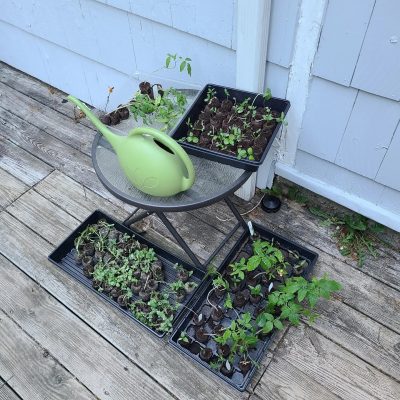
Green watering can on a small table surrounded by trays of seedlings on a wooden deck.
Photo by Heather Zidack, UConn Home Garden Education Office

Your strongest seedlings should be potted up into a larger container to encourage them to continue to grow. Putting seedlings into 3- or 4-inch pots (or recycled plastic cups with holes in the bottom) gives them a little bit extra wiggle room while we wait out these temperature fluctuations of a New England spring. Extra space for the root zone will allow the plants to continue to expand. More roots mean more water and nutrient uptake, leading to healthy growth. This practice may also help reduce watering needs on your part, since there is more media to hold moisture in the root zone.  

Are your tomato seedlings getting leggy? You can bury the stems of the tomato seedlings to help promote adventitious root development. Remove the cotyledons and any small leaves that you intend to bury below the soil line. Make sure to leave at least one third of the plant’s total height above the soil line to continue healthy growth. 

To this point, our seedlings have grown in optimum conditions, or as close to optimum as we’ve been able to provide. Not only have these conditions been ideal, they’ve also been consistent. When your plants get out to the garden, the new environment may be shocking. Hardening off is a process of transitioning them from their ideal growing conditions, into a more realistic environment. Any plant, whether it is a new seedling, a beloved houseplant, or a sheltered patio tropical, needs this transition when moving from inside to outside.  

Take your plants on “field trips” during warm spring days by placing them outside in a location with bright, indirect light. Full sun may be too strong for seedlings that have been acclimating with grow lights or through sunny windows so introduce direct light incrementally.  

Using cold frames can help to transition your plants from indoors to outdoors. These small, unheated enclosures use the sun’s energy to store heat like a greenhouse. This helps to reduce the drastic temperature swing of nightfall and insulate plants from frosts during the temperamental spring season. Crack them open during warm days for ventilation and to help start reducing humidity.  

When conditions are right for hardening off and planting your seedlings, continue to monitor weather conditions. Late spring in New England has been known to throw us a cold snap or two. If frost/freeze warnings occur, bring in potted plants and use a frost cover or breathable fabric to cover in-ground plants as frost protection. Garden stakes will help keep fabric from directly touching your plants and help create a warm air pocket around them to survive those incidental cold nights. 

Spring in New England is a season of transition. Warm days may signal planting time, but cool nights and shifting conditions remind us to move forward carefully. By thinning crowded seedlings, giving roots room to grow, and easing plants gradually into outdoor conditions, gardeners can help reduce stress and build resilience. A little patience and flexibility now can pay off with healthier transplants, stronger growth, and a more successful garden as the season continues to unfold. 

The UConn Home Garden Education Office supports UConn Extension’s mission by providing answers you can trust with research-based information and resources. For gardening questions, contact us toll-free at (877) 486-6271, visit our website athomegarden.cahnr.uconn.edu, or reach out to your local UConn Extension Center atextension.uconn.edu/locations.      

This article was published in the Hartford Courant April 26, 2026

The Do’s and Don’ts of Early Spring Gardening

By Heather Zidack, UConn Home & Garden Education Center 

There’s a well-known scene in the movie “Braveheart” where Mel Gibson’s character, commands his men to “Hold!” as the enemy is rushing upon them. It’s a scene that I often reference as an analogy for this part of the year. Daylight savings time has changed our clocks, the sunshine is warm, temperatures are reaching the “light jacket” level of comfortable, and we all feel spring rushing towards us with the promise of seedlings, flower buds, and fresh green leaves. With this, there are certainly plenty of chores that we can do right now to prepare, but there are others that we really should be waiting for a few weeks longer.  

Houseplants may enjoy a short afternoon in the outdoor sunlight on these warmer days but resist the urge to put them outside full time until night temperatures consistently reach 50 degrees Fahrenheit. The occasional day trip is an effective way to help them transition from the protection of your indoor environment to full sun outdoors. More importantly, consider giving your houseplants a good spring cleaning. Repot or divide root bound plants, remove the winter dust from leaves with a damp rag, and trim out any dead or unsightly growth. Now they’re ready for their spring debut! 

Fertilizing is another task that many gardeners feel may be a chore to check off their lists early. This is a project that should wait a little bit longer. Often, fertilizer will push new growth in your plants. Pushing them too early can leave tender leaves and buds at risk of exposure to frost and freezing temperatures, actively slowing or stunting growth that you intended to give a boost to. In the same vein, grub control, pre-emergent, and many other synthetic materials used in the landscape require specific soil temperatures to be effective and it’s still just too cold. Always read the label of any garden product to learn the best timing of any application. At this point in the year, consider doing a soil test. If you haven’t done so before, it's great to have a baseline for planting and caring for your garden. If you’ve done it a few years ago – check it again! Things change and you may be surprised by what nutrients you need (or don’t) since you last checked in. 

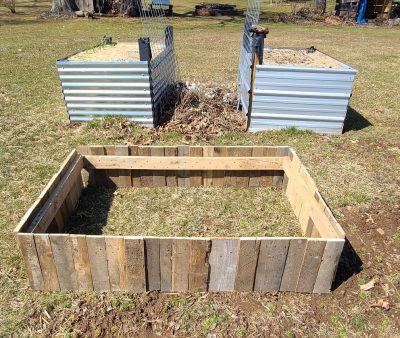
It may still be a little early for mulch as well. Adding fresh mulch too early in the season can trap moisture and slow the soil from warming up to optimum growing temperature. Take this time to pull out grass and weeds that may have taken root in mulched beds and put this time into your hardscape. Look for tripping hazards to address like cracked, sinking, or heaved pavers. Check structures like pergolas, sheds, and even raised beds for rotting boards, warping, or structural damage. Repair as needed. Building new garden spaces is always an option! Create your punch list of projects that will need fresh paint or sealant. If the weather is going to be warm and sunny – consider power washing hardscapes and structures now. 

Newly constructed raised beds
Newly constructed raised beds ready for spring! Photo by HZidack

Late winter/early spring is a fantastic time for pruning trees and shrubs in the landscape. It’s ideal because there is great visibility, and the cooler temperatures prevent disease and insects from taking advantage of fresh wounds. You want to make sure you’re pruning correctly, for the species and purpose of the trees and shrubs in your landscape – so do your homework! As a rule of thumb, roses, hydrangeas, and some hardy perennials tend to appreciate a later pruning and can vary between types within the species, so stay aware of what you have on your property to ensure success!  

“But when do I get to play in the dirt?” That's next! For our outside plants, think about dividing perennials. Divisions at this point in the year make the plants much easier to handle for the gardener. Moving your plants now gives them a chance to “wake up in place” this spring. You will reduce concerns with transplant shock when you move plants ahead of their spring flush and our summer heat. 

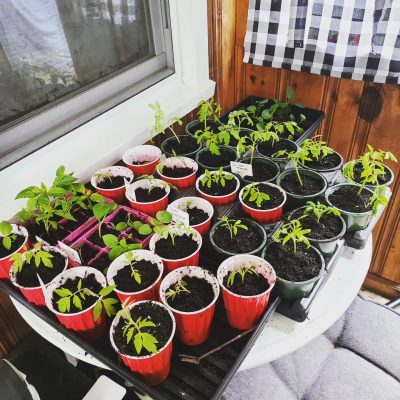
Indoors, stepping your seedlings up into larger containers gives them a little more breathing room as we wait for the season to start. Only transplant seeds when they’ve started to show 2-3 sets of true leaves and keep in mind that different species can have different needs. If you excitedly started your tomatoes too early, and now notice leggy stems, try transplanting them in plastic cups and burying them all the way up to their first couple sets of true leaves. They will put out even more roots along that covered stem and be even better prepared when you put them in the garden this season!  

Seedlings transplanted into plastic cups.
Seedlings that are leggy can be moved into plastic cups with holes in them and buried. Photo by H.Zidack 

There are still plenty of projects that can be done while we wait for spring to come! If you have questions on spring garden projects or any other gardening topic, feel free to contact us, toll-free at the UConn Home & Garden Education Center at (877) 486-6247, visit our website at www.homegarden.cahnr.uconn.edu or contact your local Cooperative Extension Center.