"Dirty hands, iced tea, garden fragrances thick in the air and a blanket of color before me, who could ask for more?"
— Bev Adams, Mountain Gardening
Why Aren't my Vegetables Growing?
Although summer is officially in full swing, you may have noticed that this year’s vegetable gardens have not yet delivered the plentiful harvest expected at this stage of the season.
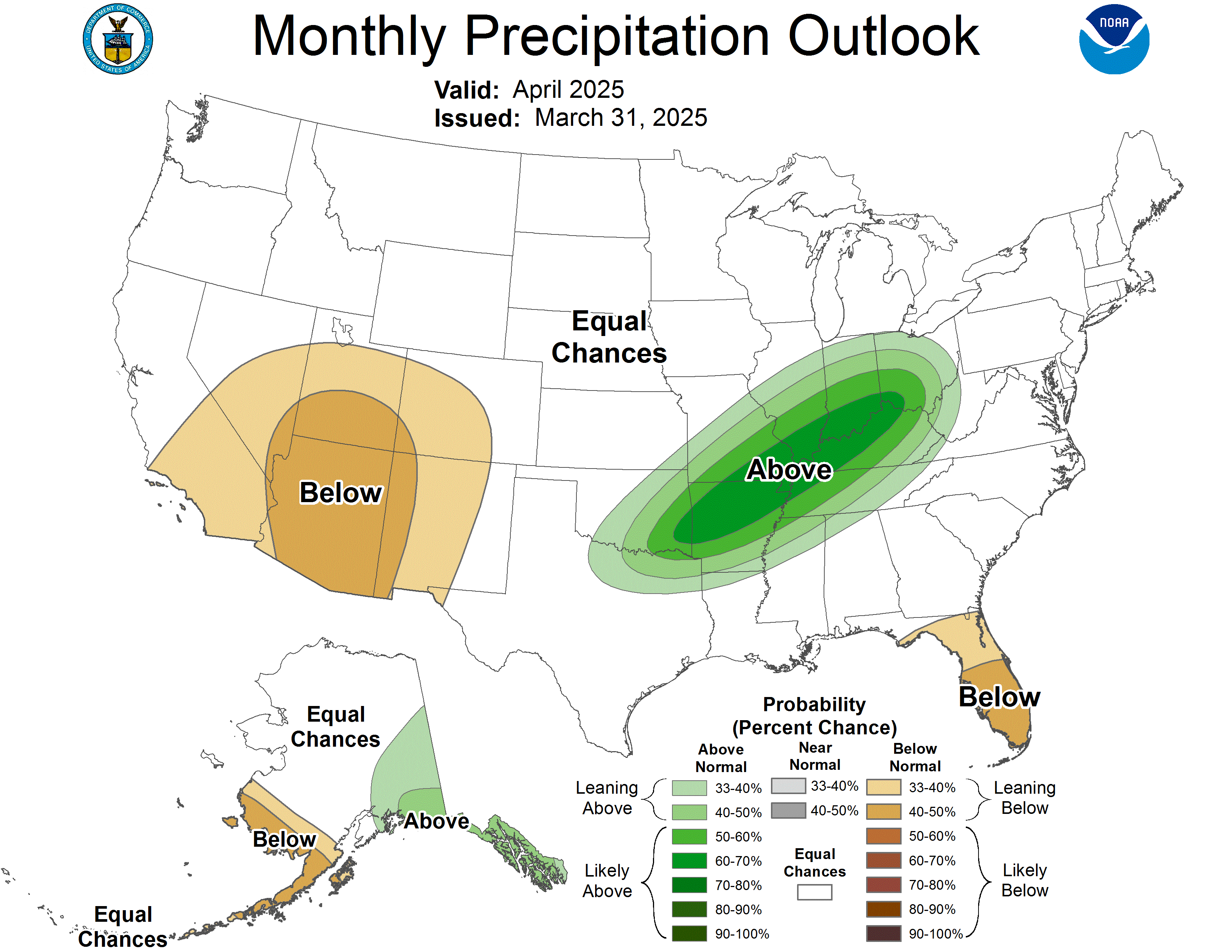
A cooler than average late spring and early summer have brought lower temperatures, especially overnight, impacting our crop’s ability to successfully develop and grow. Cool-season vegetables like broccoli and cabbage welcome cooler temperatures and have been thriving this growing season. Warm-season vegetables most synonymous with summer, such as tomatoes, peppers, and summer squash, need higher soil and air temperatures for optimal development.
As temperatures swing to the other extreme this week, gardeners may notice a continued delay in their gardens. But when temperatures level out later this month, our vegetable gardens will begin to look more like their usual selves. Learn more about the how temperature affects some of our favorite vegetables below:
Tomatoes
- Optimum Daytime Temperature: 70-77°F
- Optimum Nighttime Temperature: 60-75°F
Notes:
- Fruit set declines when temperatures exceed sustained daytime temperatures above 85°F
- Fruit ripening can be affected at temperatures above 80°F
- Susceptible to chilling injury at temperatures below ~50°F
Peppers
- Optimum Daytime Temperature: 70-85°F
- Optimum Nighttime Temperature: 60-70°F
Notes:
- Fruit set and ripening can be affected at sustained temperatures below 60°F or above 85°F
- Susceptible to chilling injury at temperatures below ~55°F
Summer Squash
- Optimum Growing Temperature: 70-85°F
- Temperatures that exceed 90°F in the daytime may result in a higher production of male flowers and/or fruit drop.
Late Cold Snaps: What they Mean for Spring Crops
How Excessive Heat Affects the Vegetable Garden
The New England Vegetable Management Guide
The New England Vegetable Management Guide is a resource curated mostly for commercial growers, however, homeowners can still pull a lot of useful information from it! Check out this resource for information on growing conditions, common plant health concerns, and more.
Scout for Summer Tomato Issues
 Tomato growth is in full swing this July! Below are some common diseases and issues tomatoes often experience this time of year.
These resources act as a great starting guide if you're scouting your home gardens!
We always recommend a confirmed diagnosis to ensure a targeted management strategy. Doing so can save you time, money and energy by knowing you've applied the correct product on the first time. If you see any of these issues in your garden, don't hesitate to reach out to the Home Garden Education Office or the Plant Diagnostic Lab for assistance with confirmation and developing a management plan!
Fungal
- Alternaria leaf spot (early blight)
- Late blight
- Septoria leaf spot
- Fusarium wilt
Fungal Leaf & Fruit Spots of Tomatoes
Viral
- Mosaic viruses: tomato, tobacco, and cucumber
- Tomato ringspot virus
- Tomato spotted wilt virus
Other Issues
- Blossom end rot— caused by calcium deficiency or inconsistent watering.
- Spider mites— a common pest
Non-Pathogenic Disorders of Tomatoes
More Tomato Resources
Keeping Your Plants Hydrated This Summer
With a drought in place in many parts of the state, and a heat wave upon us, gardeners have their minds on watering! Here are some good tips to keep in mind as you water your garden this summer:
Watering During a Heat Wave
- Don’t change your watering habits just because it’s hot! During periods of heat and drought stress, plants can close their stomata and reduce water use as a survival mechanism. While this may slow water uptake, plants still need adequate soil moisture. Overwatering, however, may not be helpful. Instead, roots can sit in saturated soil and develop diseases like root rot. Always check the top few inches of soil to ensure water is needed.
- If scheduling permits, fertilize after a heat wave, once plants resume active growth. Applying fertilizer beforehand can encourage new growth that increases water demand and may be difficult to support during periods of heat and drought stress.
- Do not spray plants down to cool them off. While this may seem helpful, it is often unnecessary and can contribute to foliar diseases if leaves remain wet for extended periods. Instead, focus on watering the soil at the base of the plant where it is most effective.
Deep Watering
Giving your plants a good soak does more than just help them in the short term. Deep watering provides a slow, thorough soak that reaches the plant’s root zone rather than just the soil surface. This encourages deeper root growth and improves drought tolerance, allowing for less frequent watering. Here are some tips on how to do this method properly.
- For most garden plants, aim to moisten the top 6–18 inches of soil (deeper for trees). Apply water slowly at the dripline so it soaks in without pooling or running off.
- Avoid high-flow sprinklers that may cause runoff; low-flow systems like drip or soaker hoses can be effective if applied long enough.
- Water movement depends on soil type. For example, loamy soils absorb water at a moderate rate, while sandy soils drain quickly and clay soils absorb slowly. Dig down into your soil to check that water has penetrated deep enough. After a few watering cycles, you will become familiar with the timing and flow rate for your specific soil and plants.
Interesting Insects: Prionus Borers
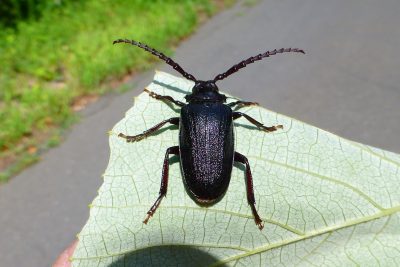
Prionus laticollis, broad- necked root borers are large black beetles up to an inch and a half long can be seen crawling across lawns, sidewalks and driveways in early summer.
Larvae are very large and feed on roots of woody ornamentals and tree roots in the soil for three years. Adults emerge from July to September. The larvae are pests, and adults could be killed when found to reduce larval populations in the future. Adults otherwise are not injurious to plants.
Native Plant Highlight: Elderberry
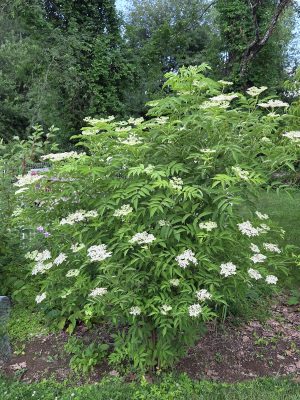
Photo by Lauren Kurtz, UConn Home Garden Education Office
Elderberry (Sambucus canadensis)
Elderberry is native to the Eastern United States, sometimes referred to as black elderberry, American elderberry and or Sambucus nigra subsp. canadensis. This multi-stemmed deciduous shrub spreads by root suckers to form colonies. The large white, flat-topped inflorescence becomes many dark purple to black fruits in late summer. The fruit (drupe) is eaten by birds. In the wild, it can be found along streambanks, moist woodlands, and roadsides. For home landscapes it's best used for a naturalized native plant garden, rain garden, as a hedge, screen, or as the background for a perennial border. This plant will attract birds and pollinators!
The CT Native Plant Availability List: Updated and even MORE user-friendly!
This native plant guide was created to assist municipalities, conservation organizations, homeowners, landscape architects, designers, and contractors with locating native plants for habitat restoration and wildlife enhancement.
The Connecticut Native Plant Availability List, by UConn Extension and CT DEEP Wildlife Division, identifies nurseries and garden centers that grow/sell native trees, shrubs, and perennials. Along with several nurseries that are new to the list, we have also added the ability for users to view the Availability List sorted by Nursery!
Word from the WiSE
Women in Soil Ecology, UConn Student Chapter
Beyond the Boom: Fireworks and Soil
This month, UConn’s Women in Soil Ecology bring you a word on firework displays. This time of year brings many fireworks celebrations, but something we might not consider is how fireworks can impact soil and water ecosystems.
Each burst of color is produced from the use of different metal compounds. For example, copper compounds are used to make purple and blue flashes. When fireworks ignite, they generate high concentrations of pollutant gases, like sulfur dioxide (SO2), nitric oxide (NO), nitrogen dioxide (NO2), and carbon monoxide (CO), through rapid combustion. Another important component of many fireworks is perchlorate, an oxidizer that helps fuel the explosion and enhances effects, such as launch height, brightness, and flash intensity. During combustion, perchlorate is transformed into other chlorine-containing compounds, although some perchlorate remains unburned.
The resulting smoke plume and fallout from this plume contains metal particles, combustion byproducts, and unburned perchlorate that can be deposited onto nearby soils and water bodies. These materials can temporarily increase contaminant levels in the environment and, depending on the frequency and scale of fireworks displays, may affect soil and water quality.
By Nora Doonan, Soil Science PhD Student, UConn PSLA
Knowledge to Grow On
Read our Ladybug Blogs Written Weekly
Find Us in the Media
Plant and Soil Center Opens to the Public
Episode 166: Managing Invasive Plants | University of Connecticut
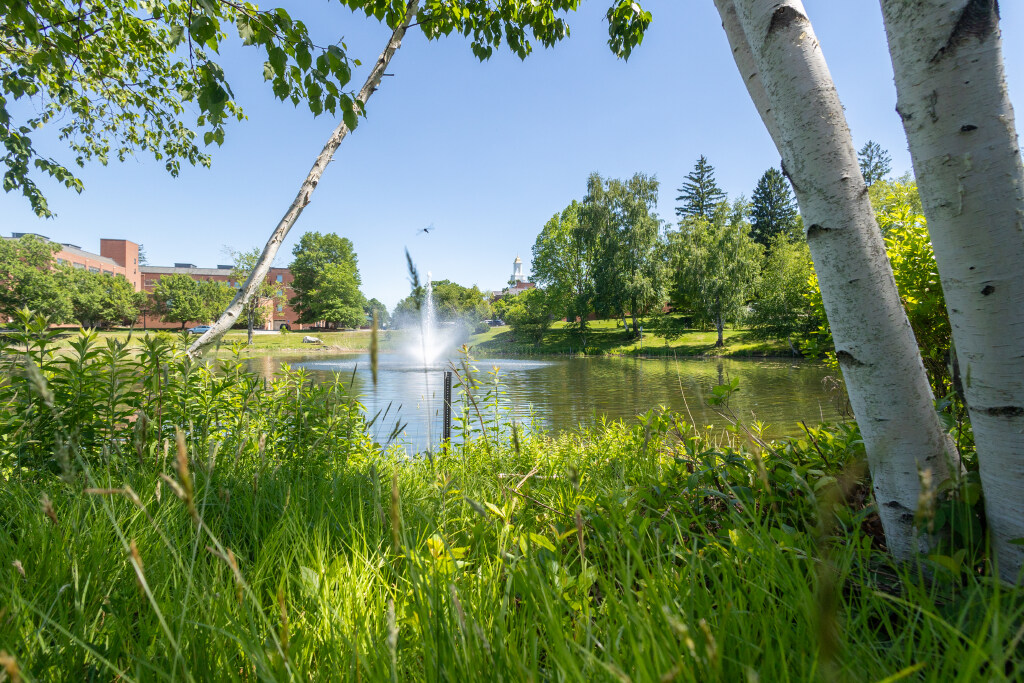
Photo by Sydney Herdle/UConn Photo
We Need Your Input!
The UConn Home and Garden Education Center is asking for your input to help guide future programs and services. Please take a few minutes to complete our needs assessment survey and share what topics, resources, and support would be most helpful to you.
Your feedback will help shape upcoming educational offerings and strengthen our ability to serve Connecticut gardeners.
Thank you for your feedback!
If you have any questions about this survey, please email us at ladybug@uconn.edu
Upcoming Events and Things to Do
- Celebrate America's 250th Birthday throughout the month with events statewide!
- Introducing Connecticut's Natural History Collections! - July 11, Hampton CT
- Learn About Lava: Connecticut's Geologic History - July 11th, Simsbury CT
- Visit one of CT's many Historic Gardens
- The Sky's the Limit Walking Challenge for 2026 has started!
Join us at Upcoming Talks!
Good Bug Bad Bug with Pamm Cooper
July 21, 2026 - 5:30 PM
Hosted by the North Stonington Garden Club
Native Plants for Cultivated Spaces with Lauren Kurtz
July 23 2026 - 6:00 PM
Hosted by the Thompson Public Library
Register
July Gardening Tips
- If your cool season annuals have died off, pull them out and add them to your compost pile. Sometimes a severe shearing, water and fertilizer will bring them back to life. Often they are best replaced with heat tolerant annuals.
- Container and hanging plants may need additional water later in the day if hot and windy conditions prevail. Check plants again at day’s end to see if any additional water is necessary.
- Water early in the morning to reduce the loss of water to evaporation during the hottest days.
- Pinching back herbs to stop flowering will keep the best flavor in the leaves and encourage branching. Herbs can be air dried, dried quickly in the microwave, or frozen.
- Mulch garden beds to help conserve water.
- Put netting on fruit trees and bushes a few weeks before the fruit begins to ripen to protect it from birds and squirrels.
- Tomato hornworms are large green caterpillars that feed on the leaves of tomatoes and related plants. Hand-pick or control with Bacillus thuringiensis. Do not remove caterpillars that are covered in white pupae as they have been parasitized by beneficial wasps.
- Inspect garden plants regularly for insect and disease problems. Good sanitation practices and insect traps are alternatives to pesticides.
- If grubs were a problem in previous years, apply grub control no later than July 15th so that it is systemically in place in grass roots when the grubs hatch in early August.
- Mosquitoes breed in standing water. To discourage them, change the water in bird baths and outdoor pet dishes every few days.
- Check family members and pets for ticks after being outside, especially when in tall grass or wooded areas. If necessary, send ticks to the Connecticut Veterinary Medical Diagnostic Laboratory for testing.
University of Connecticut
Roy E. Jones Building Annex
27 Manter Road, Storrs, CT, 06269
(In front of UConn Dairy Bar)

UConn Home Garden Education Office
Horticultural support and education for home garden issues related to plant health, garden pests, general plant care, and more.
UConn Plant Diagnostic Laboratory
Diagnosis of plant health and pest issues for commercial growers and the public.
UConn Soil Nutrient Analysis Laboratory
Soil chemistry testing including pH, nutrients, salinity, lime and fertilizer recommendations, and many others.
UConn Turf Diagnostic Lab
Turf diagnostics for golf courses, athletic fields, or other commercial turfgrass sites
What Stays the Same
We will continue to provide the professional and research-based support you’re used to, just in a convenient, central location. Our science-based testing protocols and result-driven recommendations reinforce our commitment to serving growers, landscapers, and the public with their plant and soil health issues.
What Gets Better
Combining current programs all under one roof provides an opportunity for more collaboration, outreach, and educational opportunities for our stakeholders.
- One easy-to-find location for soil, plant, and turf sample submissions
- Future expansion of diagnostic services available for plant and soil health analysis
- Collaboration between programs and increased opportunities for public outreach events
s.uconn.edu/plant-soil
This Month’s Newsletter Contributors:
Pamm Cooper, Nora Doonan, Lauren Kurtz, Emily Leahy, Natasha Raymond, Heather Zidack