Holiday Plants, Forcing Bulbs, Hawks & Other December News

December 2025

“You can tell a lot about a person by the way they handle three things: a rainy day, lost luggage and tangled Christmas tree lights.” 

— Maya Angelou

Gifted a Plant? Here's What You Should Know

Poinsettias

  • 65°F to 70°F is ideal for them! Temperatures below 50°F can cause damage. 
  • Water when the first inch feels dry to the touch. Never let your poinsettia sit in water or dry out to the point of wilting 
  • They like bright, indirect, natural light.

Poinsettia Care


Christmas Cactus

  • Ideal temperature is 75°F - 80°F during the day
  • Water when the potting mix dries out
  • The prefer filtered light
  • These plants like to be pot-bound! 

Christmas Cactus Care


Amaryllis

  • Keep them at 70°F to 75°F during flowering period, cool them to 65°F after flowering to prolong their lifespan.
  • Do not let sit in water. Keep the soil slightly moist and increase watering when plant is flowering
  • They need at least 4 hours of direct sun per day
  • Remove the blossoms after flowering and continue care to keep them growing!

Amaryllis Care


A vibrant display of poinsettias in various colors, including red with white speckles, solid red, pink, and yellow-green, arranged among lush green foliage in a greenhouse setting.

Photo by Heather Zidack, UConn Home Garden Education Office

Cyclamen

  • These plants prefer temperatures between 50° and 60°F 
  • Keep the soil moist, but do not let it sit in water. These plants are sensitive to overwatering and highly susceptible to to rot
  • Provide bright, indirect light - though they are tolerant of shady conditions when maintained

Cyclamen Care


Other Houseplants

  • Always check the soil before watering
  • When transporting plants, keep them in paper bags to prevent cold damage
  • Avoid positioning them in drafty windows or doorway areas

Houseplant Care


 Force Bulbs Now for Late-Winter Cheer

Pink tulips in full bloom arranged in a red glass vase, placed on a wooden floor in sunlight near a wall and door.
Photo by Holly McNamara, Uconn Plant Diagnostic Lab

December is your last chance to encourage spring bulbs to bloom during the late winter gloom of February and March. Paper Whites, Daffodils, Amaryllis, Iris, Tulips, Hyacinth, and Crocus can produce enticing fragrances and colors during these otherwise bleak winter conditions.

Forcing is the process of “tricking” bulbs into sprouting and blooming under artificially imposed conditions. There are often cultivars available for purchase that are specifically bred for forcing. Bulbs can be planted in commercial potting soil. Make sure there are at least 2” of soil beneath the bulbs to allow for root growth, in a pot with adequate drainage holes. With this technique, bulbs may be planted very close together for an aesthetically pleasing product. A 6” diameter pot can hold 3 large bulbs (hyacinth), 5-6 medium bulbs (tulips or daffodils), or up to 15 small bulbs (crocus).

With the exception of paperwhites, most spring blooming bulbs must be subjected to a minimum of twelve weeks of cold temperatures, anywhere from 35-50°F, to prepare them for growth. This can be achieved by placing the pot in an unheated garage, crawl space, or refrigerator. After this cold period, the pot can be moved to a cool, sunny location, preferably between 50-60°F as the shoots and leaves begin to emerge. After one week, it can be moved to a warmer location out of direct sunlight. At this point in the process, the bulbs should bloom in three to four weeks.


Keep an Eye out for Hawks

Native Cooper's hawks, red-tailed hawks, and red-shouldered hawks are more frequently seen in the winter months when foliage is absent, and prey is easier for them to find.

Cooper's hawks especially linger near bird feeders to get an easier shot at prey, but the larger hawks will often be nearby as well. 

Red-shouldered hawk perched on bare tree branches with evergreen trees and blue sky in the background.

A Red-Shouldered Hawk. Photo by Pamm Cooper, UConn Home Garden Education Office


Native Plant: Witch Hazel

Branches of witch hazel with clusters of yellow, ribbon-like flowers against a clear blue sky and autumn foliage.
Photo by Pamm Cooper, UConn Home Garden Education Office


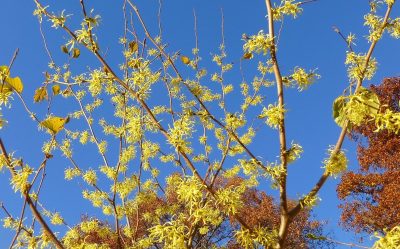
Native witch hazel is a good choice for a Connecticut landscape plant. A small tree or multi- trunked shrub, its spiky, yellow flowers are the last native blooms to appear in New England. Often, late active insects like flies, honeybees and bumblebees are found visiting its flowers as other pollen and nectar sources are no longer available.
Word from the WiSE

Women in Soil Ecology, UConn Student Chapter

Happy World Soil Day!

This month, UConn’s Women in Soil Ecology bring you a word on celebrating World Soil Day.
World Soil Day is December 5th, 2025 and the theme of this year’s celebration is Healthy Soils for Healthy Cities, emphasizing the need to consider the state of soil health in urban landscapes.

When we think of soil health, we often think about the soil in our home gardens or large-scale agricultural fields. Soil health practices are just as important in urban environments, but much of the soil is sealed away with cement and other impermeable surfaces. Healthy urban soil absorbs rainfall, reduces flooding, and supports effective stormwater management. It helps regulate temperature and can lessen the urban heat island effect. It also stores carbon, can help to improve air quality, and supports biodiversity by providing a habitat for urban wildlife.

Beyond the environmental benefits, it also can enhance human well-being. It can improve mental and physical health by generating more opportunities for outdoor recreation and strengthening connection with nature. By recognizing and sharing the value of healthy urban soils with others, we can help to rethink urban spaces and promote more resilient and healthier cities. 

By Nora Doonan – Soil Science PhD Student, UConn PSLA


Weather Outlook

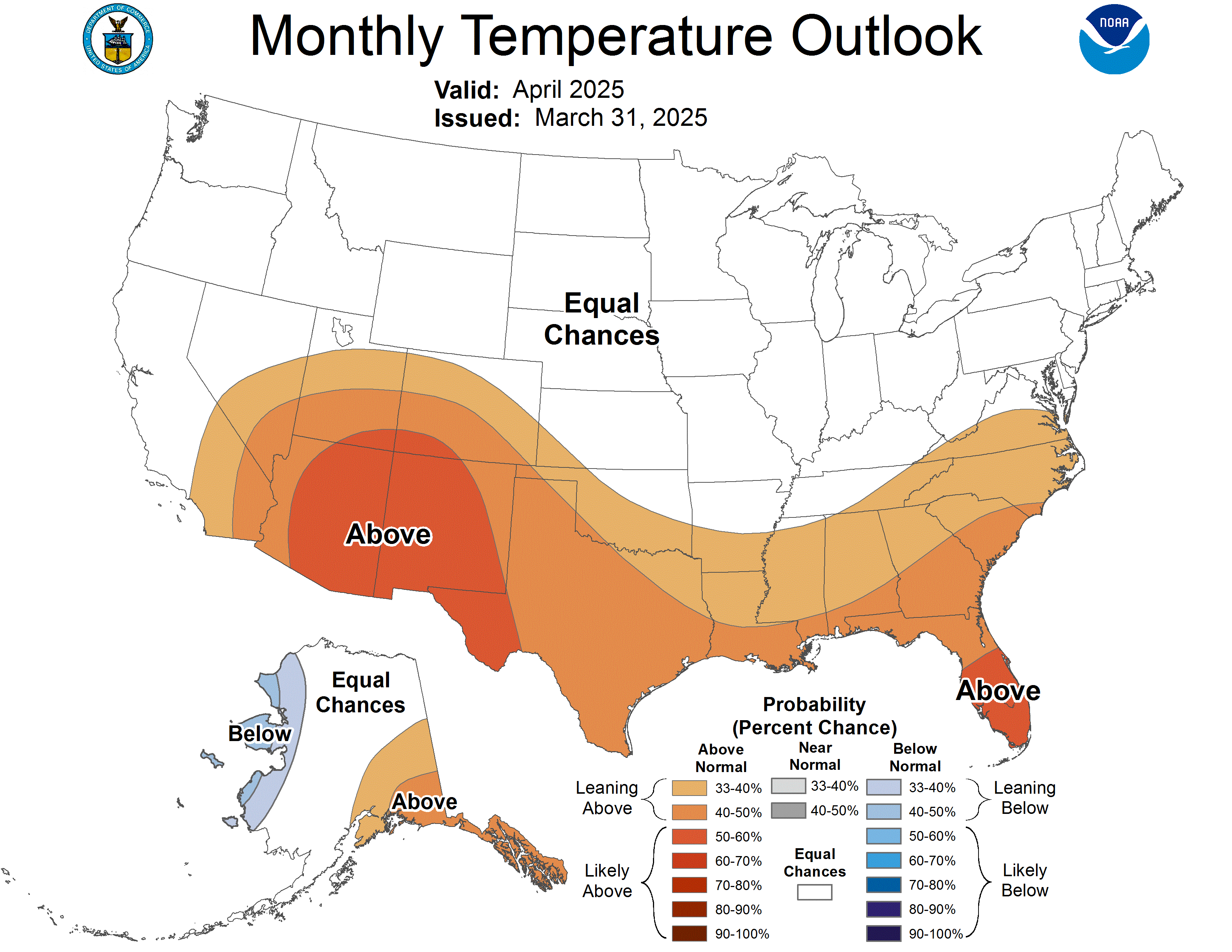
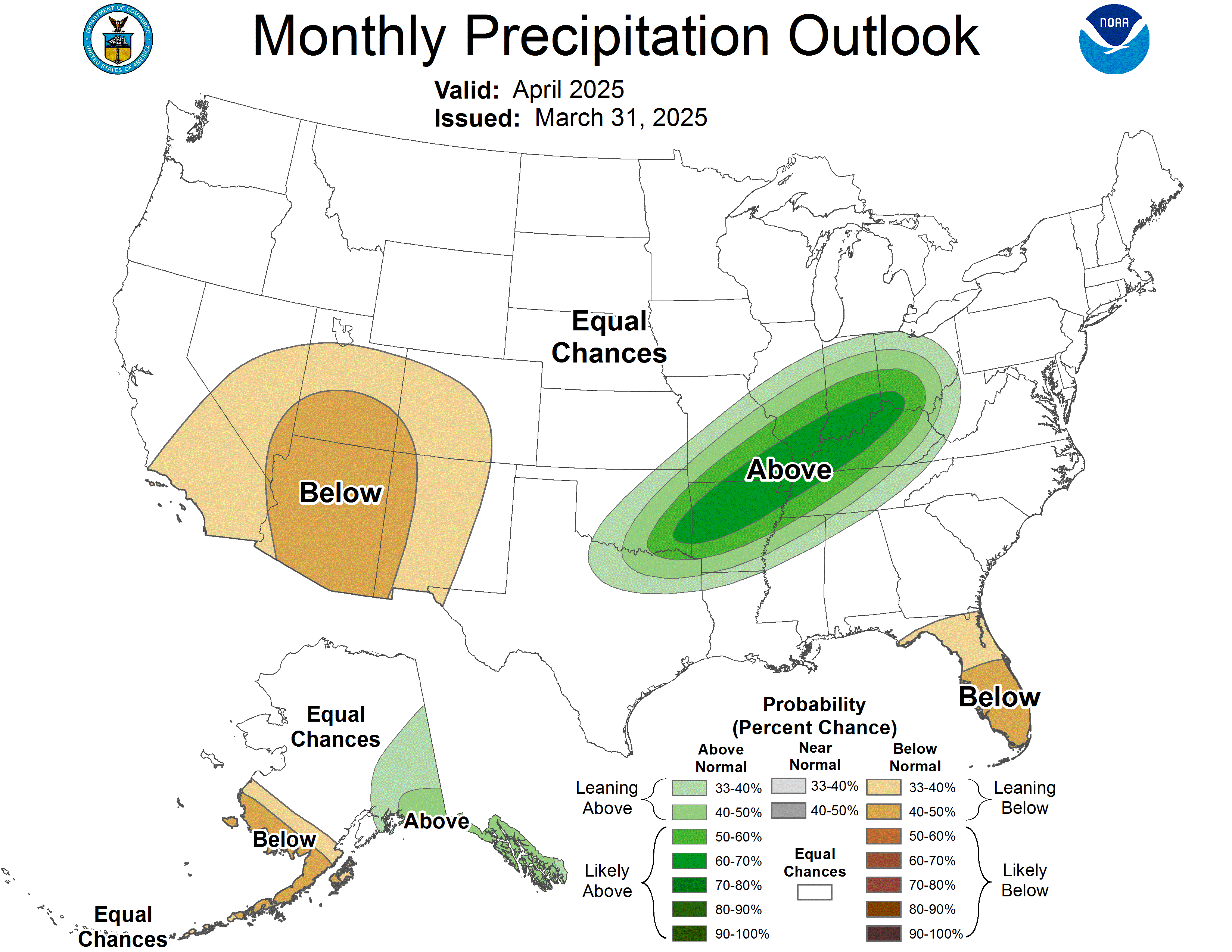
A seasoned gardener always keeps their eye to the sky at any time of year! Maps and the 30 day outlook from NOAA will help you stay prepared for any and all of your gardening chores! (Click image to see larger map.)

    Temperature map

Precipitation Outlook


Upcoming Events and Things to Do


Educational Opportunities & Workshops

Join Us at Upcoming Talks

Good Bug/Bad Bug with Pamm Cooper
December 13, 2025 - 2:00 PM
Hosted by the Mary Cheney Public Library
586 Main Street
Manchester, CT 06040

    Supplement Your Garden Produce with CT Grown Products! 

    Connecticut is rich in agricultural history, with many operational farms that have lots to offer local markets! As you plan your holiday feasts this season, consider buying local, CT grown products.

    Supporting local CT Agriculture is a way that gardeners can supplement the fresh foods they grow in their garden, with seasonal offerings from year round operations.


    December Gardening Tips

    • Holiday plants, including amaryllis, mistletoe, and yew are toxic and should be kept away from children and pets. Contact Poison Control at 1-800-222-1222 immediately if you suspect a problem.
    • Be sure to keep poinsettia away from heat sources, drafts, and cold air. Keep soil consistently moist, but not soggy. Poinsettia that dry out droop dramatically and drop their flowers. Try something a bit more unusual like a cyclamen or kalanchoe for holiday plants.
    • Decorative foil around the roots of holiday plants can hold water and drown them. Either remove it when you water, or poke drainage holes in the foil and use a saucer
    • Wooden A-frame structure protecting a green shrub in front of a house with white siding and blue shutters.”Consider protecting vulnerable plants from heavy snow sliding from the roof (see image)
    • Build a physical barrier of mesh galvanized steel hardware cloth (1/4 to 1/2 inch) around the base of vulnerable trees to prevent voles from feeding
    • Harvest any leeks and root vegetables such as carrots and parsnips that are still in the garden
    • Check produce that you have in storage. Sort out any that show signs of disease and dispose of them
    • Do not use fertilizer to melt ice. This creates nitrogen runoff issues that could damage local bodies of water
    • Tap the evergreen branches gently to remove snow and ice to prevent the branches from breaking
    • Store your opened bags of fertilizer in a sealed plastic bag or plastic waterproof container with a snugly fitting lid in a dry location to avoid caking
    • If you have a real Christmas tree, recycle it after the holidays are through. Cut off branches and use as insulation over perennials. In spring, chip or shred branches to create mulch or add to the compost pile


    Wishing you joy, peace and happiness this holiday season!


    - The UConn Plant and Soil Health Team

    Bronze husky statue adorned with a festive wreath, surrounded by illuminated evergreen trees at night.

    We're Moving in April 2026

    New Location: 
    George Leigh Minor Plant and Soil Health Center
    University of Connecticut
    Roy E. Jones Building Annex
    27 Manter Road, Storrs, CT, 06269
    (In front of UConn Dairy Bar)
    Map of the Jones Annex across from the dairy bar

    UConn Home Garden Education Office

    Horticultural support and education for home garden issues related to plant health, garden pests, general plant care, and more.

    UConn Plant Diagnostic Laboratory

    Diagnosis of plant health and pest issues for commercial growers and the public.

    UConn Soil Nutrient Analysis Laboratory

    Soil chemistry testing including pH, nutrients, salinity, lime and fertilizer recommendations, and many others.

    UConn Turf Diagnostic Lab

    Turf diagnostics for golf courses, athletic fields, or other commercial turfgrass sites

    What Stays the Same

    We will continue to provide the professional and research-based support you’re used to, just in a convenient, central location. Our science-based testing protocols and result-driven recommendations reinforce our commitment to serving growers, landscapers, and the public with their plant and soil health issues.

    What Gets Better

    Combining current programs all under one roof provides an opportunity for more collaboration, outreach, and educational opportunities for our stakeholders.

    • One easy-to-find location for soil, plant, and turf sample submissions
    • Future expansion of diagnostic services available for plant and soil health analysis
    • Collaboration between programs and increased opportunities for public outreach events
    Watch for More Information Soon
    s.uconn.edu/plant-soil

    This Month’s Newsletter Contributors: 
    Heather Zidack, Pamm Cooper, Holly McNamara, Nora Doonan