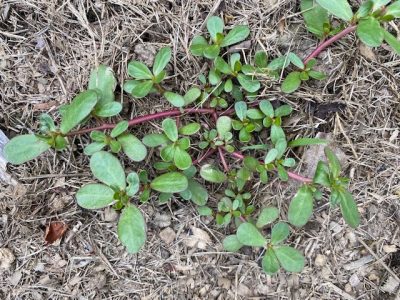
By now the vegetables and flower beds should be pretty well planted and plants starting to establish themselves. Despite many of our best efforts, a new crop of weeds is also attempting to get established. These garden pests compete for light, water and nutrients. They also may harbor or attract insects that prey on our plants. If left to their own devices, they can crowd out our desirable specimens reducing the air flow and leading to conditions more conducive to disease.
Weeds are generally sorted into 4 categories: perennial, biennial, winter annuals and summer annuals. There’s a good chance that you removed any winter annuals as you prepared your planting areas. These plants typically germinate in the fall, overwinter, bloom in early spring and set seed. They include weeds such as annual bluegrass, chickweed and shepherd’s purse.
Perennial weeds include dandelions, burdock, thistle and plantains while Queen Anne’s lace and garlic mustard are some biennial ones. Usually, the summer annual weeds are most prevalent in recently planted vegetable and flower beds. Some examples are lambsquarters, galinsoga, purslane, crabgrass and ragweed.
You have probably heard the expression ‘A year’s worth of seeding is worth 7 years weeding’ or something along that line. Weed seeds can last a long time in the soil with purslane and dandelion seeds remaining viable up to 20 years and pigweed up to 40 years. So even letting a few weed plants go to seed will have you pulling up their progeny for quite some time.
What’s a gardener to do? The key to weed control is to stay ahead of them. Take them out when they are small and shallow rooted. For areas that are pretty much bare soil, like around vegetable plants, a small handheld hoe or cobra head weeder works great on patches of newly germinated weeds that are too tiny to pull by hand. For larger gardens, maybe a taller blade or stirrup hoe would be a good tool to have on hand.
I will admit to spending a lot of time on my hands and knees weeding. While this may be not practical for everyone, it gives you a chance to get up close and personal with both the weeds as well as your garden plants so you can see, for example, if any squash vine borers are attacking your squash or pumpkins or if your radishes are ready to be harvested or if that row of bean seeds has yet to germinate.
Mulch can be a gardener’s best friend. The key is to match the mulch to the garden. For vegetable gardens, straw mulches, shredded leaves or untreated grass clippings work well as they degrade over the season adding organic matter to the soil and feeding the bacterial microbes that are most active and essential in agricultural type soils. While many people use plastic, weed fabric or cardboard to keep weeds down, these have been shown to have negative effects on soil health. The benefits may outweigh the costs for commercial growers but for the home gardener, healthy soils mean healthy plants. Plus carboard, especially corrugated pieces often contains contaminants.
For perennial flower beds, I like the look of cocoa shell (if you don’t have dogs that would eat them) or buckwheat hull mulches. They set off your perennial foliage and flowering plants at a better scale than larger bark mulches, nugget mulches or woodchips do. The problem with these being they are not always easy to find or cheap. For trees and shrubs, coarser wood or bark mulches would be appropriate. The bottom line for mulches, is that regardless of which one you chose, it will help to keep weeds down.
In certain situations, the use of an organically certified (OMRI) herbicide might be helpful. There are a number of products on the market that contain essential oils, like clove or citrus, sodium or ammonium derivatives or even acetic acid (vinegar). I find them handy for high populations of just germinating weed seeds before planting or in pathways between rows. The tiny weeds are killed quickly especially on a sunny day.
Two things to consider when purchasing these products are that they typically do not kill the roots of larger established weeds. The top will generally die back but the roots are still alive and will resprout. The other thing is these organic weedkillers are non-selective meaning they can kill any plant they are sprayed on.
However, you choose to remove them, persistence and regular scouting will keep weeds to a minimum. Because the seeds can be in the soil, be transported when purchasing compost or plants, can blow in from the neighbor’s garden or even be moved by animals and people, weeds will always find a way into your gardens and it’s your job to keep them out.
Have a question about plants? The UConn Home Garden Education Office supports UConn Extension’s mission by providing answers you can trust with research-based information and resources. For gardening questions, contact us toll-free at (877) 486-6271, visit our website at homegarden.cahnr.uconn.edu, or reach out to your local UConn Extension Center at extension.uconn.edu/locations.