If Scindapsus is Wrong, I Don’t Want to Be Right 

By Dr. Matthew Lisy, UConn Adjunct Faculty

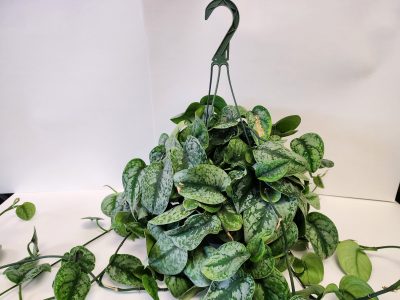
Hanging silver satin pothos plant with trailing, heart-shaped green leaves marbled with light gray, suspended from a plastic hook against a plain background.
Scindapsus pictus ‘Silver Satin,’ Photo by M. Lisy.

It really is not sinful to like Scindapsus.  In fact, it can be very enjoyable to add some to your plant collection.  These are a lesser-known houseplant, but are rapidly becoming very popular.  They are very similar to the vining Philodendrons, and are most often confused with Pothos (Epipremnum).  All of these aforementioned plants belong to the Araceae family.  The Scindapsus come from Southeast Asia, Philodendrons from Central/South America, and Pothos from the Tropical Pacific. Although they come from different parts of the world, they all live in rainforest habitats, and therefore will do well when grown together.  The thing that most stands out about the Scindapsus species are the unique colors.  They are generally a gray or green color.  Now that base color has, to more or less degree, some silver colors overlaid, except for some that don’t have any additional color at all.   

 The nicest part of Scindapsus is that they have very similar care to their look-a-like cousins.  They generally like to have the top inch or two of soil dry out between waterings.  The soil should be that used for aroids.  If using a commercial houseplant soil, add some extra perlite and/or orchid bark to lighten it up a bit.  The growth habit could be up a moss pole, or in a hanging basket.  I prefer the hanging basket on these as I really like the look of the long vines hanging over the edge of the pot.   

 They are fairly easy to propagate.  Take a cutting between the nodes – the place where the leaves grow out from.  Trim this and put it in soil.  Keep this in a moist and humid environment.  Before long, there will be new growth tips emerging from the node.  At that point, start adding some fertilizer to really kick things into gear.  These plants adapt well to growing in our typical home environment, but they do not like it super dry.  They tend to grow larger leaves in more humid environments, so think about putting one in the bathroom near the shower.    

 There are some fabulous new varieties of these plants, but because they are not as common yet therefore somewhat tricky to find.  It seems there are new varieties coming to market more frequently now.  Many of them are variations on the amount of silver in the leaves, or the pattern the silver coloration makes.  There are two main species regularly offered so far in the trade.  Scindapsus pictus, which has more of a round leaf, and Scindapsus treubii, which has more of an elongated, narrow leaf.  There are more species, and I am sure we will see the “house friendly” ones coming to market in the future.   
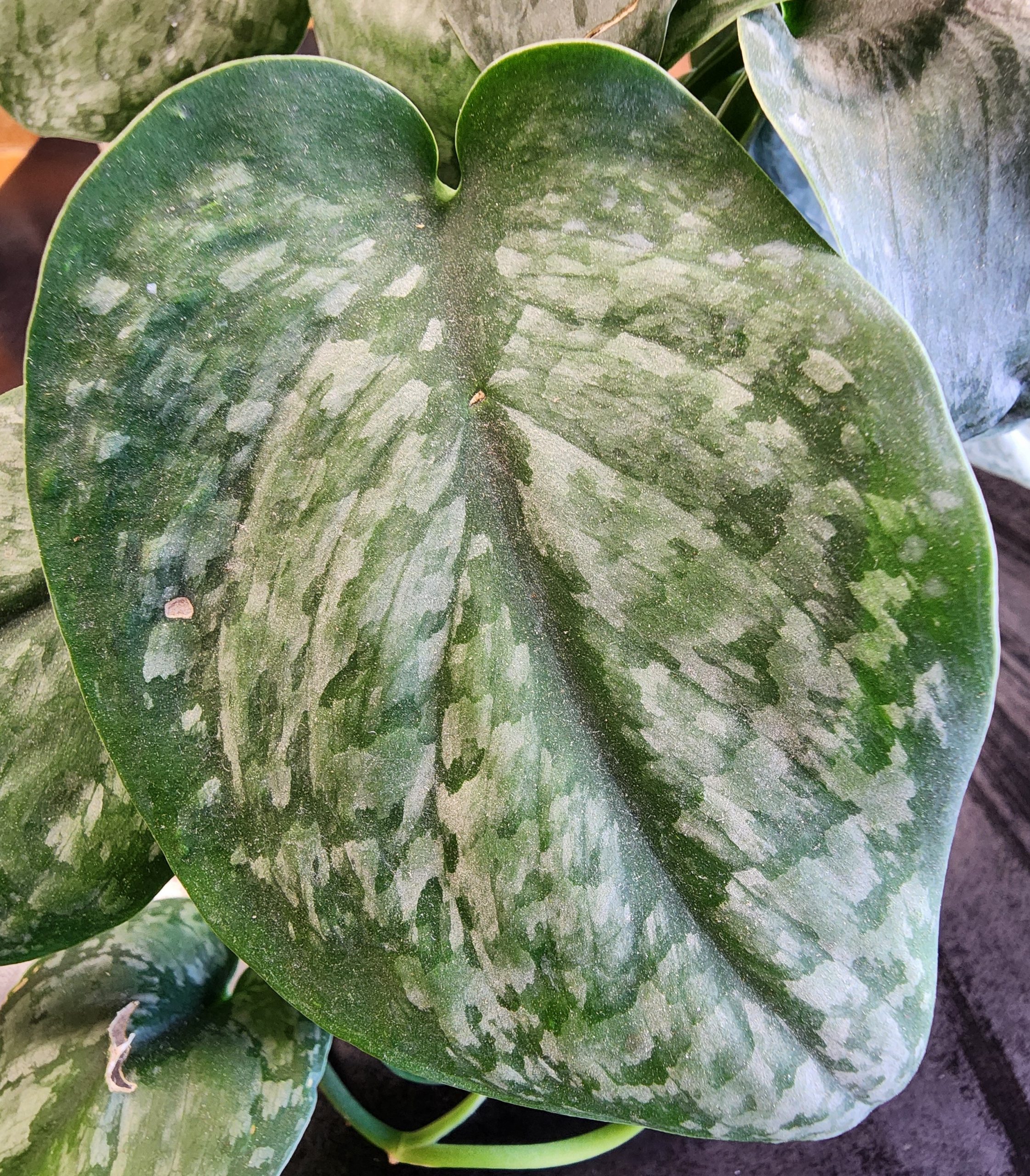
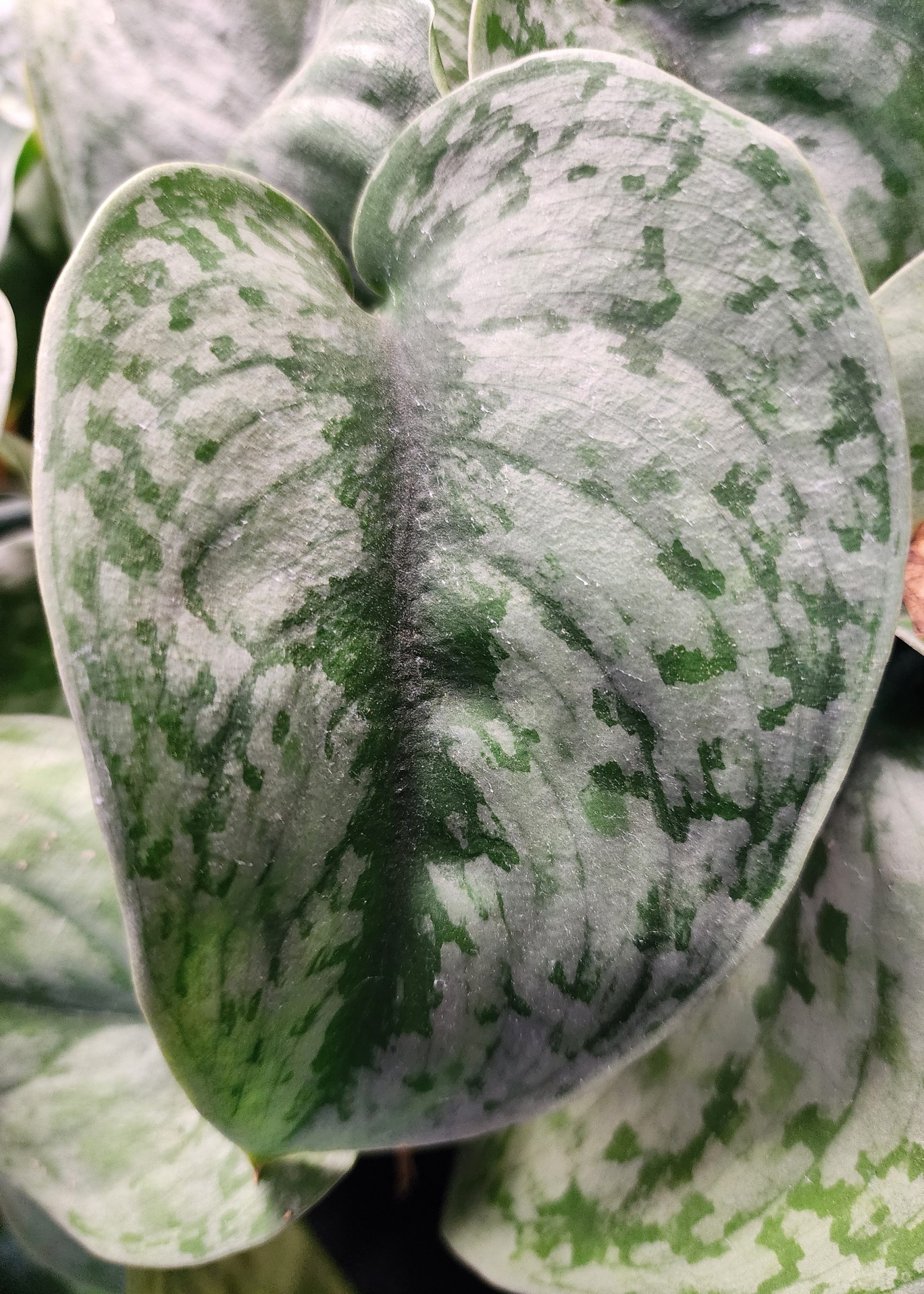
Close-up of a large, heart-shaped satin pothos leaf with a deep green center and silvery mottled patterns across the textured surface.

Scindapsus pictus 'Mount Salak,' Photo by M. Lisy

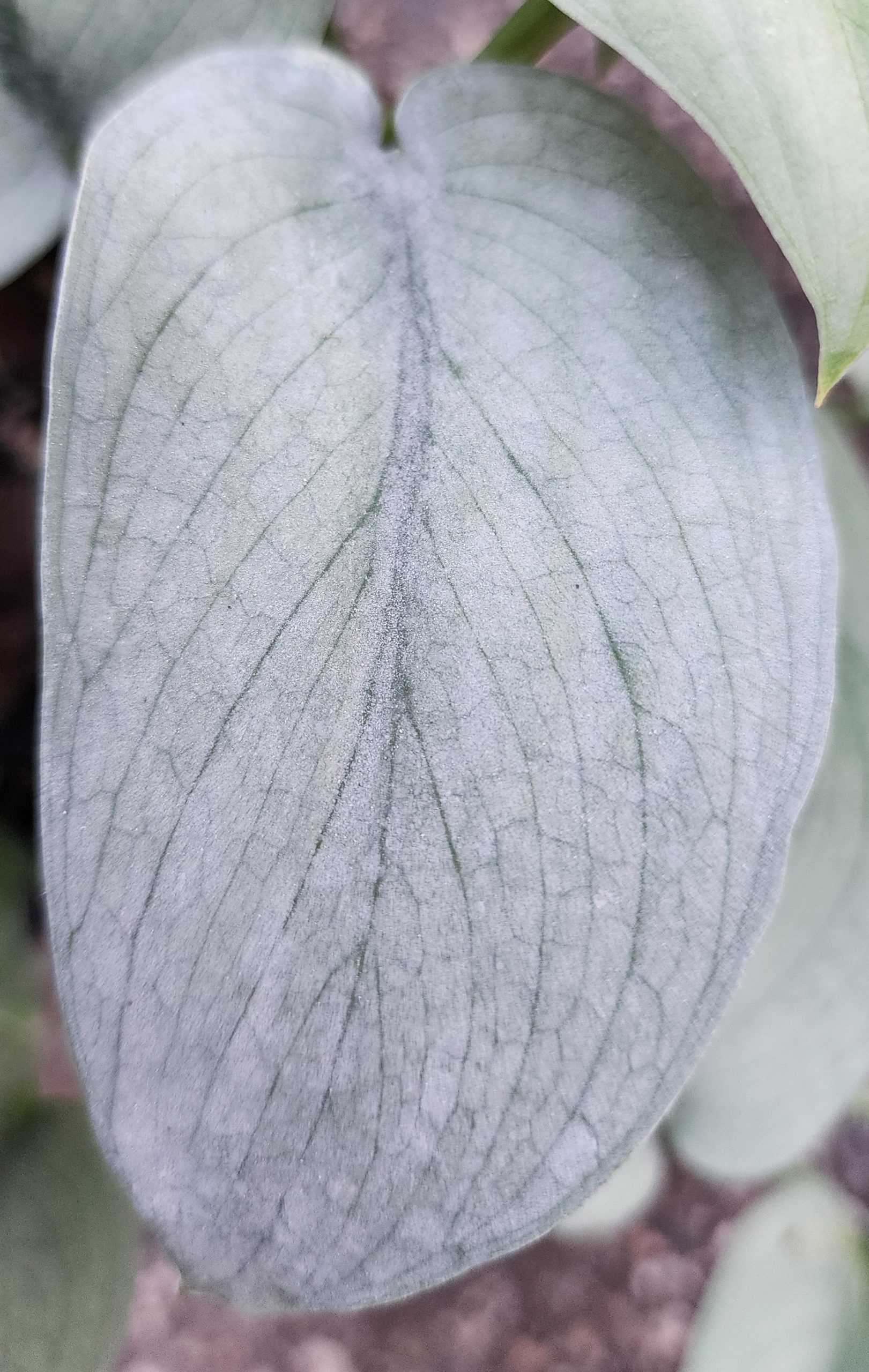
Close-up of a single silvery-green leaf with a soft, matte texture and visible dark veining running from the center to the edges.

Scindapsus pictus 'Platinum' Photo by M. Lisy

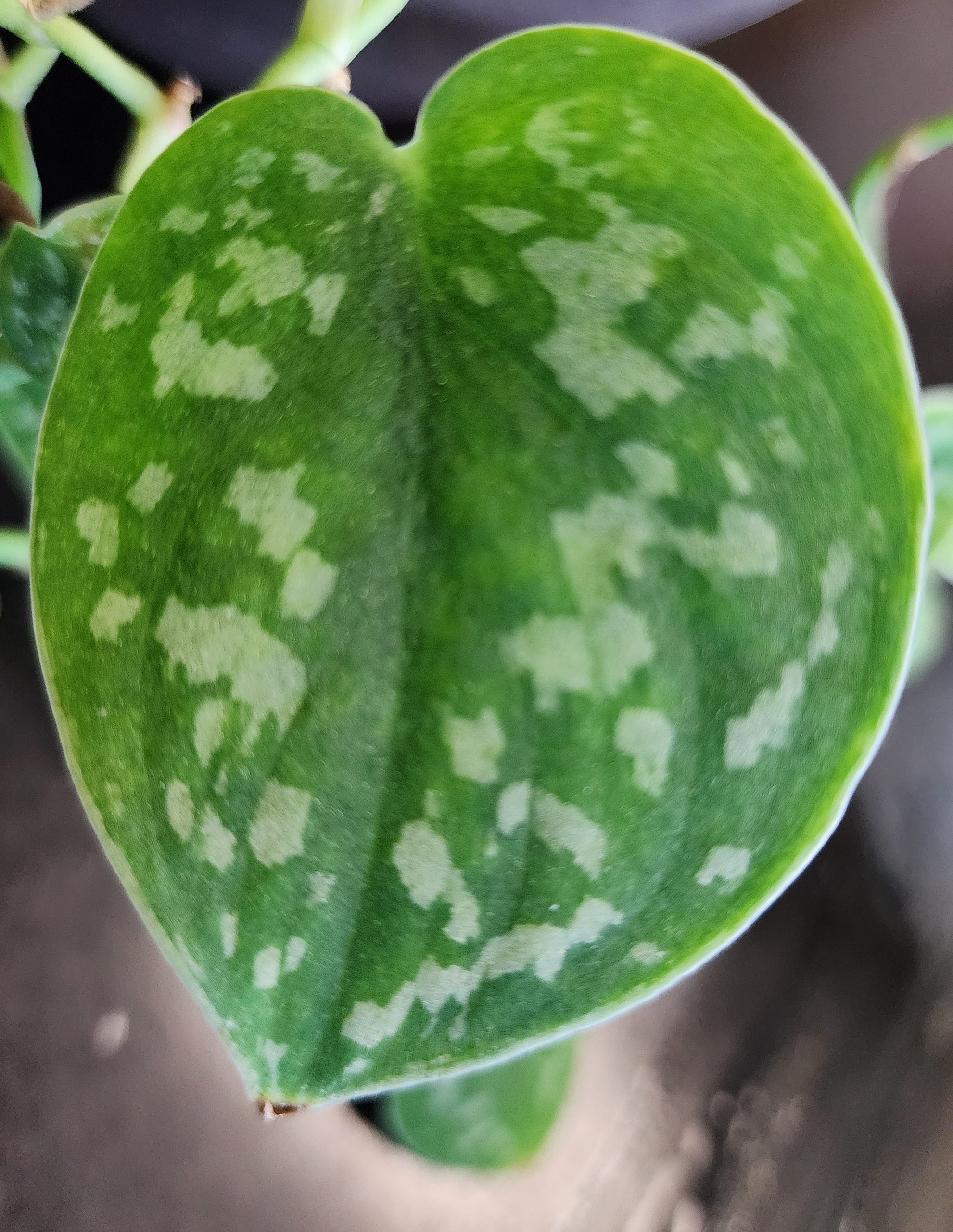
Close-up of a heart-shaped satin leaf with green coloring and irregular pale silver mottling across the surface.

Scindapsus pictus 'Silvery Ann,' Photo by M. Lisy

Close-up of a heart-shaped satin leaf with a silvery-green surface and dark green mottled patterns, showing a soft, velvety texture and central vein.

Scindapsus pictus 'Silver Satin,' Photo by M. Lisy

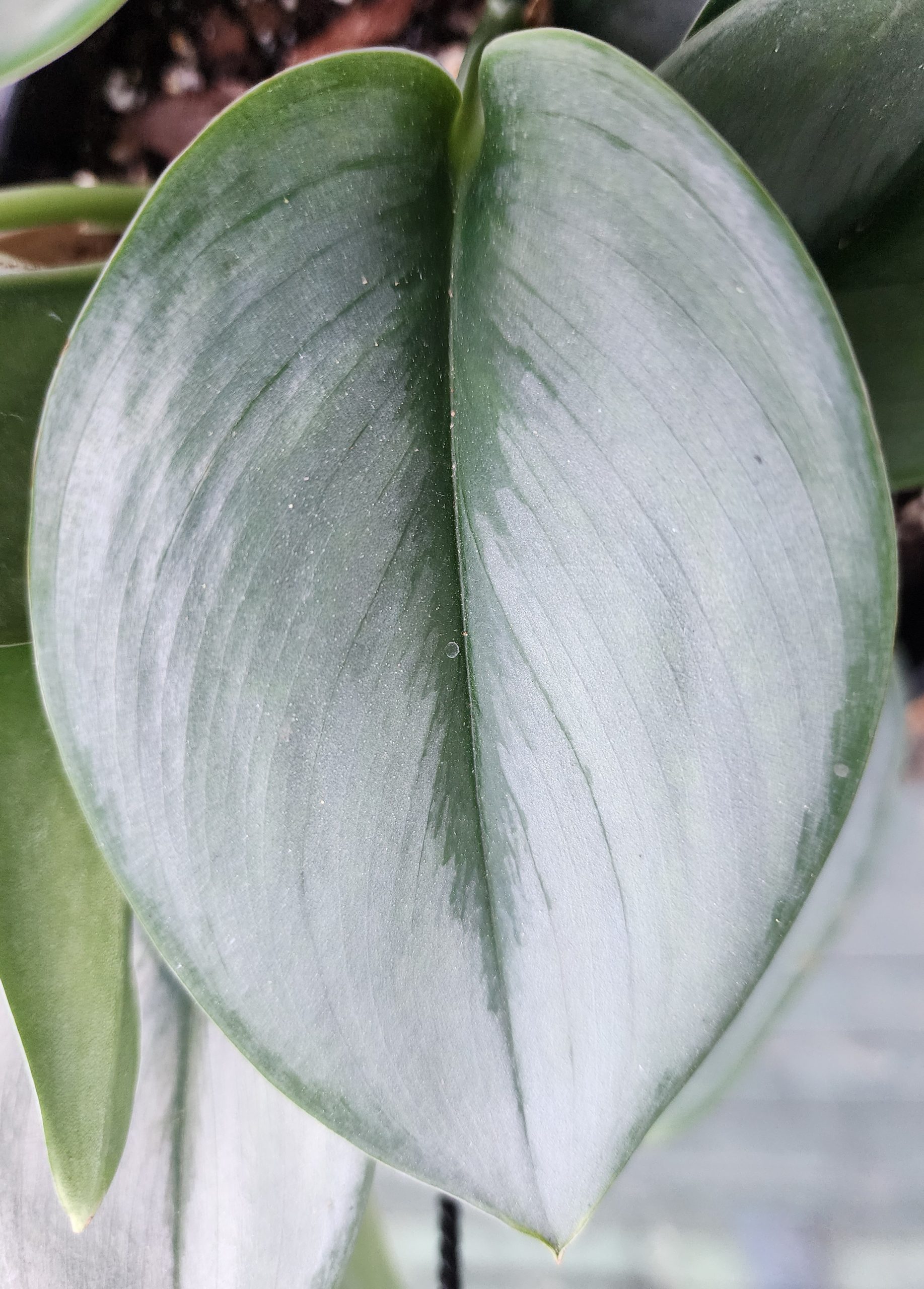
Close-up of a smooth, heart-shaped Scindapsus treubii ‘Moonlight’ leaf with a silvery-gray sheen and a darker green midrib running down the center.

Scindapsus treubii ‘Moonlight’ Photo by M. Lisy.

S. treubii  has a beautiful form called ‘Moonlight.’  It is a nice silver leaf with a green stripe down the middle.  This contrast produces a truly is a gorgeous plant when it gets larger.  There is a new variety called ‘Dark Form,’ which has almost black leaves.  I can’t wait to get this one!  All of the other varieties I will talk about are of the S. pictus species.  The first is ‘Silvery Ann.’  It is a green leaf with silver specs, squares, or blotches, but not too many.  It really makes a nice looking, unique plant.  ‘Silver Satin’ has an intense, broad silver coloration on top of a green leaf.  The variety “Mount Salak’ has much less intense silver, with some leaves having almost a light green color instead.  Its mottled color looks great over the green leaf as well.  My all-time new favorite is ‘Platinum.’  I found this one unlabeled in a big box store recently.  What a beautiful color!  Although on its own it is tempting to think the plant boring, but place it into a collection of green house plants and this one really shines!  Why not add some Scindapsus to your plant collection?       

The UConn Home Garden Education Office supports UConn Extension’s mission by providing answers you can trust with research-based information and resources. For gardening questions, contact us toll-free at (877) 486-6271, visit our website at homegarden.cahnr.uconn.edu, or reach out to your local UConn Extension Center at  extension.uconn.edu/locations.    

This article was published in the Hartford Courant June 21, 2026