Planting Peonies, Spotted Lanternflies, Pokeweed, and Other September News

September 2026 banner with green trees reflecting off a pond, and a college campus in the background.

O sweet September rain!
I hear it fall upon the garden beds,
Freshening the blossoms which begin to wane...

~Mortimer Collins, "Rain in September"

Peonies

This month is the perfect time to plant, divide, or transplant peonies, allowing tubers to establish themselves before winter arrives and the ground freezes. Six weeks of temperatures below 40°F are required for proper flowering in the spring. Choose a site with full sun and well-drained soil to avoid root rot issues. Dig a hole large enough to fit the tuber and its root system, working a form of organic matter, such as compost, into the soil. Nestle the tuber inside—about 1-2 inches from the soil surface. Planting too deeply will prevent proper flowering in the spring. Water the new planting well, adding mulch if needed to maintain moisture.  

If transplanting, cut peony stems close to ground level. Dig around and under the plant to gather up the root system. Similar to when planting new tubers, transplanted peonies should not be buried deeper than 2 inches below the soil surface.  

If dividing a previous planting, carefully dig up the peony and its root system. With a properly sanitized tool, carefully cut the root tubers into small sections with 3-5 buds each and plant according to the guidelines above.

About Peonies

Peony Care

Spotted Lanternfly & Tree of Heaven

Spotted Lanternfly (Lycorma delicatula)

Spotted Lantenrfly (SLF) is an invasive insect introduced from Asia. It arrived in Connecticut in 2020 and has since spread throughout the state. The preferred host plant is Tree of Heaven (Ailanthus altissima), but it will feed on many other genera of plants. SLF poses a threat to Connecticut agriculture because of its feeding on some fruit crops. At this point in the season, destroying eggs by scraping or crushing them will be most effective at reducing next year's population. Nymphs and adults can be treated with contact insecticides including insecticidal soaps, horticultural oils, or other insecticides according to label instructions. Circle traps can be used to capture nymphs next year.

About Spotted Lanternfly

About Tree-of-Heaven

How to Build a Spotted Lanternfly Circle Trap

What to Know about Spotted Lanternfly in Connecticut
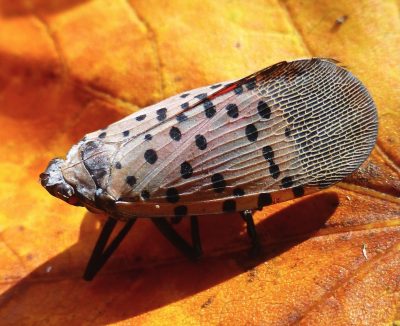


Moth with grey wings with black spots on an orange leaf.
Pamm Cooper, UConn Home Garden Education Office

Tree of Heaven (Ailanthus altissima)

Tree of Heaven (TOH) is an invasive tree in CT. It is also the preferred host plant for the invasive spotted lanternfly (SLF). This tree forms dense colonies through its suckering root system. Female trees can produce hundreds of thousands of seeds annually. Removing this tree is recommended, but careful consideration should be taken because when injured or cut down, the tree can produce many stump sprouts or root suckers. Systemic herbicides applications are recommended from mid-summer through early fall.

Pokeweed - A Native Nusiance

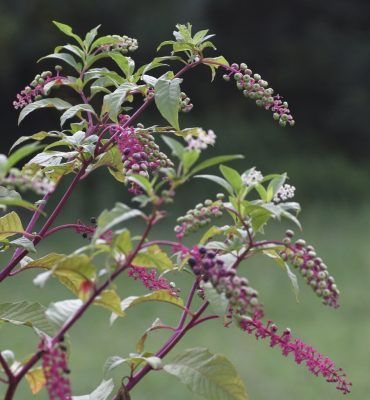
Pokeweed is a native perennial that is having a banner year in 2026 in Connecticut.  With its multiple branching habit and height-up to 10 feet- it can be mistaken for a shrub.

It is generally considered a weed in gardens and residential spaces. However, in the wild, the dark purple fruit are of value to birds and small mammals.

Pokeweed is best controlled is by pulling out young plants before the taproot gets firmly established. Other control methods are highlighted in the article below.

All plant parts are poisonous to humans and pets, and wearing gloves, long sleeves and closed toed shoes is recommended when handling all parts of the plant.
Learn More About Pokeweed

Controlling Pokeweed


 Interesting Insects: American Lady Butterflies

Orange and brown butterfly with black and white markings resting on a green leaf.
Photo by Pamm Cooper, UConn Home Garden Education Office

American lady butterflies, Vanessa virginiensis, are among the several butterfly genera that migrate in both spring and fall, like the monarchs. As they head south in late summer, flowers like goldenrods, Tithonia spp. of Mexican sunflowers, zinnias, asters and lantana are among the plants they use as food sources on their way south.

This is a very fast flyer as it wings its way around the landscape. It is very similar to the painted lady, Vanessa carduii, but it has two large eyespots on the rear wing instead of the four smaller eyespots of the painted lady. Plus, the forewing orange cell of the American lady just below the dark area with the white markings has a white dot in the center.

American Lady vs. Painted Lady Butterflies


Native Plant Highlight: Beaked Hazelnut
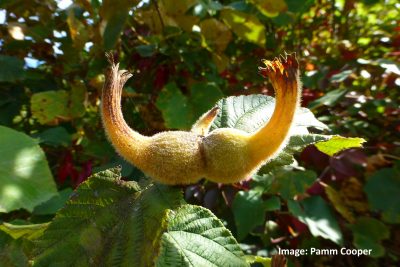
Curved hazelnut husk split into two horn-like sections, lit by sunlight and resting among large green leaves.

Photo by Pamm Cooper, UConn Home Garden Education Office

Beaked Hazelnut (Corylus cornuta)

Corylus cornuta, is a native, easy to grow multi-stemmed shrub that grows in full sun to part shade. It can form thickets by sending up suckers from rhizomes.

Edible nuts about a half inch in size are enclosed in a beaked husk, and nuts can be harvested in late summer.  The fruit is unique when joined together in pairs- the whole fruit resembles Brunhilda 's horned opera hat. Fall leaf color is yellow bronze.

Learn More About Beaked Hazelnut

The CT Native Plant Availability List: Updated and even MORE user-friendly!

This native plant guide was created to assist municipalities, conservation organizations, homeowners, landscape architects, designers, and contractors with locating native plants for habitat restoration and wildlife enhancement.  

The Connecticut Native Plant Availability List, by UConn Extension and CT DEEP Wildlife Division, identifies nurseries and garden centers that grow/sell native trees, shrubs, and perennials. Along with several nurseries that are new to the list, we have also added the ability for users to view the Availability List sorted by Nursery!

CT Native Perennial, Tree & Shrub Availability List


Word from the WiSE

Women in Soil Ecology, UConn Student Chapter

Get The Dirt On Your Soil - Soil Test This Fall!

As the summer season comes to a close and fall starts to move in, the perfect time to test your soil rapidly approaches. A fall soil test can help you start preparing for the following spring and summer season, even before winter begins! A soil test allows you to get a glimpse of what is going on in your soil, like the pH, nutrient levels, organic matter, and more! It helps to establish a base line to see if any soil amendments need to be added to improve your soil health. If any are needed, applying slow release nutrients, such as lime, in the fall can be very beneficial as the additions can slowly release into the soil over winter, and have your soil ready for growing in the spring. Fall crops and ground cover can even uptake the nutrients and have an even better spring green up! Don’t guess, soil test this fall!

By Zaira O'Leary, Soil Science Master's Student, UConn PSLA

Fall is the Perfect Time for Soil Sampling

Fall is a Great Time to Lime and Fertilize Lawns

UConn Soil Nutrient Analysis Lab


Weather Outlook

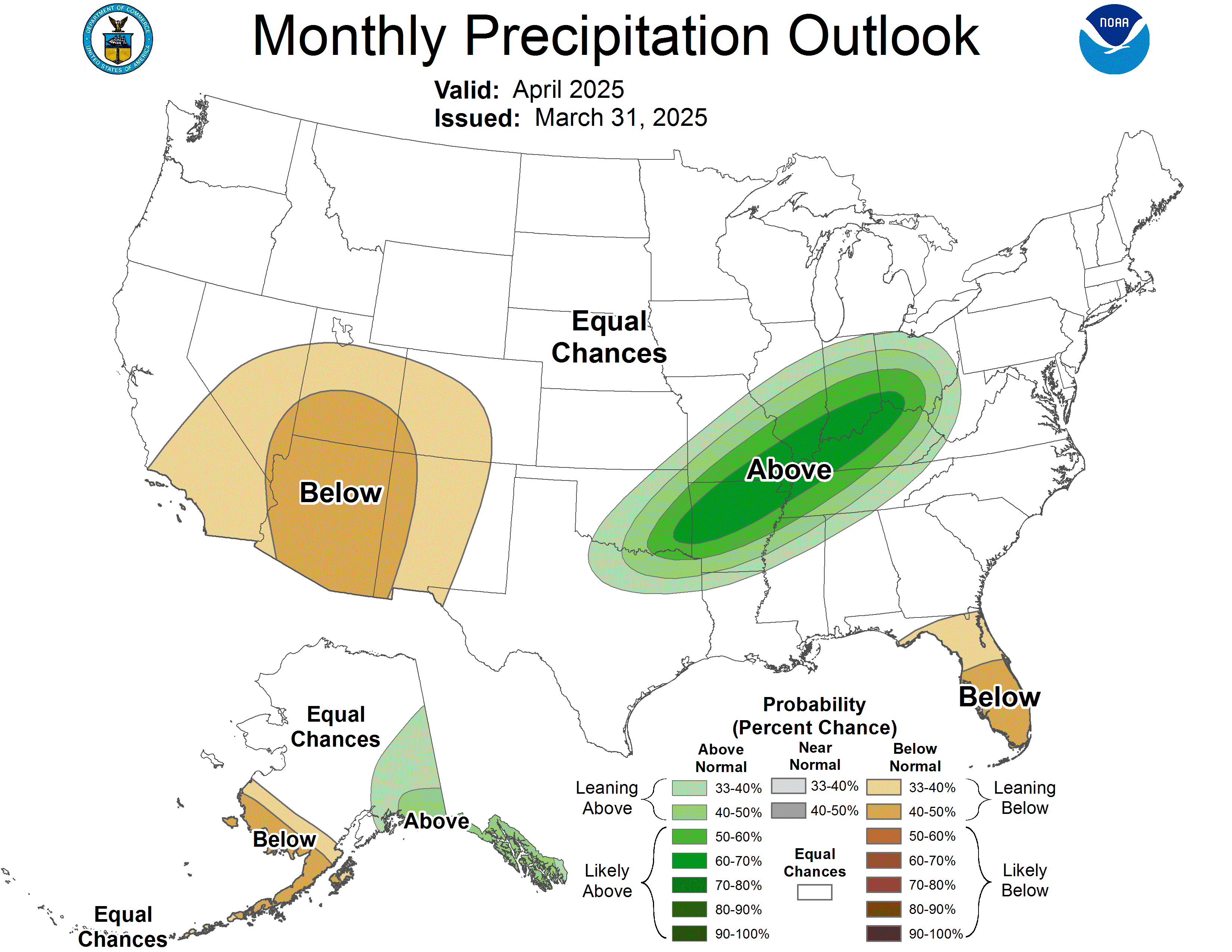
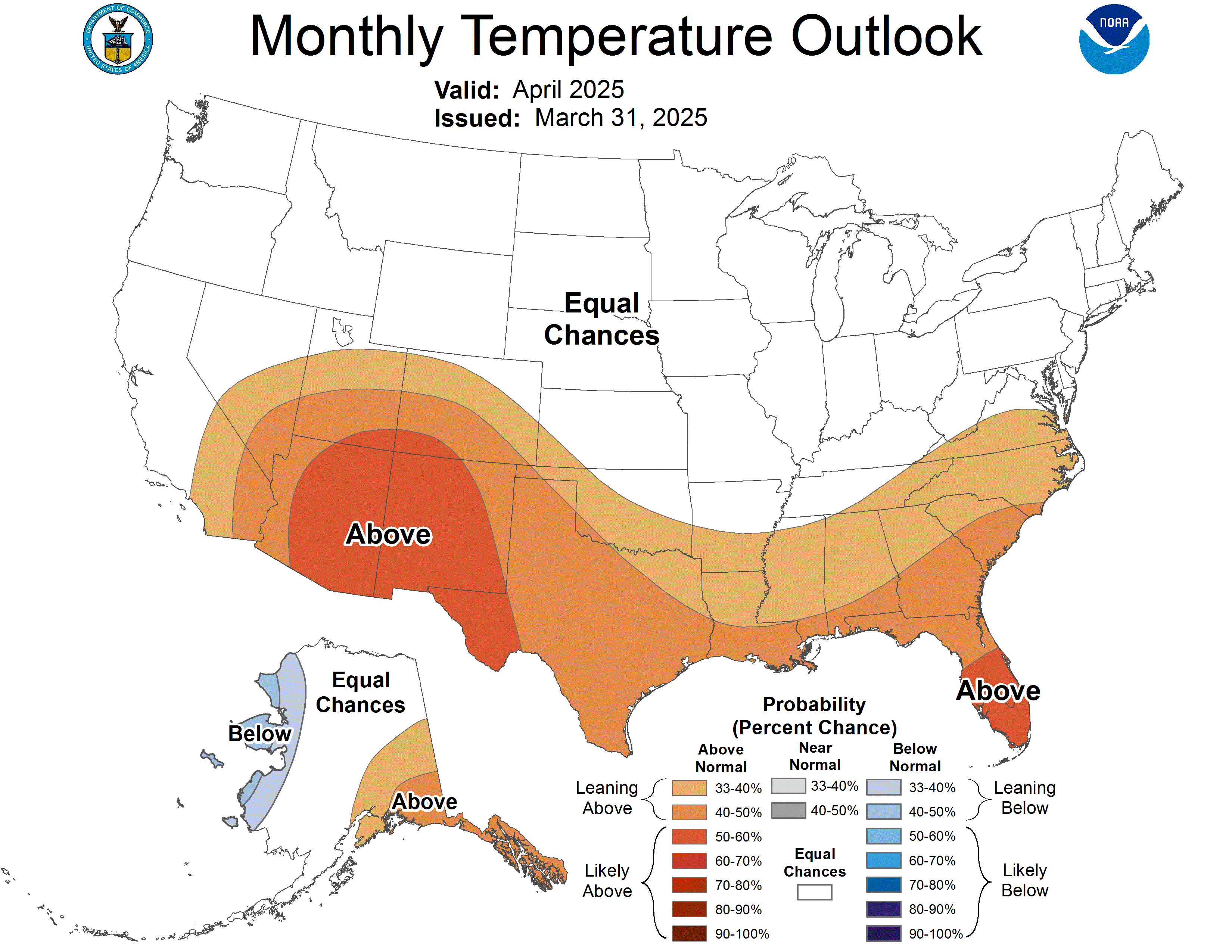
A seasoned gardener always keeps their eye to the sky at any time of year! Maps and the 30 day outlook from NOAA will help you stay prepared for any and all of your gardening chores! (Click image to see larger map.)

Monthly Temperature Outlook Map of United States
Monthly Precipitation Outlook Map of United States

Upcoming Events and Things to Do

                      Join us at Upcoming Talks!

                      A Walk on the Wild Side with Pamm Cooper
                      September 8 - 11:00AM
                      Canton Community Center, Canton CT
                      Details


                      Events & Learning Opportunities from UConn Extension

                      George Leigh Minor Plant and Soil Health Center Open House

                      October 17th, 2026
                      11:00AM - 3:00PM

                      27A Manter Rd, Storrs CT

                      Join us for a free, family-friendly open house at UConn’s newest center! Learn more about our services and expertise in home gardening, plant diagnostics, soil and nutrient health, and turfgrass.

                      - Tours of the new George Leigh Minor Plant and Soil Health Center

                      - Hands-on plant and soil health demonstrations

                      - Lawn and garden questions answered

                      - Free soil pH testing

                      - Free plant diagnostic/nutrient analysis coupons (limited qty)

                      - UConn Hort-club Plant sale

                      - UConn Dairy Bar will be open

                      - Wagon rides, games, prizes, and more!

                      UConn Master Composter Program

                      What is the Master Composter Program?
                      Between 10 and 25% of a typical household’s waste can be recycled right in our own backyards. This significantly reduces the amount of waste that is incinerated or trucked to state and municipal landfills. The UConn Master Composter Program educates and trains state residents about the composting process and prepares participants to pass that knowledge on to others through outreach.

                      Program Details
                      Format: Hybrid, with two in-person Saturday sessions and two online evening sessions

                      Program fee: $100 per student

                      Class size: Limited to 25 participants

                      Certification: Participants must attend all class sessions and complete outreach projects totaling about 20 volunteer hours to receive a UConn Master Composter Certificate & Badge.

                      Suggested topics: Composting basics; compost chemistry, contaminants, and testing; compost recipes and calculators; community composting; earthworms; vermicomposting; and public education approaches.

                      For more information including registration and program updates, email soiltest@uconn.edu.


                      2026 CIPWG Symposium

                      The Connecticut Invasive Plant Working Group's 2026 symposium From Awareness to Action - Strengthening Our Response to Invasive Plants will be in person at UConn Student Union, Storrs, CT, open to all; Wednesday, October 28, 2026.

                      Sessions include a variety of techniques for management of terrestrial and aquatic invasives, as well as restoration with native alternatives.

                      The symposium will be recorded and made available after the event. Attendees can choose to attend in person or purchase the recording. CEUs for organizations and Pesticide Recertification Credits are available.

                      $90 General Registration (in person attendance). $80 Recording Only; Student Registration Available.

                      Learn more and register at: cipwg.uconn.edu/2026-symposium/

                      Ornamental & Turf Short Course Fall 2026 

                      Registration is now open for the Fall 2026 Online Ornamental & Turf Short Course! The course runs October 7–December 16, 2026, with weekly live online sessions held on Wednesdays from 5:30–7:30 p.m.

                      Registration Cost: $400 (includes the Pesticide Applicator Core Manual, Ornamental & Turf Category Manual, and printed course materials).
                      For information on student registration or if you are retaking the course, please contact the instructor, Srikanth Kodati (contact information can be found at the end of this email).

                      This short course provides an in-depth review of the material needed to prepare for the Connecticut Supervisory Pesticide Applicator Certification Exam (Category 3A: Ornamental & Turf/Golf Course Superintendents). Students who complete all modules, quizzes, and resource materials will be well prepared for both the written and oral state exams.

                      To register for the course:
                      s.uconn.edu/turfcourse

                      For more information: https://ipm.cahnr.uconn.edu/pesticide-course/

                      Please reach out to Srikanth (course instructor) at srikanth.kodati@uconn.edu or call 860-870-6935 if you have any questions. 


                      September Gardening Tips

                              • Mid to late September is a great time to add accent plants, like vivid mums and starry asters, that will provide autumn colors in the landscape. Use them along with cool-colored ornamental cabbages and kales to replace bedraggled annuals in containers as well
                              • Lift and store tender bulbs, such as cannas, dahlias and gladiolus, after first frost
                              • Spring and summer blooming perennials like daylilies and bearded irises can still be dug up and divided
                              • Early autumn is a great time to plant perennials
                              • Do not fertilize perennials any more this season. Pushing new growth too close to frost can cause damage to your plants
                              • Late season cabbage and beets can stay in the garden until a light frost for best flavor. Some root crops, including certain varieties of beets, carrots and parsnips, may be left in the ground for storage. Wait until temperatures drop and growth stops and cover with a thick layer of straw or leaves. Harvest as needed during the winter. This may not be an option in areas with heavy vole populations.
                              • Continue to water any new shrub or tree plantings until the first hard frost.
                              • Continue to turn and moisten compost piles to speed decomposition.
                              • Apply fall fertilizer to lawns between Sept. 15th and Oct. 15th.
                              • As tomatoes end their production, cut down plants, pick up any debris and put dead/diseased plant parts in the trash or take to a landfill. Many diseases will over-winter on old infected leaves and stems so these are best removed from the property.
                              • Harvest onions once tops have fallen over and necks have started to dry down and shrink just above the bulb.


                              This Month’s Newsletter Contributors: 
                              Pamm Cooper, Zaira O'Leary, Lauren Kurtz, Emily Leahy, Heather Zidack
                              Planting Peonies, Spotted Lanternflies, Pokeweed, and Other September News

                              September 2026 banner with green trees reflecting off a pond, and a college campus in the background.

                              O sweet September rain!
                              I hear it fall upon the garden beds,
                              Freshening the blossoms which begin to wane...

                              ~Mortimer Collins, "Rain in September"

                              End of Season Harvesting

                              • While some gardeners are able to keep their vegetable gardens going into November and December, many of us start to wrap up in October. Here are some final tips for getting the most out of your autumn harvests!
                              • Harvest before a hard frost or before the temperatures drop below 28°F
                              • Clean your garden as you go. If you've harvested your last tomato, pull the plant. Not only does this help prevent a big "final project" once the garden is empty, but good cleanup is also one of the easiest ways to reduce pests and diseases in next year's garden.
                              • Keep safety in mind! Fall crops yield large fruit like pumpkins and winter squash. Practice proper lifting techniques and don't push yourself to carry more than you can handle.
                              • Find a way to cover your soil. While it may be too late to plant cover crops, gardeners can use natural mulches like shredded leaves, or straw to cover the soil and prevent erosion during winter months.

                              Fall Harvest Tips

                              Warm Season Vegetables

                              As temperatures cool, warm-season vegetables will slow their growth and production and are often the first crops affected by frost. Harvest what you can before cold weather arrives. Tomatoes and peppers can be harvested green and ripened or used in a variety of recipes.

                              Herbs & Leafy Greens

                              As temperatures cool, some leafy greens really come into their own. While lettuce and other tender greens may begin to decline, crops like kale, Swiss chard, and escarole often continue to produce well into fall. Harvest outer leaves as needed and allow plants to keep growing.

                              Harvest tender herbs and frost-sensitive greens before a hard frost. Many herbs can be dried, frozen, or dehydrated for long-term storage.

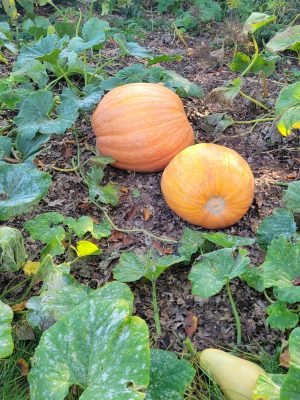
                              Pumpkins growing in a garden patch.
                              Photo by Lauren Kurtz, UConn Home Garden Education Office

                              Pumpkins & Winter Squash

                              Knowing when to harvest pumpkins and other winter squash is important because picking them too early can reduce their storage life.

                              Harvest pumpkins when they have reached their full mature color and the rind is hard enough to resist puncturing with a fingernail. The stem should be dry and brown, and the vines and leaves will usually have begun to die back.  

                              Root Vegetables

                              Cool weather often improves the flavor of many root crops. Carrots, beets, turnips, rutabagas, parsnips, and radishes can continue to be harvested throughout the fall, and some will tolerate light frosts. In fact, cool temperatures can enhance sweetness in crops such as carrots and parsnips.

                              Harvest root vegetables before the ground freezes solid. Mulching around plants can help extend the harvest season and make digging easier later into the fall.

                              Extend the Season

                              If you're one of those gardeners interested in extending your garden season as long as possible, these links might be for you!

                              Season Extenders and Growing Fall Vegetables


                              Spotted Lanternfly & Tree of Heaven

                              Spotted Lanternfly (Lycorma delicatula)

                              Spotted Lantenrfly (SLF) is an invasive insect introduced from Asia. It arrived in Connecticut in 2020 and has since spread throughout the state. The preferred host plant is Tree of Heaven (Ailanthus altissima), but it will feed on many other genera of plants. SLF poses a threat to Connecticut agriculture because of its feeding on some fruit crops. At this point in the season, destroying eggs by scraping or crushing them will be most effective at reducing next year's population. Nymphs and adults can be treated with contact insecticides including insecticidal soaps, horticultural oils, or other insecticides according to label instructions. Circle traps can be used to capture nymphs next year.

                              About Spotted Lanternfly

                              About Tree-of-Heaven

                              How to Build a Spotted Lanternfly Circle Trap

                              What to Know about Spotted Lanternfly in Connecticut


                              Moth with grey wings with black spots on an orange leaf.
                              Pamm Cooper, UConn Home Garden Education Office

                              Tree of Heaven (Ailanthus altissima)

                              Tree of Heaven (TOH) is an invasive tree in CT. It is also the preferred host plant for the invasive spotted lanternfly (SLF). This tree forms dense colonies through its suckering root system. Female trees can produce hundreds of thousands of seeds annually. Removing this tree is recommended, but careful consideration should be taken because when injured or cut down, the tree can produce many stump sprouts or root suckers. Systemic herbicides applications are recommended from mid-summer through early fall.

                              Laurel Wilt in CT?
                              What is it and what should you do?

                              This past August, the Connecticut Agricultural Experiment Station (CAES) confirmed the state’s first case of laurel wilt (Harringtonia lauricola). Laurel wilt is a severe fungal disease that attacks the vascular system of its host. Plants within the Lauraceae family are susceptible to infection, including sassafras, spicebush, redbay, and avocado. Despite what the disease’s name implies, mountain laurel is not a host of laurel wilt.  

                              Laurel wilt is vectored by the redbay ambrosia beetle (Xyleborus glabratus). These insects are extremely small (~2 mm long) and inoculate host plants by tunnelling through their stems and woody tissue. Initial symptoms of laurel wilt include leaf discoloration, wilting, and branch dieback. As the disease progresses, dark vascular streaks become visible on the sapwood underneath external bark layers.  

                              As we head deeper into fall and winter, scouting for symptoms will become more difficult. Continue to monitor any potential host plants during the spring for signs of disease. Currently, molecular testing to confirm the presence of laurel wilt is only available at the CAES.

                              CAES Official Press Release on Laurel Wilt (9/10/26)

                              Laurel Wilt Fact Sheet

                              Find it? Report it!


                              Close-up of a weathered wooden stem with natural grain and dark streaks against a blurred green background.

                              Image provided by the CT Agricultural Experiment Station

                              Dead brown leaves hanging from tree branches among green foliage.

                              Image provided by the CT Agricultural Experiment Station

                              Remember, the pathogen is not widespread in Connecticut yet – this is not cause for panic, but rather something to be aware of moving forward.  If you have questions, don't hesitate to reach out to our office! 


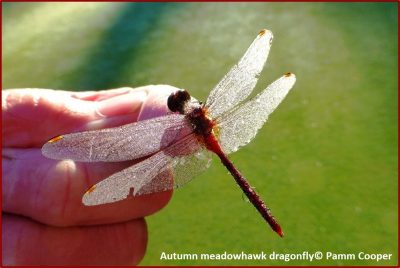
                               Interesting Insects: Autumn Meadowhawk Dragonfly

                              https://uwm.edu/field-station/bug-of-the-week/autumn-meadowhawk-dragonfly/
                              Photo by Pamm Cooper, UConn Home Garden Education Office

                              The last dragonfly on the scene in fall is the native Autumn Meadowhawk Sympetrum vicinum. They are one of the last dragonflies to emerge as adults from late July- September.

                              They are not fussy about habitat as long as there is some water nearby, especially with woodlands in the area. In the cool fall weather you can find them in sunny spots basking on rocks and small branches.

                              As long as temperatures are above 50 degrees F. they can fly, often well into November.

                              Learn More About the Autumn Meadowhawk Dragonfly


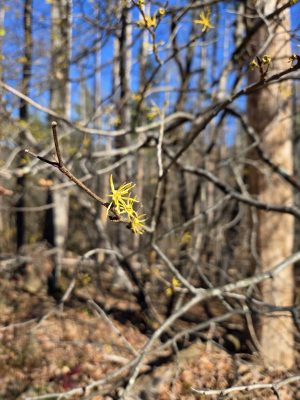
                              Native Plant Highlight: American Witch Hazel

                              Yellow witch hazel flowers blooming on bare branches in a woodland setting.
                              Photo by Lauren Kurtz, UConn Home Garden Education Office

                              American Witch Hazel (Hamamelis virginiana)

                              American witch hazel is a shrub native to Connecticut and most of the Eastern United States. This shrub blooms in October and November, making it one of the last plants to bloom for the season. Witch hazel can be grown as an understory shrub or as part of a woodland border in full sun to part shade. 

                              Learn More About American Witch Hazel

                              The CT Native Plant Availability List: Updated and even MORE user-friendly!

                              This native plant guide was created to assist municipalities, conservation organizations, homeowners, landscape architects, designers, and contractors with locating native plants for habitat restoration and wildlife enhancement.  

                              The Connecticut Native Plant Availability List, by UConn Extension and CT DEEP Wildlife Division, identifies nurseries and garden centers that grow/sell native trees, shrubs, and perennials. Along with several nurseries that are new to the list, we have also added the ability for users to view the Availability List sorted by Nursery!

                              CT Native Perennial, Tree & Shrub Availability List


                              Word from the WiSE

                              Women in Soil Ecology, UConn Student Chapter

                              A Frightful Feast for Soil Microbes

                              This month, UConn’s Women in Soil Ecology bring you a word on what fall plant waste can do for your compost pile. While October might be spooky, there is nothing scary about composting when it’s done correctly. Fall provides an abundance of plant material, such as fallen leaves and leftover debris from flower beds and vegetable gardens. These organic materials can contribute to a nutrient-rich feast for the microbes hard at work in your compost pile.

                              Fallen leaves are an excellent carbon source for compost, with a carbon-to-nitrogen ratio of about 50:1, while fresh plant material has a ratio of about 20:1 and provides more nitrogen. Because of this, it is important to add roughly twice as much fresh plant material as leaves to your compost pile.

                              Getting the carbon-to-nitrogen ratio balance right is important for healthy decomposition. Too much carbon can limit the nitrogen available to soil microorganisms, causing the pile to stay cool and slowing decomposition. On the other hand, excess nitrogen can result in the loss of ammonia gas and an unpleasant smelling pile.

                              As you’re cleaning up your garden this fall, think about adding these plant materials to your compost pile. With the right balance, they can become a valuable resource for building healthy soil.

                              By Nora Doonan – Soil Science PhD Student, UConn PSLA

                              Composting Leaves

                              Compost Chemistry


                              Weather Outlook

                              A seasoned gardener always keeps their eye to the sky at any time of year! Maps and the 30 day outlook from NOAA will help you stay prepared for any and all of your gardening chores! (Click image to see larger map.)

                              Monthly Temperature Outlook Map of United States
                              Monthly Precipitation Outlook Map of United States

                              Upcoming Events and Things to Do

                                                  Join us at Upcoming Talks!

                                                  A Walk on the Wild Side with Pamm Cooper
                                                  September 8 - 11:00AM
                                                  Canton Community Center, Canton CT
                                                  Details


                                                  Events & Learning Opportunities from UConn Extension

                                                  George Leigh Minor Plant and Soil Health Center Open House

                                                  October 17th, 2026
                                                  11:00AM - 3:00PM

                                                  27A Manter Rd, Storrs CT

                                                  Join us for a free, family-friendly open house at UConn’s newest center! Learn more about our services and expertise in home gardening, plant diagnostics, soil and nutrient health, and turfgrass.

                                                  - Tours of the new George Leigh Minor Plant and Soil Health Center

                                                  - Hands-on plant and soil health demonstrations

                                                  - Lawn and garden questions answered

                                                  - Free soil pH testing

                                                  - Free plant diagnostic/nutrient analysis coupons (limited qty)

                                                  - UConn Hort-club Plant sale

                                                  - UConn Dairy Bar will be open

                                                  - Wagon rides, games, prizes, and more!

                                                  UConn Master Composter Program

                                                  What is the Master Composter Program?
                                                  Between 10 and 25% of a typical household’s waste can be recycled right in our own backyards. This significantly reduces the amount of waste that is incinerated or trucked to state and municipal landfills. The UConn Master Composter Program educates and trains state residents about the composting process and prepares participants to pass that knowledge on to others through outreach.

                                                  Program Details
                                                  Format: Hybrid, with two in-person Saturday sessions and two online evening sessions

                                                  Program fee: $100 per student

                                                  Class size: Limited to 25 participants

                                                  Certification: Participants must attend all class sessions and complete outreach projects totaling about 20 volunteer hours to receive a UConn Master Composter Certificate & Badge.

                                                  Suggested topics: Composting basics; compost chemistry, contaminants, and testing; compost recipes and calculators; community composting; earthworms; vermicomposting; and public education approaches.

                                                  For more information including registration and program updates, email soiltest@uconn.edu.


                                                  2026 CIPWG Symposium

                                                  The Connecticut Invasive Plant Working Group's 2026 symposium From Awareness to Action - Strengthening Our Response to Invasive Plants will be in person at UConn Student Union, Storrs, CT, open to all; Wednesday, October 28, 2026.

                                                  Sessions include a variety of techniques for management of terrestrial and aquatic invasives, as well as restoration with native alternatives.

                                                  The symposium will be recorded and made available after the event. Attendees can choose to attend in person or purchase the recording. CEUs for organizations and Pesticide Recertification Credits are available.

                                                  $90 General Registration (in person attendance). $80 Recording Only; Student Registration Available.

                                                  Learn more and register at: cipwg.uconn.edu/2026-symposium/

                                                  Ornamental & Turf Short Course Fall 2026 

                                                  Registration is now open for the Fall 2026 Online Ornamental & Turf Short Course! The course runs October 7–December 16, 2026, with weekly live online sessions held on Wednesdays from 5:30–7:30 p.m.

                                                  Registration Cost: $400 (includes the Pesticide Applicator Core Manual, Ornamental & Turf Category Manual, and printed course materials).
                                                  For information on student registration or if you are retaking the course, please contact the instructor, Srikanth Kodati (contact information can be found at the end of this email).

                                                  This short course provides an in-depth review of the material needed to prepare for the Connecticut Supervisory Pesticide Applicator Certification Exam (Category 3A: Ornamental & Turf/Golf Course Superintendents). Students who complete all modules, quizzes, and resource materials will be well prepared for both the written and oral state exams.

                                                  To register for the course:
                                                  s.uconn.edu/turfcourse

                                                  For more information: https://ipm.cahnr.uconn.edu/pesticide-course/

                                                  Please reach out to Srikanth (course instructor) at srikanth.kodati@uconn.edu or call 860-870-6935 if you have any questions. 


                                                  September Gardening Tips

                                                          • Mid to late September is a great time to add accent plants, like vivid mums and starry asters, that will provide autumn colors in the landscape. Use them along with cool-colored ornamental cabbages and kales to replace bedraggled annuals in containers as well
                                                          • Lift and store tender bulbs, such as cannas, dahlias and gladiolus, after first frost
                                                          • Spring and summer blooming perennials like daylilies and bearded irises can still be dug up and divided
                                                          • Early autumn is a great time to plant perennials
                                                          • Do not fertilize perennials any more this season. Pushing new growth too close to frost can cause damage to your plants
                                                          • Late season cabbage and beets can stay in the garden until a light frost for best flavor. Some root crops, including certain varieties of beets, carrots and parsnips, may be left in the ground for storage. Wait until temperatures drop and growth stops and cover with a thick layer of straw or leaves. Harvest as needed during the winter. This may not be an option in areas with heavy vole populations.
                                                          • Continue to water any new shrub or tree plantings until the first hard frost.
                                                          • Continue to turn and moisten compost piles to speed decomposition.
                                                          • Apply fall fertilizer to lawns between Sept. 15th and Oct. 15th.
                                                          • As tomatoes end their production, cut down plants, pick up any debris and put dead/diseased plant parts in the trash or take to a landfill. Many diseases will over-winter on old infected leaves and stems so these are best removed from the property.
                                                          • Harvest onions once tops have fallen over and necks have started to dry down and shrink just above the bulb.


                                                          This Month’s Newsletter Contributors: 
                                                          Pamm Cooper, Zaira O'Leary, Lauren Kurtz, Emily Leahy, Heather Zidack