Autumn

Plectosporium – Not as Spooky As it Sounds!

By Emily Leahy, UConn Plant Diagnostic Lab

White blister like spots on an orange pumpkin
Raised white lesions, indicative of Plectosporium blight, on a pumpkin. William Nesmith, University of Kentucky.

A chill in the air, football playing on the TV, and a certain kind of latte in your hand – there is only one season which encapsulates all three. Autumn is at our doorstep, bringing with it vibrant colors to paint the trees and an abundant harvest to use in all the season’s culinary endeavors. Many of the crops most representative of fall are cucurbits – the most relevant of which being various varieties of squash and pumpkins. Although the season is associated with comfort, danger lurks for these plants in the form of a fungal disease – Plectosporium blight.  

As the disease name suggests, the fungal pathogen Plectosporium tabacinum is responsible for its occurrence. Following a typical cycle of disease in infected hosts, fungal reproductive structures overwinter on crop residue. The pathogen even has the ability to dwell in soil for up to three years, much overstaying its welcome. As the growing season progresses, fungal spores will enter hosts through natural openings like cuticles and stomata. Plectosporium tabacinum prefers a cool and rainy environment, as windy and wet weather can assist in the spread of fungal spores and therefore the disease itself.  

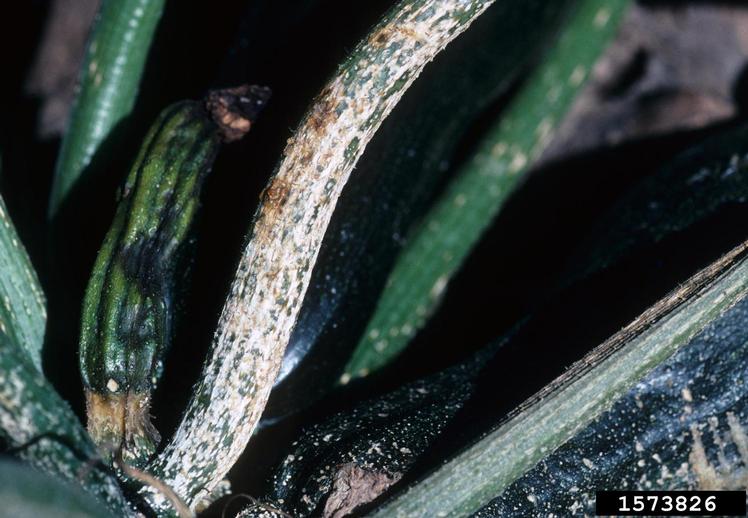
White lesions on a pumpkin stem
Squash host exhibiting tissue desiccation in late stages of infection. Gerald Holmes, Strawberry Center, Cal Poly San Luis Obispo, Bugwood.org

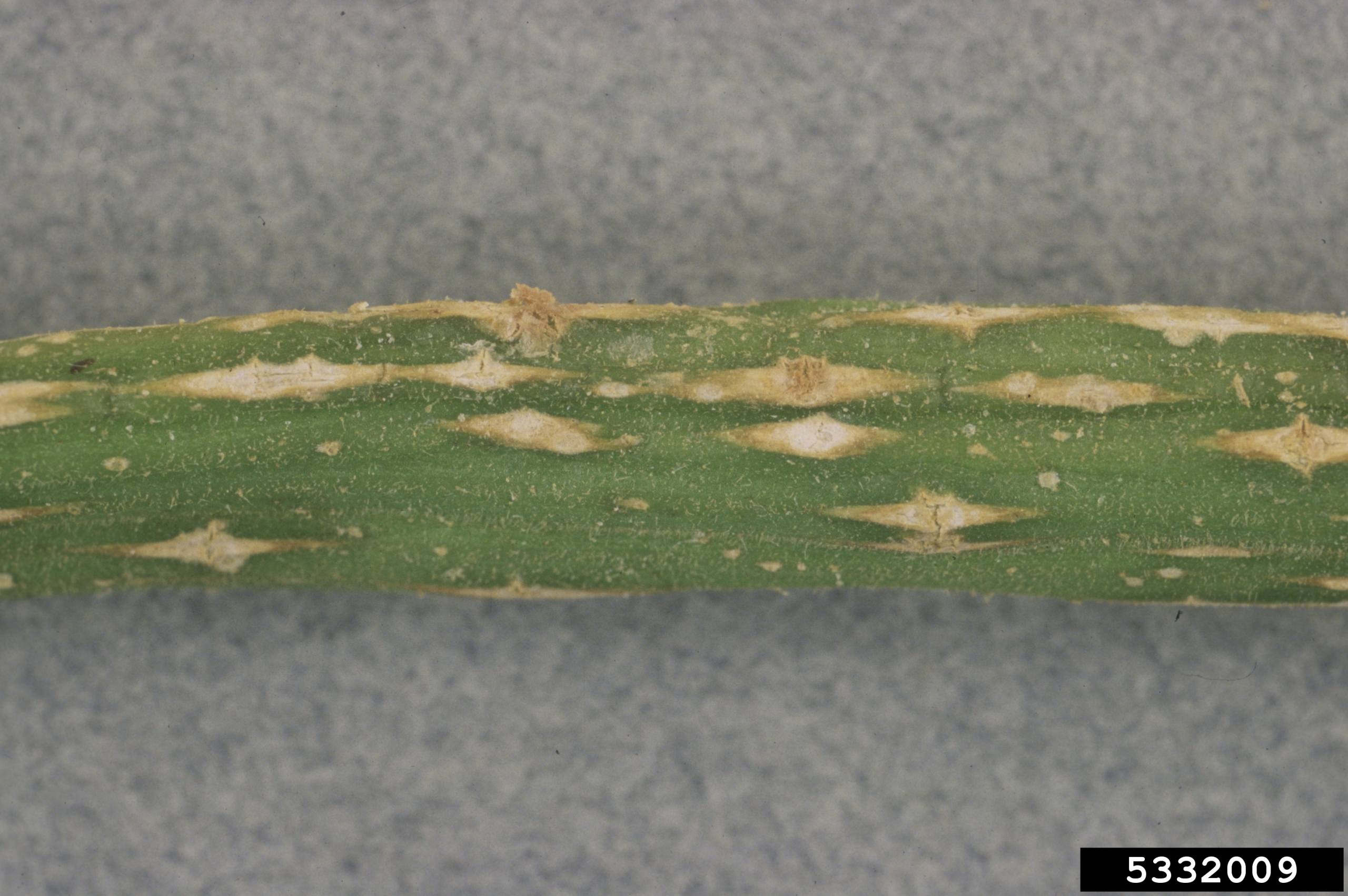
Plectosporium blight has a few key symptoms which are easy to spot. White or cream-colored patches of various sizes will be present on stem tissue and can also spread to leaf petioles – the stalk which connects the leaf to its stem or branch. In severe cases of infection with Plectosporium tabacinum, hosts can become entirely defoliated as these lesions deplete petioles of their strength. Raised circular lesions in colors including white, tan, and gray, will appear on the body of the fruit and possibly leaves. As the disease progresses, infected tissue will become increasingly brittle and dry, forming tan abrasions that detract from the plant’s vigor.  

Up close image of white spots
Symptom of Plectosporium tabacinum – white pathces on a squash stem. Virginia Tech Learning Resources Center , Virginia Polytechnic Institute and State University, Bugwood.org

Fear not – all hope is not lost for the unofficial mascots of autumn. There are management strategies readily available to deter Plectosporium tabacinum. Due to the pathogen’s ability to dwell in plant residue and soil for long periods of time, crop rotations are beneficial to position potential hosts away from areas where the disease was observed in the past. In addition, assuring that plants have ample space between each other and therefore promoting air circulation. This leaves fungal pathogens without a suitable place to dwell, reducing infection of plants in the area. Control can also be achieved by fungicides, including Chlorothalonil and strobilurin based compounds. Always read the label in full before using any chemical product on your plants. 

The number of management strategies available for Plectosporium blight is a comforting indicator that this disease is easily controlled. As you are outside admiring the fall foliage and enjoying a reprieve from the harsh heat of summer, peruse your fall cucurbit harvest for the aforementioned symptoms. Stay curious and enjoy the dynamics of the season – it'll slip away in the blink of an eye!  

The UConn Home & Garden Education Center supports UConn Extension’s mission by providing answers you can trust with research-based information and resources. For gardening questions, contact us toll-free at (877) 486-6271, visit our website at homegarden.cahnr.uconn.edu, or reach out to your local UConn Extension center at cahnr.uconn.edu/extension/locations. 
This article was published in the Hartford Courant September 13, 2025

Why Bees and Wasps Really Crash Your Late Summer Picnic!

By Heather Zidack, UConn Home & Garden Education Center

Did you notice a few unwelcome guests trying to steal a sip from your soda can at your Labor Day picnics last weekend? In late August/Early September, bees and wasps are highly visible, more persistent, and at their peak populations in social hives. We get a lot of calls this time of year asking what can be done to remove them from shared spaces. 

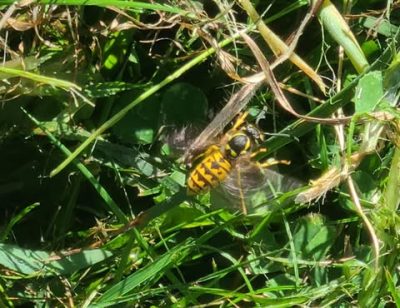
A yellowjacket flying low to the ground
A Yellowjacket. Photo by Heather Zidack, UConn Home & Garden Education Center

Thousands of described species are spread across 7 taxonomic families, worldwide. Eusocial species, like honeybees and paper wasps, have complex social structures that contribute to the overall survival of the hive. Meanwhile, a large majority of species are solitary and may live close to similar species but don't work together when it comes to provisioning resources or defending a territory. Diets range from carnivorous to herbivorous. However, most of them have developed a relationship with flowering plants in some capacity. Some are specialists, needing specific flowers for various resources, while others are generalists. Flowers have co-evolved with these insects so that they may benefit from the relationship via pollen distribution. Only those that help to move pollen are considered pollinators, though many may feed on floral resources. Entomologists dedicate their entire careers to understanding these insects and their complex relationships with the larger world. 

So why do they bother us around Labor Day but not so much during other summer picnics? A lot of it has to do with life cycles. By August, a hive has had a significant amount of time to establish. In spring, a queen will start a nest the size of a quarter. They aren’t on our mind so we’re not on the lookout. By now, some of those social nests can be the size of a basketball, or larger, with thousands of insects working for the good of the hive. At the same time, we're in the season when bees and wasps are on the lookout for sweet, sugary energy sources as their natural floral resources start to become scarce with the change of the seasons. Some become more protective of territory, trying to protect local resources and inadvertently mistake your sodas, fruit, and sweet picnic goodies as their next opportunity. Keeping drinks and food covered at picnics at this time of year is highly recommended to avoid attracting bees and wasps. If you grow fruit trees or berries, clean up any dropped fruit that could also attract these sugar fiends.  

In general terms, the easiest management strategy is to avoid the area, if possible. Hives built in low traffic areas can plausibly be left for the season, since workers will die out with colder weather. The only one to overwinter is the queen, and she will usually overwinter in leaf litter or plant material at ground level. In addition, wasps are not going to re-use their hives. The new queen will start fresh with her own nest, and her own colony come springtime. Next spring would be the time to scout for any unwanted guests and physically remove the beginnings of a nest early. This not only helps keep them out of your space but gives the queen time to reestablish a nest somewhere else that is safer for both parties and allows them to coexist with us more favorably. 

We always encourage having a bee or wasp identified before managing a nest, for a multitude of reasons. Your local beekeeper may be skilled and willing to help you remove a hive or swarm of honeybees from your property, but they won’t want to go near wasps any more than you might. Some species, like carpenter bees, may cause property damage and management may include removal of the bees as well as some minor carpentry repairs.  Others, like the Cicada Killer, may appear big and scary, but want nothing to do with humans and can be left alone to complete their season.  

If you or a family member has an allergy, damage is being done to property, or the nest is in a high traffic area, removal of the nest may be appropriate. Chemical management products, like bee and wasp sprays, are highly effective when used according to the label. These products will kill the insects. Not all products may fit all situations, so check labels carefully. As an example, sprays for ground bees and wasps should be labeled for ground use. Remember to read the label in its entirety before use and follow all instructions as written. Consider hiring a pest removal professional who can take the proper safety precautions. These professionals also know strategies that may help reduce the impact on nearby pollinators, treating only the problem at hand. 

If you have questions about bees or wasps or need help identifying them to navigate which action to take, the UConn Home & Garden Education Center is here to help!  

The UConn Home & Garden Education Center supports UConn Extension’s mission by providing answers you can trust with research-based information and resources. For gardening questions, contact us toll-free at (877) 486-6271, visit our website at homegarden.cahnr.uconn.edu, or reach out to your local UConn Extension center at cahnr.uconn.edu/extension/locations. 

This article was published in the Hartford Courant September 6, 2025

The Fall Invasion of the Asian Lady Beetle

By Marie Woodward, UConn Home & Garden Education Center

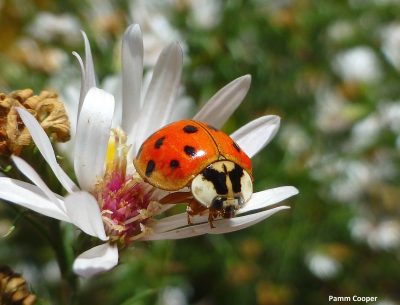
multi-colored Asian ladybeetle on a flower

As the leaves change color and the weather turns colder, many people look forward to the beauty and coziness of autumn. However, one uninvited guest often accompanies the season: the Asian lady beetle. This insect, scientifically known as Harmonia axyridis, can be a nuisance to homeowners as it seeks shelter in warm buildings during the fall months.

The Asian lady beetle is native to eastern Asia but was introduced to the United States and other parts of the world in the early 20th century as a biological control agent for aphids and other pests. While they are highly effective at controlling these pests in the gardens and crops, their rapid spread and tendency to congregate in large numbers have caused problems for homeowners.

These beetles are easily recognizable by their orange to reddish-brown coloration, small black spots on their wing covers, and distinctive M-shaped marking behind their head. Their size ranges from 5-8mm in length. They have six short legs and two antennae.

During the fall, the Asian lady beetle seeks protected locations to spend the winter. They gather in large groups, often on the sunny side of buildings, before ultimately finding their way into homes and other structures through cracks and gaps. It is not uncommon to find them gathered in attics, wall voids, or other quiet, undisturbed areas.

Once inside, these beetles can become a nuisance due to their sheer numbers and tendency to release a yellowish, foul-smelling liquid when disturbed. This liquid can stain walls, fabrics, and other surfaces, and may cause allergic reactions in some individuals. Additionally, some people find the beetles’ scent unpleasant or even nauseating.

Prevention is key to avoiding an Asian lady beetle infestation. Sealing entry points, such as cracks around windows, doors and utility openings, can significantly reduce the likelihood of an invasion. Additionally, keeping exterior lights off at night and planting trees or shrubs away from the house can reduce the attractiveness of your home to these insects.

If beetles have already found their way inside, using a vacuum cleaner is the best means of removal. However, be sure to dispose of the vacuum bag or empty the canister outdoors immediately to prevent the beetles from returning back into your home. Alternatively, insect light traps or sticky traps can help capture and remove beetles.

It’s essential to remember that while the Asian lady beetle can be a nuisance, it is not a significant threat to your home or your health. Taking proactive measures to prevent their entry and managing their presence can significantly reduce the annoyance caused by these uninvited guests.

As the fall season arrives, keep in mind the potential for Asian lady beetles to seek shelter in your home. By understanding their behavior and implementing preventive measures, you can enjoy the beauty and warmth of autumn without the invasion of these pesky insects.

If you have questions about Asian lady beetles or other gardening topics, contact the UConn Home & Garden Education at (877) 486-6271 or www.homegarden.cahnr,uconn.edu or your local Cooperative Extension Center.