Spring

Watch for Bulb Diseases

Dr. Nick Goltz, UConn Home & Garden Education Center; UConn Plant Diagnostic Lab

Gardens in New England come to life in spring thanks, in large part, to bulbs! Spring bulbs are reliable, perennial color-bringers and seem equally at home in landscapes and containers. Daffodils (Narcissus spp.), grape hyacinth (Muscari spp.), and tulips (Tulipa spp.), are just some of the bulb plants that grace our gardens this time of year, and they remind us that the blooms of summer alliums aren’t far behind. While these plants might seem effortless to grow, they are not without their fair share of disease issues!
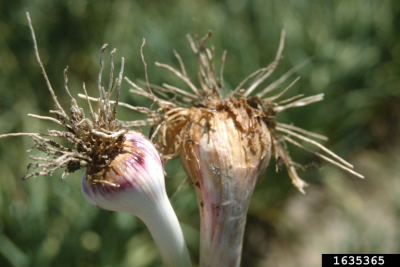
Purple streaking and weak root systems associated with Fusarium rot.
Purple streaking and weak root systems are symptoms associated with Fusarium rot. Ed Kurtz, budwood.org

One common disease of bulbs we see here in Connecticut is Fusarium wilt and bulb rot.

Bulbs generally prefer average to loamy soil with good drainage. When planted in clay soils or following long periods of rain in early spring, however, they are susceptible to rot diseases caused by fungal pathogens such as those in the genus Fusarium. The various wilt and rot diseases caused by Fusarium species can be destructive and sometimes difficult to control. Symptoms include wilting, brown lesions at and below the soil line, vascular discoloration, bulbs that are soft or spongey, and, especially with garlic (Allium sativum) and relatives, a purple-red discoloration of bulb tissue. Plants affected by this soil-borne fungal disease do not recover, so it is wise to be proactive with management and prevention.

If your bulb plants do not emerge properly in the spring or emerge but wilt soon after, fail to flower, or display other symptoms associated with root rot diseases, pull them up and throw them away! Fusarium and similar fungal pathogens often survive the winter in the soil on diseased plant tissue from the year before, so it is important to keep your garden clean and to not compost diseased plant tissue, as most home compost bins do not reach temperatures necessary to kill pathogens. Fungi like Fusarium thrive in soggy soils, so do your best to prevent flooding and standing water where bulbs are planted. There are no fungicides that will completely control or eradicate Fusarium in a landscape, but some are helpful with preventing infection of healthy plants. Remember to always wear protective equipment and follow label rates and instructions if you choose to apply fungicides.
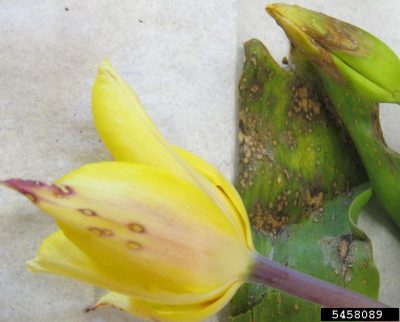
Symptoms of tulip fire, Botrytis tulipae, on tulip flower and leaves.
Symptoms of tulip fire, Botrytis tulipae, include leaf spots on leaves and flowers, often with dark boarders resembling burn injury, lending the common name. Sandra Jensen, Cornell University, Bugwood.org

Another common fungal disease of bulbs grown here in the Northeast is Botrytis gray mold or tulip fire. Fungi in the genus Botrytis cause disease symptoms on many different host plants. Though it is often called “gray mold” when associated with other plants, for tulips, the disease is usually called “tulip fire” due to the spots it causes on leaves and flowers, often with dark borders resembling a burn.

Botrytis fungi are very common and are capable saprophytes, meaning they feed on dead or decaying tissue and contribute to nutrient cycling in the environment, but can be problematic in managed landscapes. To cause disease, Botrytis fungi must first colonize and get nutrients from dead or declining plant tissue, such as fading flower petals, over-ripened fruit. Once the fungus is established in its host plant, it becomes more aggressive and invades healthy plant parts, causing brown lesions and decay.

To prevent Botrytis gray mold and tulip fire, try to encourage good airflow around your plants. Many people plant their bulbs closely together, like eggs in a carton, but this can make bulbs susceptible to tulip fire over time when treated as perennials. Dig up your tulips when they appear crowded, and each year when dealing with a potential disease issue. Inspect bulbs before you plant them again, and discard bulbs that are not firm, discolored, or otherwise do not appear healthy. Rotate to new locations and avoid planting consecutively in the same spot if there has been a history of disease there.

If you have questions about growing bulb plants, are dealing with a plant health issue, or regarding other gardening topics, feel free to contact us, toll-free, at the UConn Home & Garden Education Center by emailing ladybug@uconn.edu. You can also call us at (877) 486-6271, visit our website at www.homegarden.cahnr.uconn.edu, or contact your local Cooperative Extension center.
Grow Vegetables – Save Money

By Dawn Pettinelli, UConn Home & Garden Education Center

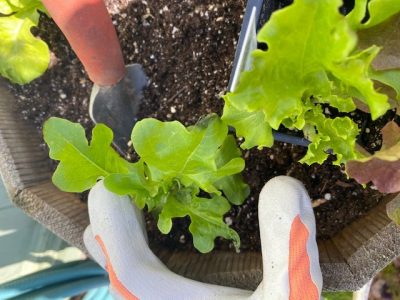
Lettuce planted in a container.
This lettuce was planted in a container. Photo by dmp2024

Anyone who grocery shops on a regular basis has likely noticed a higher tally at the checkout counter. The latest consumer pricing analysis from the USDA is predicting a 1.3 percent increase in food prices. While we can’t do much to lower the prices, one thing we can do is grow some of our own vegetables and herbs.

The investment in a small 100 square foot or so garden is not large, and one can be assured of healthy, high quality fresh produce. Vegetable gardeners can also control what, if any, types of pesticides are used on the plants. One source suggested that a $70 investment in plants and seeds could produce a harvest worth $600 or more over the growing season. Already having basic garden tools was probably taken for granted.

If yard space is limited or too shaded, consider renting a plot in a community garden, maybe teaming up with a friend trading garden chores for produce, or consider growing in window boxes and other containers. Even small areas provide opportunities to grow your own food. While a head of lettuce can cost $2-3 dollars at the grocery store, for that same amount one can often pick up a cell-pack of 6 lettuce plants and grow them out in a large container, or 6 square feet or so of garden bed.

Starting plants directly in the garden by direct seeding can also offer considerable savings. I picked up a package of mixed lettuce variety seeds for $3.25 that contains 500 seeds. This would enable one to grow multiple succession plantings for at least 2 or 3 years. If stored in a dark, cool, dry spot, many seeds last for at least 2 years if not longer.

Good candidates for direct sowing would be bush or pole beans, lettuce and other green leafy vegetables, radishes, peas, carrots, summer and winter squash, cucumbers, and corn. If they tickle your tastebuds, you can toss in turnips and parsnips.

Some vegetable varieties have greater cold tolerance than others so your peas, radishes, and many green leafy vegetables can usually be planted by the end of this month depending on the weather. In northern parts of Connecticut, it would be good if the soil warms and dries up a bit more.

Other types of vegetables are better to set in the garden as transplants, whether you grow them yourself or purchase them in cell-packs. The main reason for this is twofold. Certain plants, particularly in the brassica family, like cabbage, broccoli and cauliflower germinate fine in warm household temperatures but like to be grown cooler than many of us keep our houses and if left in those warm temperatures grow long and leggy instead of short and stocky. So, it’s just easier to purchase healthy, stocky plants grown in a greenhouse to set in the garden or container, although the leggy ones usually catch up.

The second reason why some plants are better purchased as transplants is because vegetables like tomatoes, peppers, eggplant and leeks have a long growing season – often 80 to 100 days from transplant until they produce harvestable crops. It makes more sense to plant 3- or 4-week-old transplants around Memorial Day so harvesting can start in late July or August. Contrarily, even though some winter squash and pumpkins might take 100 days or so to mature, I typically just direct seed them around Memorial Day because they seem to catch up with transplants, that usually experience a bit of transplant shock, pretty quickly so I don’t feel like I am gaining much by purchasing transplants and more importantly, the particular varieties I prefer are not always available as plants.

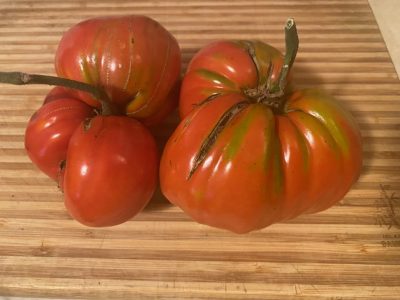
Fresh picked roma style tomatoes
This fabulous roma style tomato is an heirloom variety a friend brought from Italy. It makes a fantastic sauce! Photo by dmp2024

Regardless of whether you have a few containers to fill or a large garden, do some research before purchasing seeds or transplants. There are so many different cultivars available so look up variables like days to harvest, disease resistance, cold tolerance, productivity and more. Make notes on how they taste and any problems during the growing season.

When planning your edible plantings, also think about succession sowings, finding out what pest problems to be on the lookout for, last and first frost dates, mature size and space requirements, and days to harvest.

Feel free to contact the UConn Home & Garden Education Center with questions on growing vegetables, herbs and other plants or if you have any other gardening questions, contact the UConn Home & Garden Education at (877) 486-6271 or www.homegarden.cahnr,uconn.edu or your local Cooperative Extension Center.

The Do’s and Don’ts of Early Spring Gardening

By Heather Zidack, UConn Home & Garden Education Center 

There’s a well-known scene in the movie “Braveheart” where Mel Gibson’s character, commands his men to “Hold!” as the enemy is rushing upon them. It’s a scene that I often reference as an analogy for this part of the year. Daylight savings time has changed our clocks, the sunshine is warm, temperatures are reaching the “light jacket” level of comfortable, and we all feel spring rushing towards us with the promise of seedlings, flower buds, and fresh green leaves. With this, there are certainly plenty of chores that we can do right now to prepare, but there are others that we really should be waiting for a few weeks longer.  

Houseplants may enjoy a short afternoon in the outdoor sunlight on these warmer days but resist the urge to put them outside full time until night temperatures consistently reach 50 degrees Fahrenheit. The occasional day trip is an effective way to help them transition from the protection of your indoor environment to full sun outdoors. More importantly, consider giving your houseplants a good spring cleaning. Repot or divide root bound plants, remove the winter dust from leaves with a damp rag, and trim out any dead or unsightly growth. Now they’re ready for their spring debut! 

Fertilizing is another task that many gardeners feel may be a chore to check off their lists early. This is a project that should wait a little bit longer. Often, fertilizer will push new growth in your plants. Pushing them too early can leave tender leaves and buds at risk of exposure to frost and freezing temperatures, actively slowing or stunting growth that you intended to give a boost to. In the same vein, grub control, pre-emergent, and many other synthetic materials used in the landscape require specific soil temperatures to be effective and it’s still just too cold. Always read the label of any garden product to learn the best timing of any application. At this point in the year, consider doing a soil test. If you haven’t done so before, it's great to have a baseline for planting and caring for your garden. If you’ve done it a few years ago – check it again! Things change and you may be surprised by what nutrients you need (or don’t) since you last checked in. 

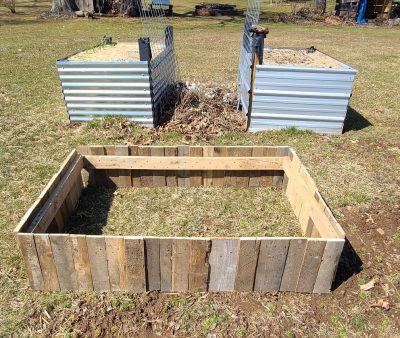
It may still be a little early for mulch as well. Adding fresh mulch too early in the season can trap moisture and slow the soil from warming up to optimum growing temperature. Take this time to pull out grass and weeds that may have taken root in mulched beds and put this time into your hardscape. Look for tripping hazards to address like cracked, sinking, or heaved pavers. Check structures like pergolas, sheds, and even raised beds for rotting boards, warping, or structural damage. Repair as needed. Building new garden spaces is always an option! Create your punch list of projects that will need fresh paint or sealant. If the weather is going to be warm and sunny – consider power washing hardscapes and structures now. 

Newly constructed raised beds
Newly constructed raised beds ready for spring! Photo by HZidack

Late winter/early spring is a fantastic time for pruning trees and shrubs in the landscape. It’s ideal because there is great visibility, and the cooler temperatures prevent disease and insects from taking advantage of fresh wounds. You want to make sure you’re pruning correctly, for the species and purpose of the trees and shrubs in your landscape – so do your homework! As a rule of thumb, roses, hydrangeas, and some hardy perennials tend to appreciate a later pruning and can vary between types within the species, so stay aware of what you have on your property to ensure success!  

“But when do I get to play in the dirt?” That's next! For our outside plants, think about dividing perennials. Divisions at this point in the year make the plants much easier to handle for the gardener. Moving your plants now gives them a chance to “wake up in place” this spring. You will reduce concerns with transplant shock when you move plants ahead of their spring flush and our summer heat. 

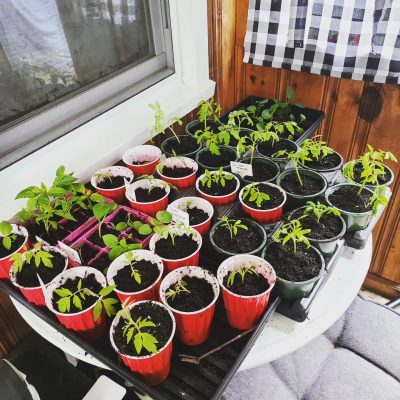
Indoors, stepping your seedlings up into larger containers gives them a little more breathing room as we wait for the season to start. Only transplant seeds when they’ve started to show 2-3 sets of true leaves and keep in mind that different species can have different needs. If you excitedly started your tomatoes too early, and now notice leggy stems, try transplanting them in plastic cups and burying them all the way up to their first couple sets of true leaves. They will put out even more roots along that covered stem and be even better prepared when you put them in the garden this season!  

Seedlings transplanted into plastic cups.
Seedlings that are leggy can be moved into plastic cups with holes in them and buried. Photo by H.Zidack 

There are still plenty of projects that can be done while we wait for spring to come! If you have questions on spring garden projects or any other gardening topic, feel free to contact us, toll-free at the UConn Home & Garden Education Center at (877) 486-6247, visit our website at www.homegarden.cahnr.uconn.edu or contact your local Cooperative Extension Center.