“August is ripening grain in the fields blowing hot and sunny, the scent of tree-ripened peaches, of hot buttered sweet corn on the cob. Vivid dahlias fling huge tousled blossoms through gardens...”
— Gladys Taber
Balancing Healthy Lawns and Sustainable Landscapes
Utilized lawn spaces, sometimes referred to as functional lawn spaces, are areas people regularly use. These can be parts of your yard where your children play, your pets explore, or areas you utilize for family barbecues. On a commercial scale, these may be sports fields, town greens, or other recreational areas.
Underutilized lawn spaces are aesthetically appealing when kept up but are not used for heavy foot traffic, recreational, or other personal uses. Many gardeners are choosing to convert underutilized lawn areas into native plantings, pollinator habitats, low growing lawn alternatives, or other landscape features that better meet their goals while reducing maintenance inputs.
By differentiating between these two types of lawn spaces, homeowners can determine the level of care and maintenance each area requires. In the long run, this can help them balance healthy lawn areas with more sustainable landscape features.
For Connecticut's cool-season lawns, mid-August through mid-September is a prime time to perform lawn renovation and maintenance practices. Performing tasks at the proper time of year helps to reduce over-applicatinon of products.
Late Summer/Early Fall Lawn Care Chores
- Seeding or Overseeding
- Aug 15-Sept 15 is a great time to repair thin or damaged lawn areas by either seeding or overseeding
- Dethatching
- If thatch accumulation exceeds ¼ inch, dethatching can improve water and nutrient penetration and encourage healthier turf growth
- Aerating
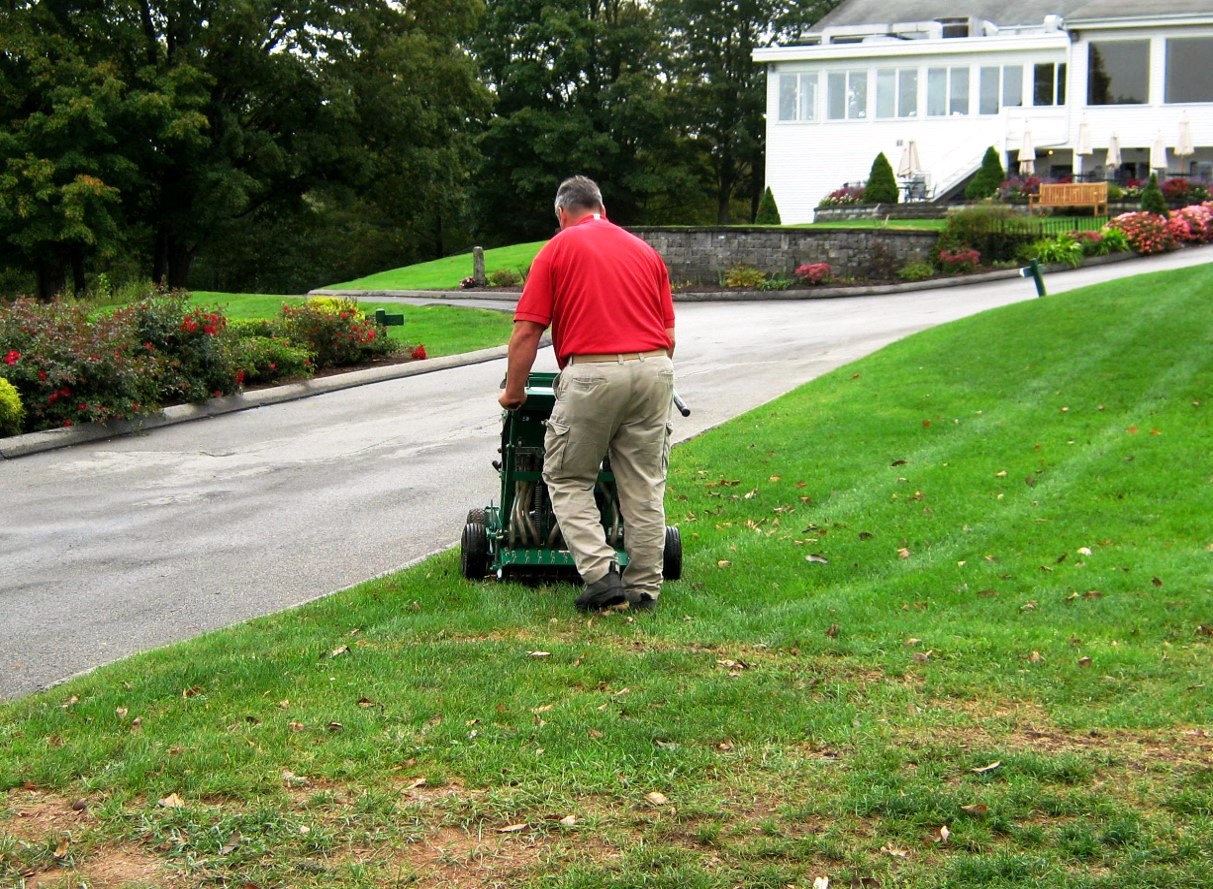
- Core aeration is generally only needed if soils are compacted
- Aeration can improve root growth, water infiltration and overall turf health in compacted areas
- Fertilizing
- Late summer/fall fertilization should be done in alignment with results from a soil test

Photo by Pamm Cooper, UConn Home Garden Education Office
Fall Lawn Care Tips & Guides
Converting Underutilized Lawn to Landscape
Take Care of Your Hanging Baskets
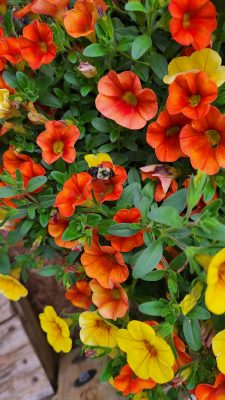
Hanging baskets are a staple of summer, bringing a pop of color and brightness to empty spaces on porches and decks. However, they require extra care and maintenance as their free-floating nature renders them more susceptible to the elements—namely an increased exposure to wind and sun. This leads to drier soils, making it necessary to frequently monitor hanging baskets to meet their watering needs.In especially full baskets with a variety of flowers, roots can become packed together and dry out even faster.
Check the soil texture at least once a day and water accordingly, increasing to two or more times on particularly hot and sunny days. Provide baskets with a healthy drink until water runs through the bottom, ensuring moisture will reach all of the roots evenly and thoroughly.
Baskets may also benefit from a trim, especially if you see the center of the basket starting to thin out or turn brown. Cut back your cascading stems by one third to help the plant push new growth out of the center.
Scout for Glossy Buckthorn
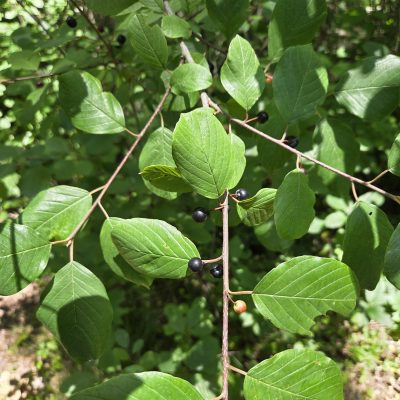
Glossy buckthorn (Frangula alnus ) is an invasive shrub or small tree spreading through disturbed areas, forests, wetlands, and edges across the Northeast. This plant leafs out early and retains its foliage later into fall. By doing so, it shades out native plants and disrupts natural forest regeneration. Look for smooth gray bark with prominent lenticels, alternate glossy leaves, and small fruits that change from red to dark purple or black. Birds eat the fruit and spread the seeds. Management is most effective when plants are removed before fruiting, using a combination of cutting and targeted herbicide application to prevent resprouting. Follow the label and all state regulations when choosing to use herbicides. Young or small plants can be manually removed.
Interesting Insects: Smaller parasa
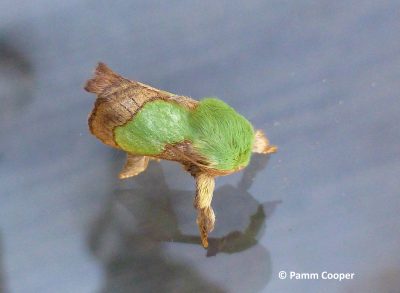
Smaller Parasa slug moths are very small with a shaggy mane of green hairs and a thick green band on its brown forewing. Normally slug moth caterpillars are seen in August- September.
The caterpillars of all slug moths have no legs- instead of crawling they glide along by means of medial suckers. Most slug moth caterpillars have urticating spines which can cause a painful sting if touched, and on some species, like the smaller parasa, the spines are hidden until the caterpillar becomes alarmed. The caterpillar shown was found on a pin oak on Horsebarn Hill, UConn.
Native Plant Highlight: Summersweet

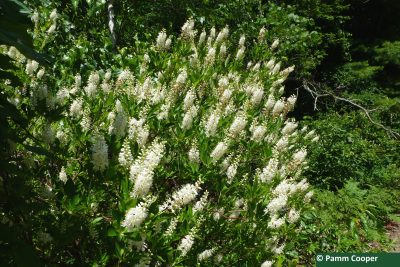
Photo by Pamm Cooper, UConn Home Garden Education Office
Summersweet (Clethra alnifolia)
Clethra alnifolia, is a native shrub that is found along watercourses or in damp areas where soils are acidic. Flowers are on white spikes and are very fragrant, attracting many pollinator species. This shrub is clonal and will spread somewhat over time.
Also called sweet pepperbush or summersweet, it is often found in the wild with buttonbush, which is also a native and flowers about the same time. There are cultivated varieties including 'Ruby Spice' which has pink flowers.
The CT Native Plant Availability List: Updated and even MORE user-friendly!
This native plant guide was created to assist municipalities, conservation organizations, homeowners, landscape architects, designers, and contractors with locating native plants for habitat restoration and wildlife enhancement.
The Connecticut Native Plant Availability List, by UConn Extension and CT DEEP Wildlife Division, identifies nurseries and garden centers that grow/sell native trees, shrubs, and perennials. Along with several nurseries that are new to the list, we have also added the ability for users to view the Availability List sorted by Nursery!
Word from the WiSE
Women in Soil Ecology, UConn Student Chapter
Bokashi: The Ferment for Soils
Have you ever tried kombucha or kefir for yourself? Have you ever thought soils can have beverages like those?
Composting techniques such as vermicompost and leaf compost have certain restrictions with the types of residues that can be incorporated when prepared. With bokashi, a Japanese technique to feed soils, more residues such as manures and other animal wastes can be used. It undergoes a fermentation process at anaerobic conditions, so it is not technically referred as compost. In principle, you add an easy source of carbon like sugar or molasses to your residues, and an inoculum of efficient microorganisms (mostly lactic acid bacteria and yeasts), which will overcontrol the mix and help with the regulation of possible pathogens. The result of this process is a solid that can be incorporated to soil, and a liquid that can be used diluted to fertilize, prevent drain blockages, and even added to accelerate composts!
Studies around bokashi are limited but often report high crop yields. Mineralized nitrogen varies depending on the material you use for its preparation. It is important to be cautious and ensure the conditions for the desired microorganisms, and to test for nitrogen content to not exceed its incorporation and generate runoffs and contamination. Nevertheless, no doubt there is an opportunity to use more of our residues and explore its properties.
By Paulette Goyes, elected WISE President & PhD. Student at the Plant Science and Landscape Architecture Department, UConn
Knowledge to Grow On
Read our Latest Publications Written Weekly
Find Us in the Media
IMG_0885

Photo by N. Raymond, UConn Plant Diagnostic Lab
Upcoming Events and Things to Do
- Check out a local Summer Concert Series
- August kicks off Fair Season in Connecticut!
- Woodpecker Walk & Documentary Screening - August 22, Stamford CT
- Visit one of CT's many Historic Gardens
- The Sky's the Limit Walking Challenge for 2026 has started!
Join us at Upcoming Talks!
Slime Molds and Lichens with Pamm Cooper
August 5, 2026 - 1:30PM
Old St. Andrew's Church, Bloomfield
Registration Required
5th Annual Intergrated Pest Managment Seminar for the Home Gardener
Thursday, August 20th, 2026
10:30 AM - 2:00 PM
UConn Research Farm
59 Agronomy Road, Storrs, CT 06268
*Free Parking*
$5.00 Per Person
Learn basic principles of Integrated Pest Management and techniques to implement in your gardens with a day designed for the home gardener. Speakers from the UConn IPM team will present on various topics to help you improve the plant and soil health of your gardens, lawns, and landscapes.

August Gardening Tips
- August is the month to order peony roots for September planting. Peonies should be in the ground about a month before the average first frost date.
- Continue to deadhead annuals and perennials to encourage continuous bloom.
- Water plants deeply once or twice a week depending on the heat and humidity.
- The best time to gather herbs and flowers for drying and preserving is during the midmorning hours, just after the dew has dried but before the sun causes them to wilt. Tie herbs in clusters with the stems attached and hang upside down to dry or dry in the microwave.
- Renovate strawberry beds by mowing to a height of 1 ½ inches, thinning plants and side-dressing with a balanced fertilizer
- Stop pruning evergreen trees and shrubs to avoid promoting new growth that may not harden off before first frost.
- Fruiting plants such as winterberry, holly, and firethorn need regular watering during dry spells to ensure that berries mature and don't drop off
- Do not add weeds with mature seed heads to the compost pile. Many weed seeds can remain viable and germinate next year when the compost is used.
- Reseeding the lawn in late August gives the new grass two growing periods (fall and spring) before the heat of summer. Be sure to keep the seed moist until germination.
- Control mosquitoes by eliminating all sources of stagnant water. Clean bird baths and pet’s outdoor dishes often.
- Leaky garden hoses and fittings can waste water. Check hoses while they are under full pressure and make repairs.
This Month’s Newsletter Contributors:
Pamm Cooper, Paulette Goyes, Lauren Kurtz, Emily Leahy, Natasha Raymond, Heather Zidack